


A new impasse over an old route
Nepal’s objection to the use of the Lipulekh Pass for the Kailash–Mansarovar Yatra signals a new combativeness
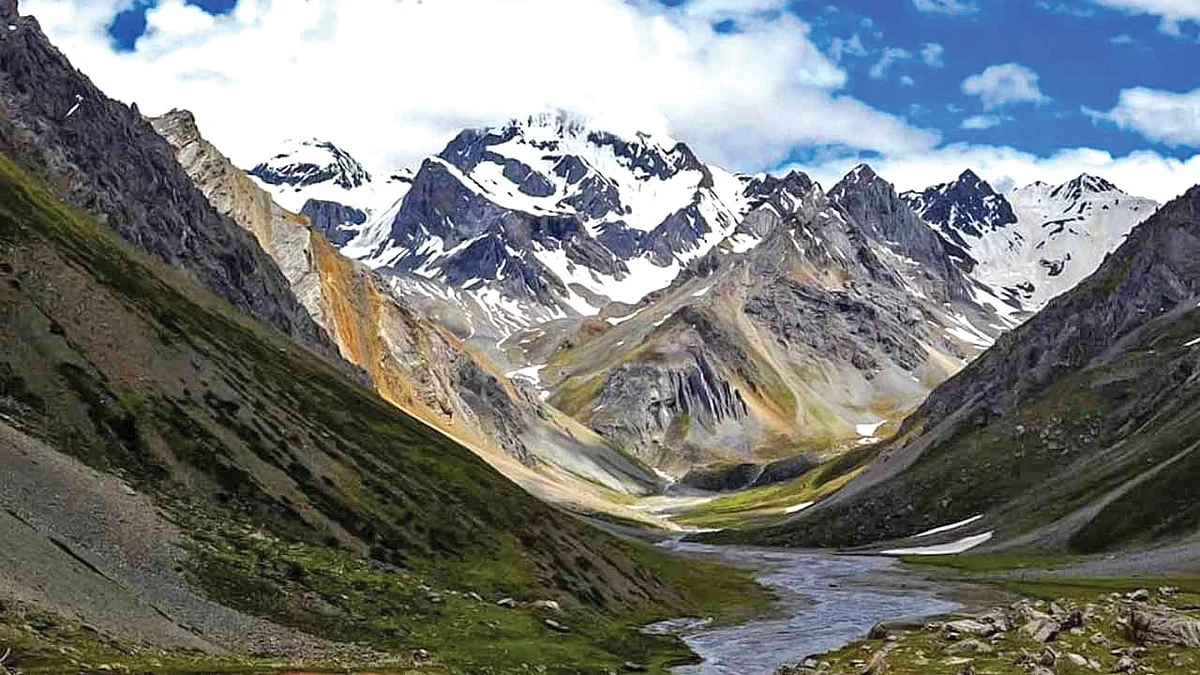


There’s a new hotspot in South Asia’s geopolitics. Located at an altitude of 17,000 feet, Lipulekh Pass is a narrow gap in the ridge line of Uttarakhand’s Kumaon region. A historical trade route, the pass connects India’s Vyas Valley and the Tibet Autonomous Region of China, and is the gateway for the Kailash-Mansarovar Yatra — an important pilgrimage for Hindus, Buddhists and Jains.
Because of its unique position at the junction of the borders of India, China and Nepal, Lipulekh is one of the most strategically sensitive and culturally significant sites in the entire Himalayan range.
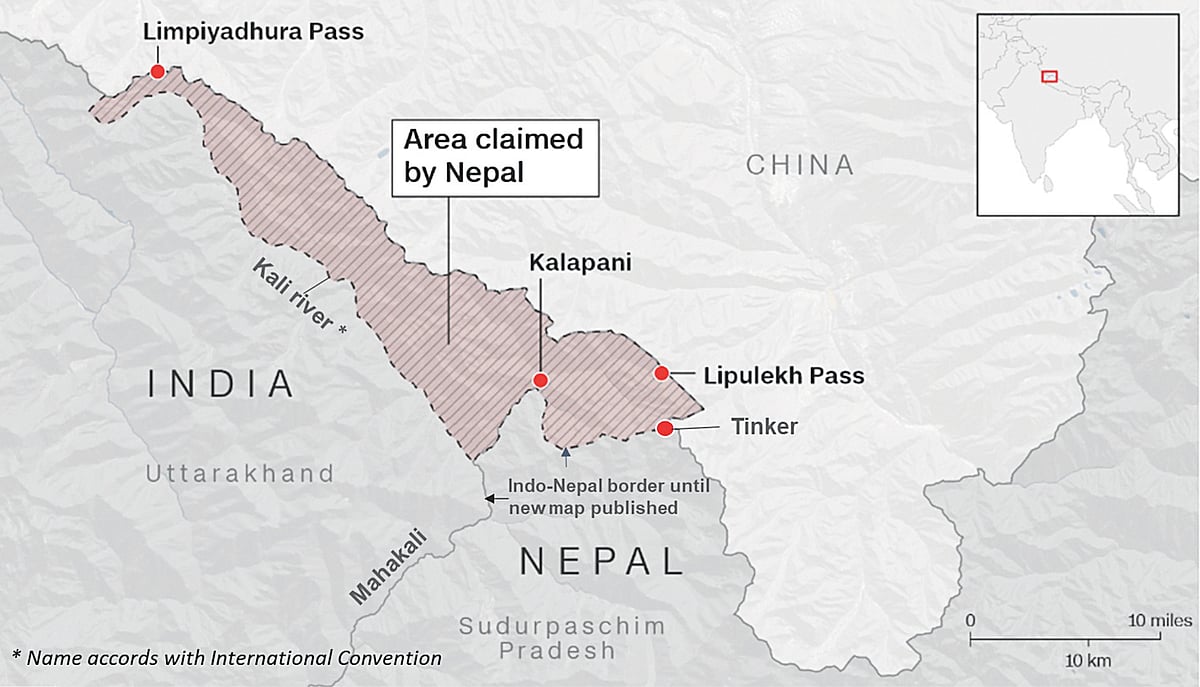
On 3 May, the foreign ministry of Nepal issued a formal objection regarding the use of the Lipulekh Pass for the 2026 Kailash-Mansarovar Yatra. In its note, the ministry said: ‘The Government of Nepal is completely clear and adamant on the fact that Limpiyadhura, Lipulekh and Kalapani east of the Mahakali River are integral parts of Nepal since the Sugauli Treaty of 1816.
'The Government of Nepal has reiterated its clear stance and concerns to both India and China through diplomatic channels regarding the Kailash-Mansarovar Yatra, which is said to be organised via Nepali territory… The Government of Nepal has been continuously urging the Government of India not to carry out any activities such as road construction or expansion, border trade and pilgrimage in the area.’
The note also observed that Nepal was not consulted before the route was finalised by India and China. Interestingly, the Kathmandu missive landed just ahead of foreign secretary Vikram Misri’s scheduled visit to Kathmandu on 11 May to discuss bilateral ties and review India-funded projects.
In response, India’s ministry of external affairs spokesman Randhir Jaiswal said: “India’s position in this regard had been consistent and clear. Lipulekh Pass has been a long-standing route for the Kailash-Manasarovar Yatra since 1954 and the Yatra through this route has been going on for decades. This is not a new development.
"As regards territorial claims, India has consistently maintained that such claims are neither justified nor based on historical facts and evidence. Such unilateral artificial enlargement of territorial claims is untenable. India remains open to a constructive interaction with Nepal on all issues in the bilateral relationship, including on resolving agreed outstanding boundary issues through dialogue and diplomacy.”
The Treaty of Sugauli — which Nepal invokes to underscore its sovereign right over Lipulekh Pass, a claim India dismisses — was signed on 2 December 1815 and ratified on 4 March 1816. It ended the Anglo-Nepalese War (1814-16) between the Kingdom of Nepal and the British East India Company and forced Nepal to cede roughly one-third of its territory, including Kumaon, Garhwal and the Terai region. The treaty also formalised the current shape of the India-Nepal border.
Nepal insists that Limpiyadhura, Lipulekh and Kalapani are inseparable parts of its territory; that official diplomatic notes have been sent to both New Delhi and Beijing, urging both to refrain from any activity in the area; and that, despite its objection, Nepal remains committed to resolving boundary disputes through peaceful diplomatic channels.
While the yatra through Lipulekh is not a ‘new development’, what is new is Nepal’s territorial assertion — under the new government headed by Balen Shah — over Lipulekh and its adjoining areas. Also significant is Nepal’s conscious effort to keep both India and China at arm’s length over this issue. Does this stance reflect Nepal’s Gen Z-driven in-your-face irreverence; or is there an invisible hand shepherding Nepal’s foreign policy?
****
Nepal’s newly-elected Prime Minister Balen Shah appears to be riding a wave of assertiveness. Social media discussions have identified Aksai Chin and Darjeeling as pressure points in its engagement with India. Viral videos argue ‘If Aksai Chin can be depicted as part of India, why can’t Lipulekh be depicted as part of Nepal’? Similar videos demand that Darjeeling be shown as part of Nepal.
Thus far, Shah remains an elusive figure, even in Nepal. He communicates via social media and appears to be avoiding giving interviews or addressing press conferences. Significantly, he declined to meet Sergio Gor, the US ambassador to India and special envoy for South and Central Asian affairs, during his recent Nepal visit, citing protocol. Unconfirmed reports suggest that Shah has been advised against visiting India unless he is received on arrival by the Indian prime minister. It is not even clear whether Misri will actually get to meet him.
On 30 April, a day before Gor visited the Everest base camp, Nepal’s home ministry suspended the operations of Airlift Technology, a Nepali tech startup and Everest expedition operator, citing unspecified security concerns. Gor was hoping to see flight demos of drones to be used for airlifting garbage and supplies.
According to Kathmandu Post, the order appeared to target two drones — the Chinese-made DJI FlyCart 100 and the US-made Freefly Systems Alta X Gen 2 — both associated with Airlift’s operations and both with 3D-mapping capabilities. The suspension order was lifted after five days.
Kedar Sharma, author, commentator and travel blogger from Nepal told National Herald, “Nepal has asserted its territorial right whenever the question of Lipulekh has come up vis-à-vis India. Allowing Indian pilgrims and traders to use Lipulekh Pass disregarding Nepal’s territorial claim was akin to undermining its broader engagement with Nepal — this seems to be the message the foreign ministry has tried to deliver to China.”
Sharma used the Hindi proverb “Jiski laathi, uski bhains (the one with the stick owns the buffalo)” to describe India’s claim on Lipulekh and dismissed allegations of the US or other countries playing agent provocateur as conspiracy theories suggest. “We tend to see the CIA’s hand even when street dogs fight!”
Nepal’s assertion of its territorial rights along a sensitive border point must, however, be seen in the context of a growing sentiment that no longer regards India as a reliable friend or partner. The sentiment hardened after the blockade in 2015-16 when India imposed restrictions on essential commodities — fuel, medicine and food — from entering landlocked Nepal from India for four-and-a-half months.
While India denied an official blockade and blamed it on the unrest among Nepal’s Madhesi community — who live across the India-Nepal border — the disruption caused a severe humanitarian crisis, made worse in the aftermath of the April 2015 earthquake.
Since then, the prevailing belief is that India forced Nepal to accommodate Madhesi aspirations in its new Constitution by enforcing and leveraging the blockade. India’s decision to reduce the recruitment of Gorkhas in the Indian Army, advising them to opt for the Agnipath scheme instead, has also cooled relations.
Within Nepal, opinion appears divided. Several commentators point out that landlocked Nepal continues to depend on India for key supplies, including fuel and fertilisers. RSS activities in Nepal and India’s contempt — expressed on social media — for its smaller neighbour complicate the relationship further. This has triggered a demand for a US base, military or otherwise, in Nepal as a counterweight to both India and China.
For now, it does seem that Prime Minister Balen Shah, despite his Madhesi ancestry and India connections, is in no mood to ease his grip on Lipulekh to reconnect India and China.
Sourabh Sen is a Kolkata-based independent writer and commentator on politics, human rights and foreign affairs. More of his writing here
Join our official telegram channel (@nationalherald) and stay updated with the latest headlines