


Odisha: Should MPs and MLAs fix their own salaries?
With 16 per cent population in Odisha still below poverty line, the move by MLAs to give themselves a three-fold salary hike sparks debate on ethics and accountability
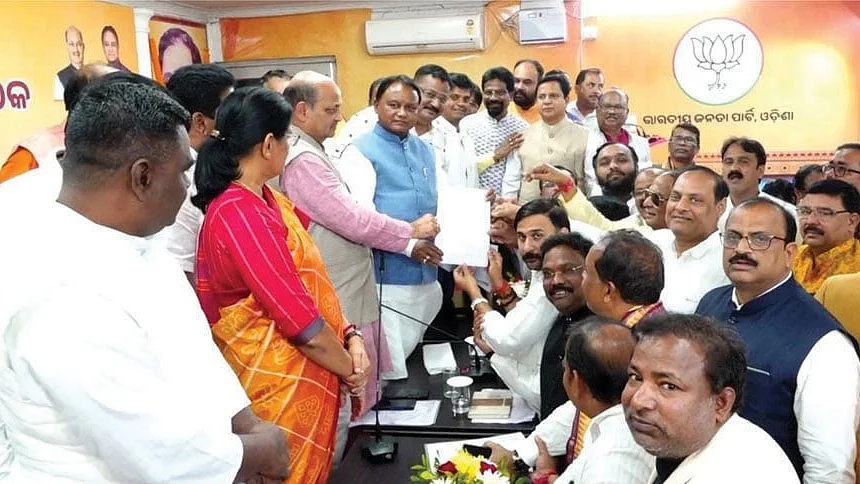


India’s parliamentarians and state legislators are empowered to fix their own salaries and perks. Each assembly decides on it from time to time, but should they?
Unlike government employees, who have independent pay commissions, MPs and MLAs decide their own remuneration—an arrangement increasingly being questioned for its inherent conflict of interest. This issue has gained currency after Odisha MLAs raised their take-home salary to Rs 3.45 lakh per month, the highest in the country, followed by Telangana (Rs 2.7 lakh), Maharashtra (2.6 lakh), Manipur (2.5 lakh) and Uttar Pradesh (2.4 lakh). The lowest-paid MLAs are in Kerala at Rs 70,000 per month.
The Odisha Assembly unanimously passed four Bills approving a threefold pay hike on 9 December, the last day of the winter session. Additionally: emoluments have been enhanced with retrospective effect from June 2024. Aside: the current BJP government under Mohan Charan Majhi assumed office in June 2024.
The monthly pension payable to former MLAs has also been revised from Rs 30,000 to Rs 80,000, plus a travel allowance of Rs12,500 and a revised medical allowance of Rs.25,000. In a state where nearly 16 per cent of the people still live below the poverty line, the move has triggered widespread public anger and criticism.
Odisha remains one of India’s poorest states with malnutrition, high infant mortality rates, battered repeatedly by floods, cyclones and droughts. At Rs 1.83 lakh, the state’s per capita income lags behind the national average of Rs 2 lakh. Against this backdrop, the self-serving pay hike seems insensitive and unjustified.
Seshdev Nanda of Nabnirman Krushak Sangathan highlights the disconnect: “Our minimum wage for unskilled workers is around Rs 12,000 per month. How can such a dramatic hike for MLAs be justified when ordinary workers earn a fraction of that amount? Our state is battling poverty accentuated by natural calamities and still grappling with poor health indicators.”
Other social activists echo this sentiment. The highly regarded activist Jagannath Chatterjee commented on the irrational increase: “If legislators demand a hike, it must match their performance on the ground. Sadly, we lack mechanisms for real accountability, which fuels public frustration. Introducing recall provisions for non-performing representatives could empower voters and improve governance, but such reforms remain elusive.”
Sadly, we lack mechanisms for real accountability, which fuels public frustrationJagannath Chatterjee
Odisha Election Watch convenor and social activist Ranjan Mohanty said he was not against periodic enhancement in the salaries of public representatives but it must be commensurate with their needs and performance. “Public sentiments should be kept in mind while making such moves. After all, the representatives get their mandate from the people,” said Mohanty.
Women’s rights activist Tapsee Prahraj was blunt about the timing: “The government has failed to deliver on promises to empower women, raise old-age pensions or enhance welfare. How can they justify hiking their own salaries amidst such widespread unmet needs?”
Social media has amplified demands for greater transparency and accountability, with citizens urging lawmakers to publish periodic report cards on their work.
***
Legislators cutting across party lines have defended the hike, saying it was long overdue—the last increase was in 2017. “A public representative needs money to help people financially in all kinds of situations, right from weddings to last rites. This step by the chief minister is certainly welcome,” cooperation minister Pradeep Bal Samanta told a news channel.
The Biju Janata Dal, the main opposition party, not only supported the Bills inside the House but was effusive in praising it outside. Party MLA Sarada Jena said, “The enhancement of MLAs salaries was a genuine need that has been taken care of.” Similar sentiments were echoed by his party colleagues Pramila Mallick and Ganeswar Behera, as well as Congress MLA Dasrathi.
CPI(M) MLA Laxman Munda, the sole dissenting voice in the Assembly, condemned the hike as insensitive amid farmers’ distress and other pressing issues: “Our farmers cannot sell their paddy and face numerous problems. Instead of addressing these, legislators focus on protecting their own interests.”
Leader of Opposition Naveen Patnaik refused to accept his increased pay and urged the state to use the funds for poor people’s welfare. His family had donated their ancestral property for public use in 2015—he was merely keeping that legacy alive, said he.
Patnaik’s move was seen as a political stunt since his party supported the Bills. Deputy chief minister K.V. Singh Deo said, “He had the opportunity to put forward his views in the House. Why did he not do so?”
Also Read: Odisha: The alarming state of lawlessness
Join our official telegram channel (@nationalherald) and stay updated with the latest headlines