


PM Modi's address a partisan assault on Constitutional traditions
A national address turns into campaign rhetoric, eroding constitutional norms and blurring the line between state and party power
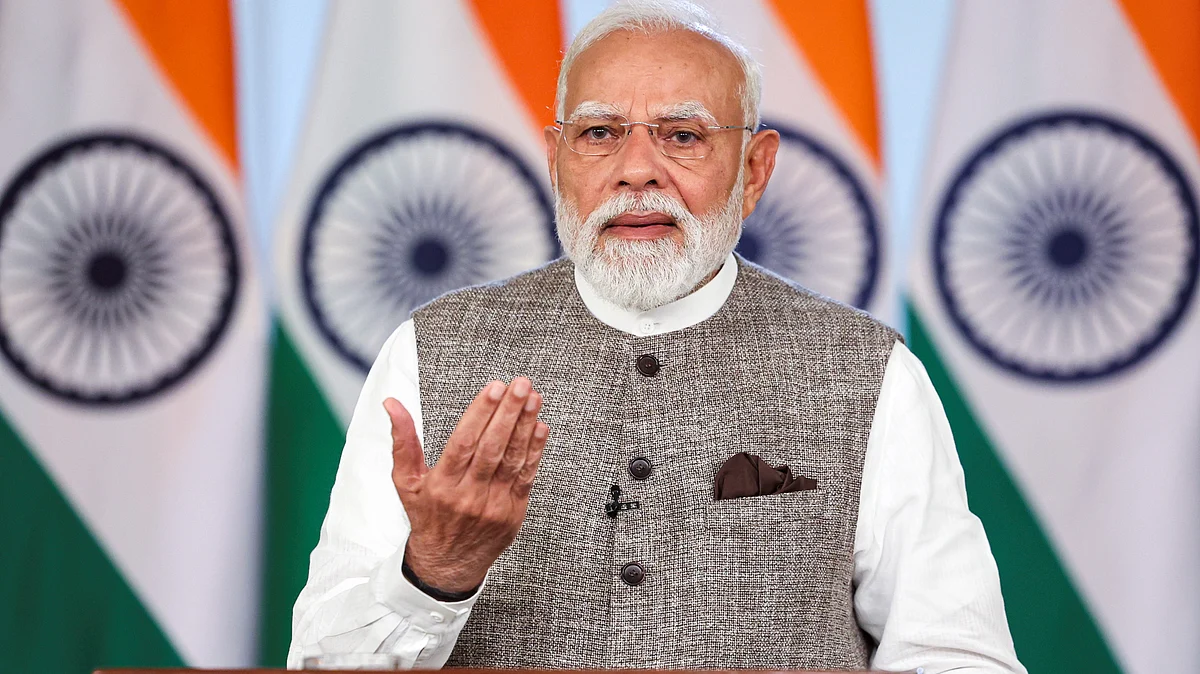


In the history of the Indian Republic, the ‘Address to the Nation’ has traditionally been treated as a solemn instrument of the state — a platform from which the prime minister rises above partisan contestation to speak to the collective conscience of the country.
Prime Minister Narendra Modi’s 29-minute televised address on Saturday, 18 April, marked a disturbing departure from this democratic convention. Coming a day after the legislative collapse of the 131st Constitution Amendment Bill, the PM Modi appeared to convert the authority of his office into a campaign platform, substituting statesmanship with a sharp attack on the Opposition.
The government’s narrative framed the ‘Nari Shakti Vandan’ amendment as a ‘need of the hour’ for gender justice. Yet, the Bill’s failure to secure passage in the Lok Sabha on 17 April was widely viewed not as a rejection of women’s rights, but of the conditions attached to them.
By linking 33 per cent reservation to a large-scale delimitation exercise — one that could expand the Lok Sabha to over 800 seats — critics argued that the legislation functioned as a ‘Trojan horse’, potentially strengthening the BJP’s northern strongholds while reducing the relative political weight of southern states.
When the Bill failed to obtain the required two-thirds majority, the prime minister’s response was not one of parliamentary introspection but of public reproach. By characterising the Opposition’s Constitutional objections as a ‘defeat’ of women’s aspirations, the government appeared to substitute policy debate with emotive political messaging.
The most controversial aspect of the prime minister’s address was the rhetorical escalation later described by Congress president Mallikarjun Kharge as "mudslinging and lies". In remarks that drew widespread criticism, the PM equated the democratic rejection of a Bill with ‘bhroon hatya (foeticide)'. Invoking the language of a grave social crime to describe parliamentary dissent goes beyond political metaphor; it risks delegitimising the very role of an Opposition in a parliamentary democracy.
By accusing the Congress, TMC and DMK of "insulting women", and asserting that "a woman never forgets an insult", the prime minister appeared to deploy gendered rhetoric to deflect attention from the government’s inability to build political consensus. References to political rivals as "urban Naxals" and "successors to the British" further contributed to an increasingly polarised discourse, distancing the debate from the Constitutional sobriety expected in matters of amendment.
Perhaps the most serious concern arising from the address relates to the sanctity of the electoral process. With Assembly elections underway in various states and voting still to come in West Bengal and Tamil Nadu, critics argue that the speech amounted to a violation of the Model Code of Conduct (MCC). As Rajya Sabha MP John Brittas observed, "No prime minister has ever used a national address to openly criticise and target the Opposition in this manner."
Also Read: The subterfuge of women’s reservation
The speech carried the tone and content of an election rally, yet was delivered using state resources and broadcast through the national broadcaster. The perceived silence of the Election Commission in the face of this alleged misuse of office raises troubling questions about institutional autonomy. If a national broadcast can be used to influence voters in poll-bound states under cover of an official communication, the principle of a level playing field is significantly undermined.
The setback to the women’s reservation proposal called for renewed dialogue and a recommitment to federal consultation. Instead, the country witnessed what critics describe as a ‘distress address’, marked more by political urgency than constitutional restraint.
When the authority of a national broadcast is used to launch a polemical attack on political opponents, the damage extends beyond partisan contestation. It risks diminishing the dignity of the office itself. 18 April 2026 may therefore be remembered less as a day of reflection on women’s political representation, and more as a moment when the boundary between State authority and party interest appeared to blur in troubling ways.
Hasnain Naqvi is a former member of the history faculty at St Xavier’s College, Mumbai. More of his writing may be read here
Join our official telegram channel (@nationalherald) and stay updated with the latest headlines