


Procedure vs democracy: SC’s missed opportunity in Meenakshi Natarajan case
The controversy is about more than one Rajya Sabha seat — it is a test of balancing procedural compliance with democratic fairness
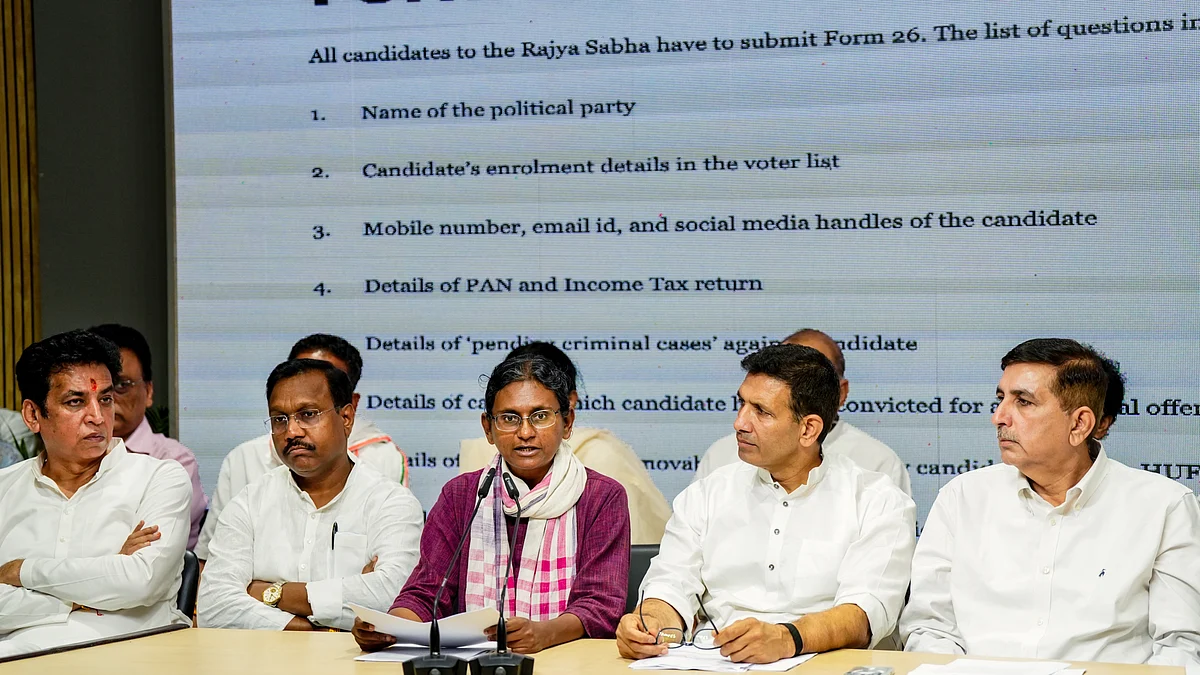


The Supreme Court’s dismissal of Congress leader Meenakshi Natarajan’s challenge to the rejection of her Rajya Sabha nomination from Madhya Pradesh marks a troubling moment in India’s electoral jurisprudence. By directing her to pursue the lengthy route of an election petition under the Representation of the People Act rather than intervening at a decisive stage of the electoral process, the Court allowed a highly contentious administrative decision to stand.
The immediate consequence was significant: the BJP secured all three Rajya Sabha seats from the state without facing a contest for the third seat.
At the heart of the controversy lies a fundamental question: should procedural formalities be allowed to override the broader principles of electoral fairness and democratic competition?
Natarajan’s nomination was rejected during scrutiny on 9 June on the ground that she had allegedly failed to disclose a private complaint filed in a Hyderabad court in 2025. The complaint, lodged by a former Telugu Desam Party corporator, primarily concerned allegations against another Congress leader. Natarajan, then the All India Congress Committee’s in-charge for Telangana, was implicated only on the allegation that she had failed to act on the complaint.
The legal significance of the omission appears questionable. No FIR was registered, no investigation resulted in charges, and no court framed charges against her. That distinction is critical. Section 33A of the Representation of the People Act requires disclosure of criminal cases in which charges have been framed for offences punishable with imprisonment of two years or more. The provision was intended to ensure transparency regarding serious criminal antecedents, not every private complaint or unsubstantiated allegation brought before a court.
Viewed in that light, the rejection appears less a case of material concealment than an unusually rigid interpretation of disclosure requirements. Nomination scrutiny is meant to establish eligibility and compliance with essential statutory requirements, not become a procedural trap. Election law has long recognised that returning officers should reject nominations only when defects are substantial and go to the root of a candidate’s eligibility.
Also Read: When scrutiny becomes exclusion
The objection against Natarajan did not concern citizenship, qualification, disqualification, or any established criminal liability. It rested solely on the non-disclosure of a private complaint that had not resulted in police action or judicial determination.
Against that backdrop, the objection raised by a BJP candidate inevitably attracts political scrutiny of its own. What is presented as a defence of transparency can equally be viewed as a strategic effort to remove the Congress candidate from the contest. The result was clear: BJP candidates Tarun Chugh, Rajneesh Agarwal and Mahesh Kewat were assured victory without the uncertainty of a competitive election.
That outcome is what makes the episode particularly unsettling. The Congress maintained it had sufficient legislative support to mount a credible challenge for the third Rajya Sabha seat. What should have been a political contest decided by elected representatives was effectively settled during the scrutiny process itself.
The Election Commission’s response offered little reassurance. Despite protests and representations by the opposition, it refrained from any visible intervention as the process moved rapidly towards its conclusion.
When the matter reached the Supreme Court, there was hope that the judiciary would examine whether the rejection had crossed the line from lawful scrutiny into arbitrary exclusion. Instead, the Court chose institutional restraint. Citing Article 329(b) of the Constitution and the availability of post-election remedies, it declined to stay the process or overturn the returning officer’s decision.
From a strictly legal perspective, that reasoning may be defensible. Courts have traditionally been reluctant to interrupt ongoing electoral processes. Yet constitutional fidelity requires more than adherence to precedent. It also demands vigilance against actions that may compromise the integrity of electoral competition itself. The purpose of constitutional safeguards is not merely to protect procedures but to ensure that procedures serve democratic ends.
This case raises uncomfortable questions about the scope of discretion exercised by returning officers. Here, the decision was taken by the principal secretary of the Madhya Pradesh Assembly acting as returning officer. If such authority can be exercised on the basis of legally inconclusive complaints, future elections may witness similar attempts to sideline candidates through procedural objections rather than political contestation.
The disclosure framework was never intended to function as a mechanism for procedural ambush. Its purpose is to inform voters and legislators about genuine criminal liabilities and serious legal proceedings. Expanding it to encompass unresolved complaints lacking police cognisance or judicial findings risks distorting both the letter and spirit of the law.
The danger lies not only in the immediate outcome but in the precedent such decisions create. Once accepted, hyper-technical scrutiny can become a convenient tool for influencing electoral outcomes before voting even takes place.
By directing Natarajan to pursue an election petition, the Court preserved procedural orthodoxy but offered little practical relief. Election petitions are notoriously time-consuming. Even if a challenge ultimately succeeds, the disputed seat may remain occupied for years before any corrective action materialises.
Electoral disputes differ from ordinary litigation because the consequences are immediate and political. A delayed remedy cannot fully restore a lost opportunity to contest, nor can it undo the democratic deficit created when voters or elected representatives are denied a genuine choice.
The episode is therefore a reminder that democratic institutions must be judged not only by their adherence to rules but also by their commitment to preserving electoral fairness. Returning officers, the Election Commission and the judiciary each play a critical role in ensuring that elections remain genuinely competitive and free from arbitrary exclusion.
Clearer guidelines governing nomination scrutiny are urgently needed. The scope of mandatory disclosures must be defined with greater precision, leaving little room for subjective interpretation or partisan exploitation. Equally important are safeguards that prevent procedural technicalities from becoming instruments of political advantage.
The credibility of any electoral system rests on public confidence that the rules are applied fairly and consistently to all participants. When scrutiny appears selective and legal formalism eclipses democratic substance, that confidence begins to erode.
The Meenakshi Natarajan episode is therefore about far more than a single Rajya Sabha seat. It is a test of whether India’s electoral institutions can balance procedural compliance with democratic fairness.
If such controversies continue to be resolved through technical disqualifications rather than open political contests, exceptional departures from democratic norms risk becoming routine. And when that happens, representative democracy is weakened not by dramatic assaults, but by the quiet normalisation of institutional imbalance.
Hasnain Naqvi is a former member of the history faculty at St Xavier’s College, Mumbai. More of his writing here
Join our official telegram channel (@nationalherald) and stay updated with the latest headlines