


Sloppy history or deliberate erasure?
Kolkata’s renaming fiasco exposes the perils of partisan memory
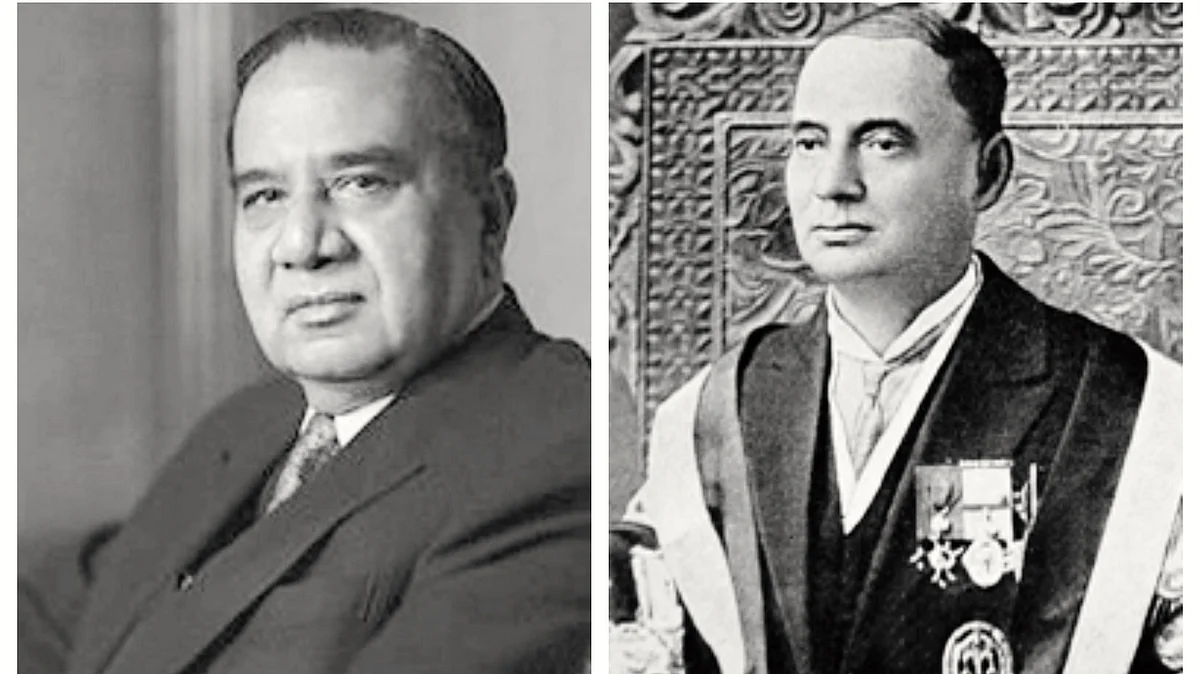


In the heart of Kolkata, where Park Circus meets the city's daily bustle, a 500-metre stretch once known as Suhrawardy Avenue now bears the name Gopal Mukherjee Road. The Kolkata Municipal Corporation's decision, announced on Paschimbanga Divas, was hailed by chief minister Suvendu Adhikari as the correction of a "historical wrong".
On X, Adhikari said the old name honoured a man who had 'wilfully misused state power as a weapon, orchestrating the massacre of innocent citizens'. The new namesake, Gopal Chandra Mukherjee — better known as Gopal 'Pantha' (goat in Bengali), a meat-shop owner and local strongman — is celebrated in Hindu nationalist circles for organising armed resistance to protect Hindu families during the 1946 Great Calcutta Killings.
Yet this act of symbolic politics appears to rest on a basic factual error. The road was never named after the controversial politician Huseyn Shaheed Suhrawardy, premier of Bengal in 1946 and later prime minister of Pakistan. It was named after his uncle, Dr Sir Hassan Suhrawardy — a distinguished surgeon, military officer, member of the Bengal Legislative Council and the first Muslim vice-chancellor of Calcutta University from 1930-34.
The distinction is not a matter of academic nit-picking. It lies at the heart of the controversy.
Historical records leave little room for doubt. The Calcutta Municipal Gazette of March-April 1933 records that the Calcutta Improvement Trust named the newly constructed road Suhrawardy Avenue after Sir Hassan Suhrawardy. The road ran from Park Circus to an area near his residence and was intended to honour his contributions to medicine, public health and higher education.
Sir Hassan was knighted in 1932 after helping save the life of Bengal governor Sir Stanley Jackson during an assassination attempt by revolutionary Bina Das. His public career was rooted in academia and medicine, not communal politics.
His nephew, Huseyn Shaheed Suhrawardy, occupies a very different place in history. As premier of Bengal, he remains one of the most controversial figures associated with Direct Action Day on 16 August 1946, when the Muslim League called for mass mobilisation in support of Pakistan. The violence that followed, remembered as the Great Calcutta Killings, left thousands dead and pushed Bengal further towards the communal rupture of Partition.
Historians, including Joya Chatterji, have documented the administrative failures and political decisions that allowed the violence to spiral. Debate continues over the extent of Suhrawardy's personal responsibility, but there is little dispute that his legacy remains deeply divisive.
What is beyond dispute is that Sir Hassan Suhrawardy had no connection to those events. The avenue was named after him more than a decade before the riots. Conflating uncle and nephew represents a striking lapse for a government claiming to be correcting the historical record.
Critics have not been gentle. Former Rajya Sabha MP Jawhar Sircar described the rationale behind the renaming as "patchy, half-history".
"The BJP and many Bengalis have a valid reason to hate Huseyn, the Premier of Bengal in 1946, but unfortunately they picked on the wrong Suhrawardy," he said.
Other historians and researchers have pointed to municipal records and P Thankappan Nair's work on Kolkata's streets, all of which identify Sir Hassan as the person honoured by the avenue's original name.
The controversy also raises questions about the politics of memorialisation. Across India, governments have increasingly turned to renaming roads, stations and public institutions as a way of reshaping historical narratives. Such exercises inevitably involve political choices. But they also demand factual accuracy.
Also Read: Selective outrage in Bengal
The figure replacing Sir Hassan is himself a complex and contested historical character.
Gopal Pantha (1913-2005) emerged as a prominent Hindu leader during the communal violence of 1946. Supporters credit him with organising neighbourhood defence groups when the state machinery appeared paralysed. Family accounts and oral histories portray him as a protector who saved Hindu lives and later devoted himself to social work.
At the same time, contemporary accounts also describe him as a feared gang leader who oversaw violent reprisals during the riots. Historians and Partition archives portray him not simply as a saviour, but as part of the wider network of communal militias that emerged as Bengal descended into bloodshed.
That complexity need not disqualify him from public recognition. But replacing an apolitical educationist because of a mistaken understanding of history undermines the very case being made for the change.
The episode reveals a larger challenge confronting Bengal's new political establishment. Re-examining historical narratives is a legitimate exercise. But historical correction requires more than political conviction; it requires careful research.
Sir Hassan Suhrawardy represented an important chapter in Bengal's intellectual and educational history. Huseyn Shaheed Suhrawardy's role in 1946 deserves rigorous scrutiny on its own merits. Gopal Pantha's contested legacy also warrants thoughtful engagement.
When those histories are collapsed into one another, the result is not historical justice but historical confusion.
In Kolkata's streets, names remain powerful symbols of identity, memory and politics. But when a campaign to correct the past begins by targeting the wrong person, it risks turning a serious reckoning into an avoidable farce.
Join our official telegram channel (@nationalherald) and stay updated with the latest headlines