


The film they didn’t want India to watch
Suppressing Satluj raises the question: who gets to decide which parts of our collective past we may revisit as citizens?
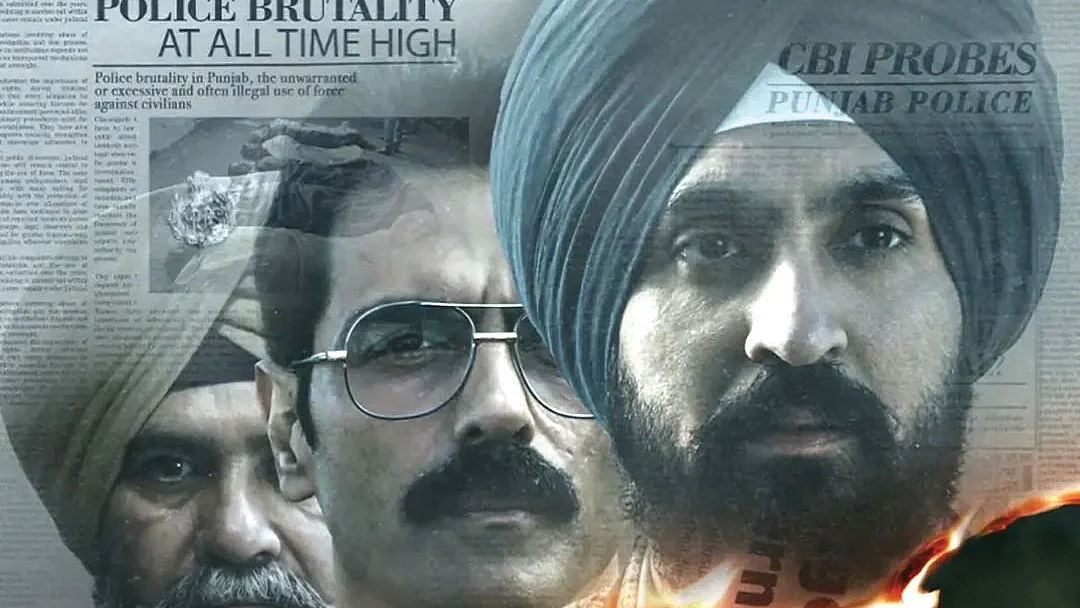


When the lights dim in a cinema hall, audiences prepare to willingly surrender to a story. The darkness invites us to enter a realm of imagination, argument, truth. But when the State imposes darkness on the film itself, we are denied both the experience and the argument.
The abrupt removal of Satluj from the ZEE5 OTT platform barely 48 hours after its release is a reminder of how fragile creative freedom has become in contemporary India. It raises a disturbing question: who gets to decide which parts of our collective past we, as citizens, are allowed to revisit?
Directed by Honey Trehan and starring Diljit Dosanjh, Satluj (earlier titled Punjab ’95) is based on the life of Jaswant Singh Khalra, the human rights activist who investigated allegations of illegal killings and secret cremations during Punjab’s violent insurgency. Khalra publicly referred to around 25,000 alleged illegal cremations, a figure that remains contested.
Various official inquiries and independent researchers have cited significantly lower numbers, and the exact scale continues to be debated. The film reflects Khalra’s claims, making them central to the storyline rather than presenting them as judicially established fact.
What is incontrovertible is Khalra’s own fate. He was abducted and murdered in 1995, and several Punjab Police personnel were eventually convicted for the crime. His killing became one of the most powerful symbols of the excesses committed during Punjab’s troubled years.
During the legal proceedings over the film, one judge reportedly observed, “There’s no point in running away from the past. Unless you counter your past, you’ll never have a better future.”
Unfortunately, the decision to takedown Satluj suggests exactly the opposite instinct — that difficult memories are better expunged than examined.
The film’s journey is in itself a commentary on censorship. Submitted to the Central Board of Film Certification (CBFC) in 2022, it remained entangled in certification disputes for nearly 30 months.
According to Trehan, the board demanded more than 120 cuts over multiple rounds of review. These included objections to references to Punjab, the use of Khalra’s name, the Indian flag appearing in the background, and even Gurbani, allegedly on grounds that such elements could ‘provoke emotions’.
Whether one agrees with every statement made by the filmmaker or every objection raised by the authorities is almost beside the point. When a work of art is made to shed so many of its historical markers that even its geographical setting appears fictional, censorship smacks of erasure.
The Union government’s explanation, however, deserves serious consideration. According to officials quoted by PTI, the producers never accepted the cuts suggested by the CBFC and instead quietly released the film directly on an OTT platform, where prior certification is not mandatory.
Once the government became aware of the release, ZEE5 was directed to remove the film, citing security concerns and obligations under intermediary guidelines. Officials argued that if the makers wished to release the film in theatres or on OTT without controversy, they should have followed the established certification process.
Supporters of the government’s position have advanced another rationale. Punjab continues to carry the scars of militancy, and with Assembly elections approaching, a film revisiting one of the darkest periods in the state’s history could potentially be exploited by separatist organisations seeking to revive old narratives.
Security concerns can never be dismissed casually. However, an instructive comparison can be found if we rewind to another film that dealt with the same historical landscape as Satluj.
In 1996, Gulzar’s Maachis portrayed how ordinary young Punjabis were drawn to militancy after police brutality. The wounds of terrorism were fresher then than today. Hundreds of police personnel, political leaders and innocent civilians had lost their lives. Yet, neither the government nor the CBFC sought to suppress the film.
Instead, audiences engaged with it, debated it and ultimately accepted it as one of Indian cinema’s finest political dramas.
Nearly three decades later, nobody can say that Maachis strengthened separatist sentiment in Punjab. If anything, it demonstrated cinema’s capacity to humanise tragedy without endorsing violence.
No serious account of Punjab in the late 1980s and early 1990s can ignore the courage and sacrifices of police officers who fought terrorism under extraordinarily difficult circumstances. Many senior officers and thousands of policemen lost their lives combating heavily armed militants. That sacrifice deserves enduring recognition.
But history also records another reality.
During those years, extraordinary powers occasionally led to extraordinary abuses. Fake encounters, illegal detentions and custodial excesses became part of public discourse, prompting judicial interventions and investigations. Remembering those innocent victims does not diminish the sacrifices of security forces; it acknowledges that a democracy must remain capable of examining its own mistakes.
This is precisely where Jaswant Singh Khalra’s contribution lay. Regardless of one’s assessment of his personal political beliefs, he relied on painstaking documentation and grassroots investigation. Saluting such work because it is ideologically convenient is one thing; honouring the research (and the researcher) for bringing uncomfortable questions back into the public domain is quite another.
While filmmaker Ram Gopal Varma praised Dosanjh’s restrained performance and the film’s willingness to lay bare the “wound” of one of India’s darkest chapters, Satluj is not without flaws.
A sequence that depicts the assassination of Punjab chief minister Beant Singh features the Gurbani line, 'Soora so pehchaniye jo lade deen ke het (only those are heroes who fight for the faith)', in the background. Many viewers may find this juxtaposition deeply inappropriate because it risks lending unintended moral resonance to an act of terrorism.
If the authorities considered this sequence objectionable, a narrowly tailored intervention — such as removing or replacing the background audio — would have been understandable.
Instead, the entire film was removed. That decision may prove spectacularly counterproductive. As filmmaker Anurag Kashyap remarked after the controversy erupted, “The more you ban something, the more people want to watch it.”
On 9 July, several media outlets reported that gurdwaras across Punjab, Delhi, Rajasthan, Haryana and Jammu have begun organising community screenings.
The digital age has also blunted the edge of censorship. Removed from a legal streaming platform, Satluj was ‘leaked’ on X, downloaded and shared by fans. Its second life through Telegram groups, Reddit discussions and social media has transformed the film into something far more potent than the version the State took down — a symbol of resistance against censorship itself.
The political timing has also intensified the debate. With Punjab heading for Assembly elections, every party is attempting to calculate who gains, who loses from the controversy. Punjab’s electoral history suggests, though, that voters rarely cast their ballots based solely on the memories of militancy three decades ago.
While the Union government is widely perceived as the force behind the film’s disappearance, the issue is larger. History cannot be healed by taking a film off a platform. It can perhaps be understood better by letting citizens watch, question, argue, remember.
Join our official telegram channel (@nationalherald) and stay updated with the latest headlines