


Undoing hard-won transgender rights
Chittajit Mitra on why the new transgender law is regressive
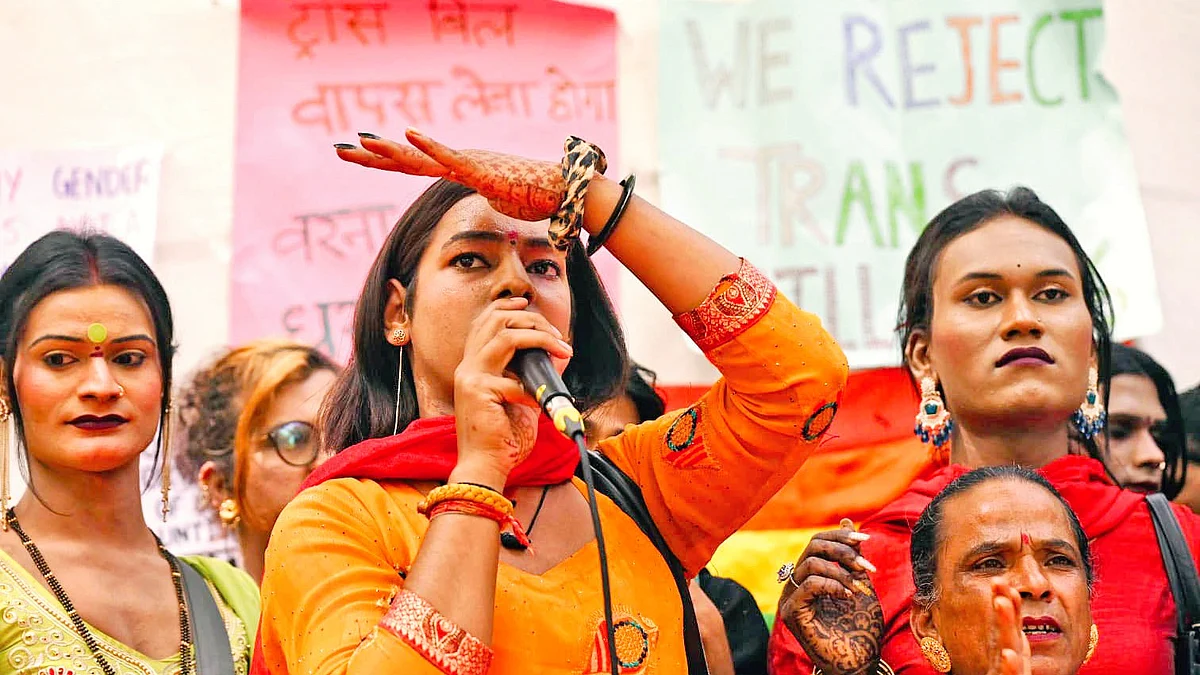


On 13 March, the social justice and empowerment minister Virendra Kumar tabled the Transgender Persons (Protection of Rights) Amendment Bill, 2026 in the Lok Sabha.
When I first heard this, I thought, in all my naïveté, they’re finally bringing in the changes the transgender community has been asking for. Provisions for horizontal reservations, for example, or just punishment for the different kinds of violence (against trans people) that had been clubbed together in the 2019 Act. But reality bit hard. The new Bill, instead of expanding the rights of the community, retracts almost all the rights they had won after fighting for decades.
Even amid demands by the Opposition that the Bill be referred to a select committee for wider consultation, and a plea by lawyers and activists that the President withhold assent, the regressive provisions are now the new law.
Why are these changes regressive? How do the amendments undermine or violate fundamental rights and dilute protections under Article 14 (equality before the law), Article 15 (non-discrimination), Article 19 (freedom of expression) and Article 21 (protection of life, personal liberty, bodily integrity)?
First, the new law narrows the definition of ‘transgender person’. It delegitimises self-identification and empowers medical boards and district magistrates to grant recognition. In doing this, it goes against the Supreme Court’s landmark NALSA ruling (of 2014) that recognised the constitutional rights of transgender persons and established the principle of self-identification of gender identity.
The system of graded punishments introduced in the new law, ostensibly to criminalise coercion/ deception/ allurement to make someone present themselves as transgender, uses overbroad language where even gender-affirming care can be interpreted as coercion. It ignores the community’s lived realities and potentially criminalises their support systems.
****
I grew up in Uttar Pradesh listening to rumours about the transgender community: they are supposedly people with indeterminate genitals; they are involved in stealing and kidnapping children; they force people to castrate themselves… and so on. This kind of demonisation, which marginalised the community, now has the force of law behind it.
In narrowing the definition of ‘transgender person’ to specific socio-cultural identities (kinnar, hijra, aravani, jogta) plus intersex variations, and in folding intersex persons into the transgender category — even though intersex variations are biological and distinct from gender identity — the new law disenfranchises individuals who don’t belong to these socio-cultural groups (what about trans groups like the Nupi Manbi from Manipur?) and non-binary, gender-diverse individuals.
It attaches biological markers to ‘transgender-ness’ that contradict internationally accepted definitions of gender identity. As the European Institute for Gender Equality puts it, gender identity is ‘each person’s deeply felt internal and individual experience of gender, which may or may not correspond to the sex assigned at birth, including the personal sense of the body (which may involve, if freely chosen, modification of bodily appearance or function by medical, surgical or other means) and other expressions of gender, including dress, speech and mannerisms’.
It reintroduces the formation of district-level medical boards to effectively certify transgender persons. This contentious provision has a history: it was initially proposed in 2016, flagged by activists as medical and bureaucratic gatekeeping and as a violation of the NALSA judgement (2014) and then withdrawn in the 2019 Act.
The 2019 Act was far from ideal. Its disregard for the community’s right to dignity was conspicuous in the manner that violent crimes like rape and physical abuse were clubbed with milder offences against the community (like obstructing their use of public spaces) under a catch-all provision, carrying the same light punishment. Is it really, then, about ‘Protection of Rights’ — as the phrasing of the law may have you believe?
When transgender members of the National Council for Trans Persons (NCTP) were called from different parts of the country for an urgent meeting with social justice minister Virendra Kumar, he thought it better to skip the interaction and sent bureaucrats instead.
Resigning from the NCTP on 25 March (when the bill was passed by Rajya Sabha), Council members Kalki Subramaniam and Rituparna Neog shared what transpired during the deliberations. Asked about the unequal rape laws, for instance, the bureaucrats cited “biological differences” between trans women and cisgender women. This reveals the discriminatory mentality and the bio-essentialism — the belief that biological factors are the essence of who a person is — sitting at the core of the new law.
Another treacherous amendment introduces severe punishment (10 years to life imprisonment) for attempts to ‘compel’ any person or child ‘to outwardly present a transgender identity’. The clause may appear harmless, even benevolent, but the overbroad definition of abuse can have a chilling effect on the support systems the community has relied on — NGOs, CBOs (community-based organisations), even traditional groups.
Many trans individuals face natal violence and are forced to hide their true self at home. If they run away and seek refuge at any of these institutions, their families can easily file an ‘abduction or allurement’ case against those who gave them a safe space. This archaic understanding that parents or natal families can do no harm to the child has been proven wrong time and again, and yet we are blindly handing over the rights of transgender individuals to the family.
Finally, the Indian queer community must understand that politics based on the disenfranchisement of any section of society will one day come round to haunt them as well. A small section of India’s LGBTQ+ has been desperately trying to seek validation from majoritarian forces; the new law should tell them where they stand. The malicious attempt to further marginalise and undercount us in the upcoming Census will not be tolerated. It is time to raise our voices as one.
Chittajit Mitra (he/they) is a writer and translator based in Allahabad
Join our official telegram channel (@nationalherald) and stay updated with the latest headlines