


What Delhi owes its urban villages
People who live in the bylanes of the informal city know the risks better than they get credit for, writes Puneet Singh Singhal
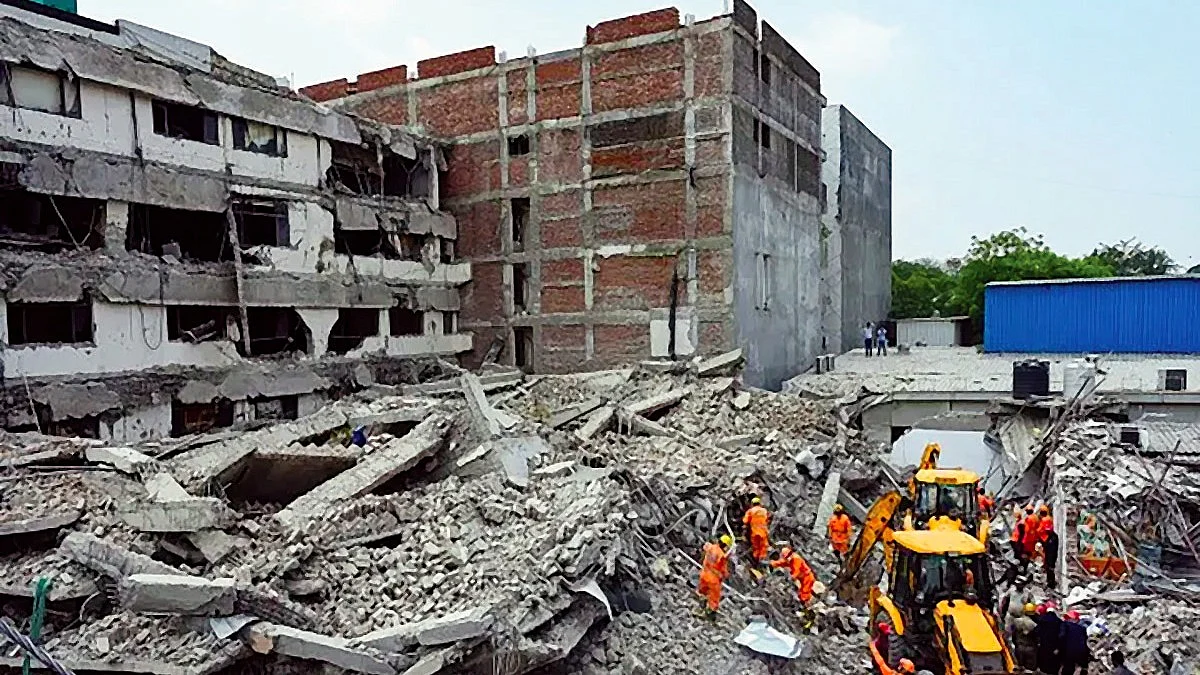


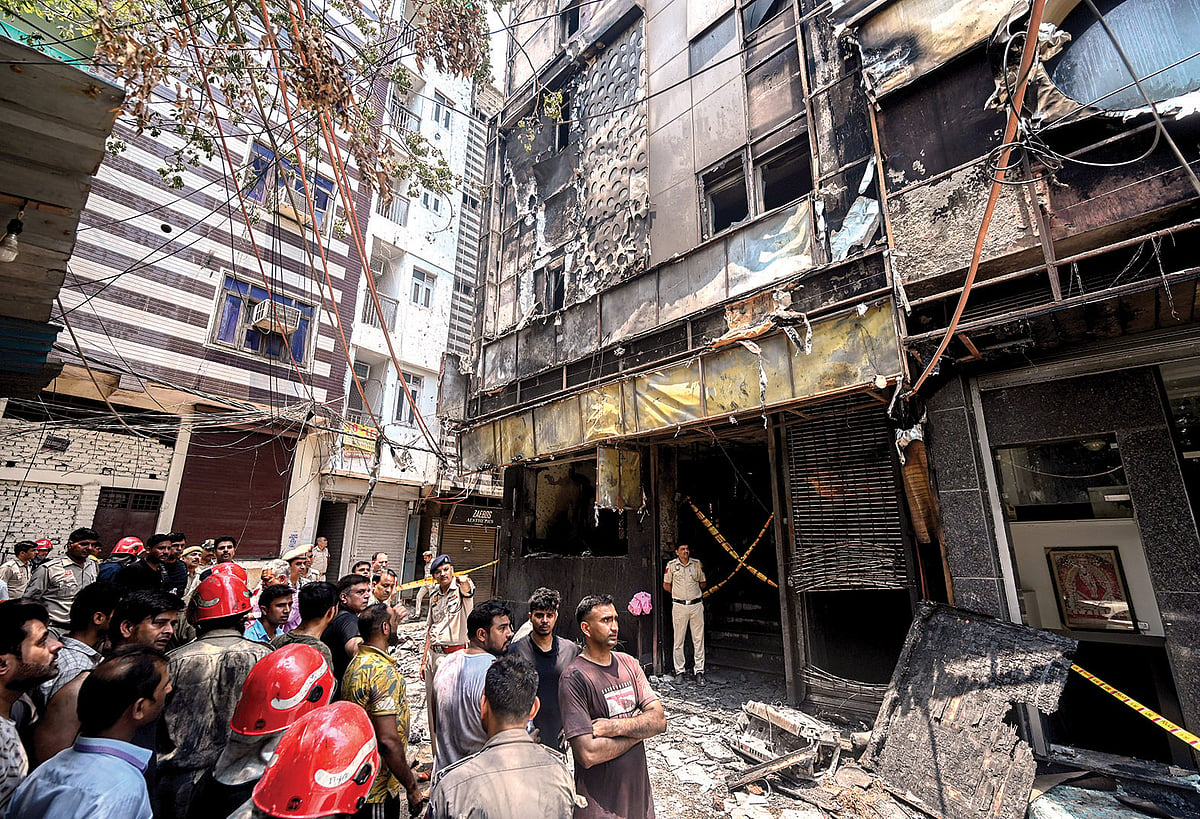
A building falls in Said-ul-Ajaib. A bed-and-breakfast catches fire in Hauz Rani. In public memory, both incidents may remain attached to larger neighbourhood names — Saket and Malviya Nagar — but the precise geography matters. These are not ordinary colonies. They are Delhi’s urban villages, where old settlement patterns now carry the weight of a city that has outgrown its planned existence.
The tragedy does not begin on the day of the collapse or the fire. It begins in the long, quiet years when extra floors become acceptable, commercial use enters residential lanes, electricity loads multiply, staircases narrow, and every civic authority chooses to look the other way.
Delhi’s urban villages sit inside a peculiar history. At first, the core of the old villages remains distinct from the agricultural land around them. As Delhi expands after Independence, farmland enters planned acquisition, while Lal Dora (‘red line’) areas — dating back to 1908 when the British demarcated village residential areas from agricultural land — remain in a different legal and administrative category.
Over the decades, a family home on a small plot becomes rental housing; by the 1990s, a guest house, a café, a clinic and/or a shop. A lane that was earlier used for residents, cattle and carts now becomes the only available access route for cars, delivery bikes, fire tenders and ambulances.
Also Read: A towering inferno of bad policies
This contradiction is visible every day in Devli, another urban village in South Delhi, where I write this from. Older residents still describe a time when homes had courtyards, spaces for cattle, open fronts and enough sky for the air to move. Now, one often hears: ‘Zameen toh wahi hai, par zaroorat badh gayi hai (the land remains the same, but the need keeps growing)'.
Each addition appears reasonable in isolation, but seen together, on the scale of the city that Delhi is, they spell danger.
This is why urban villages cannot be understood only through the lens of illegality. They provide what ‘formal Delhi’ repeatedly fails to: affordable rooms for students, migrants and workers; temporary homes near hospitals for patients and attendants; spaces for small businesses; dense food cultures; and social networks that absorb people who cannot afford planned Delhi.
A young worker chooses a room without proper ventilation because it is close to the metro and within budget. A student accepts a cramped paying guest accommodation because it’s affordable and the college is nearby. A shopkeeper runs a business from the ground floor because a mall unit is unimaginable. These choices are not always made freely. They are influenced by cost and utility, which cannot, however, become an excuse for the failure of the city that denies them.
The reported details from Hauz Rani are disturbing because they are familiar. A building that is cleared for two floors rises much higher, allegedly without plan approval or fire certification. Across the city, the same pattern repeats: more floors, more tenants, more rent, more electrical load, more risk. Under proper planning, height is linked to road width, ventilation, fire access and structural safety. In many urban villages, that relationship is broken.
The dilemma is real and tough. Sudden strict enforcement, without alternatives, can displace thousands who depend on these neighbourhoods. It can punish tenants before the systems get exposed — and fixed. It can convert ‘safety measures’ into eviction drives. The continued tolerance of unsafe construction means waiting for the next fire, collapse or death by suffocation to expose what is an ‘open secret’.
People who live in these lanes often understand the risks better than outsiders imagine. Yet, knowledge does not automatically translate into action, because responsibility is dispersed. Owners blame paperwork. Tenants blame the cost of living. Officials blame violations. Politicians blame past governments. The city blames the village.
Delhi cannot keep treating the urban villages as criminal, invisible as long as they provide services, ‘seen’ only after disasters. These neighbourhoods do not need episodic scrutiny after disaster and death. They need long-term, permanent, sustainable solutions: documented buildings, clear ownership records, practical construction rules, emergency access, fire-risk mapping, structural audits, retrofitting support and — perhaps most important — local authorities who are answerable before tragedy strikes.
The aim cannot be to flatten urban villages into gated colonies or romanticise them as old-world settlements. They are dense, changing, unequal, useful, neglected urban spaces. Any serious response must recognise both their economic role and their vulnerability.
The deaths in Said-ul-Ajaib and Hauz Rani are not accidents in the narrow sense of the word. They are the bill that Delhi keeps reneging on, postponing what it owes an economy built on exemptions, shortcuts and institutional indifference.
Puneet Singh Singhal is a disability inclusion and climate justice advocate; founder/curator of Green Disability and Dilli Dehat Project
Join our official telegram channel (@nationalherald) and stay updated with the latest headlines