


Bengal: Anti-rowdy Bill passed amid 'police state', Rowlatt Act fears
While most legislators backed tougher action against vandals, several warned that the Bill lacks safeguards against misuse
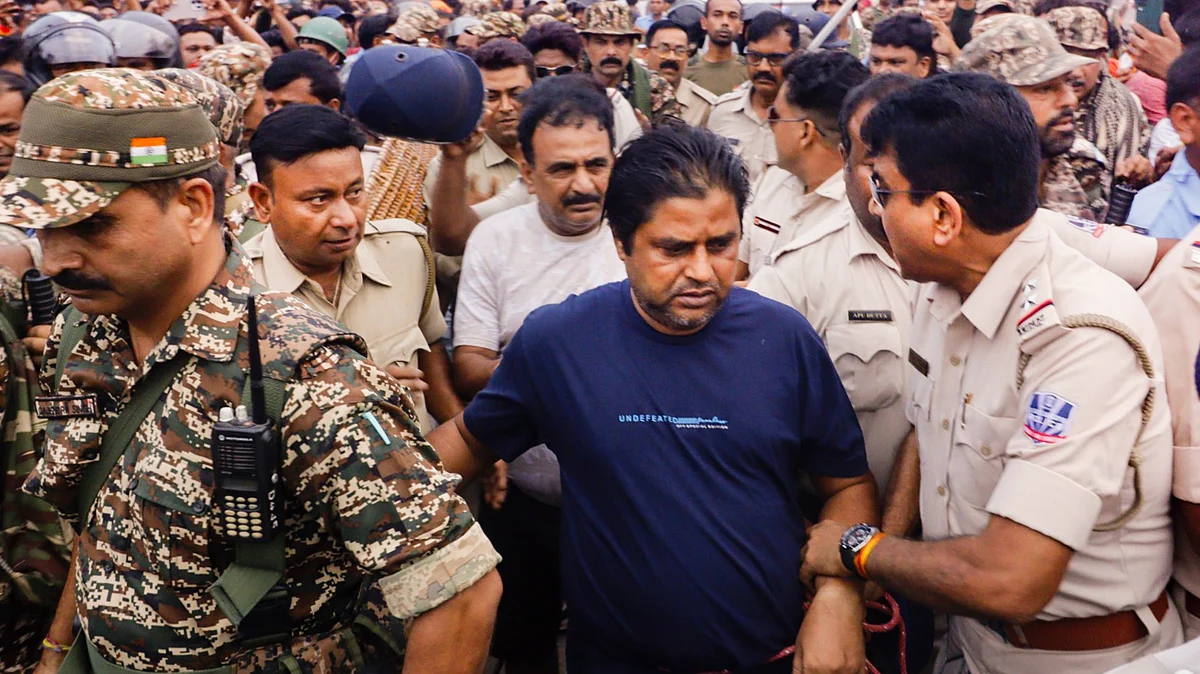


The West Bengal Public Safety and Control of Anti-Social Activities Bill, 2026, which has already become the 'anti-gunda (rowdy)' Bill in local parlance, was passed in the West Bengal Legislative Assembly on Monday, 29 June after a heated debate, with the BJP government defending it as a necessary measure to curb anti-social activities while Opposition legislators — whatever is left of them — warned that it could become a tool to suppress dissent, enable arrests based on suspicion, and grant sweeping powers to the police.
The discussion also covered the West Bengal Maintenance of Public Order (Amendment) Bill, with members from the treasury benches and Opposition presenting sharply contrasting views.
Leading the criticism was Indian Secular Front MLA Naushad Siddique, who made it clear that he supported holding those responsible for damaging public property financially accountable. "If public property — built using taxpayers' money — is destroyed in the name of protest, compensation must be paid," he said. However, he stressed that "there should be no partiality; the process must adhere to specific rules".
Siddique argued that the proposed legislation went far beyond protecting public property and instead risked undermining democratic rights. "Will this law be used as a tool for suppression? Will dissent be treated as a crime? Will the police be granted arbitrary powers?" he asked.
Questioning the provision allowing action based on suspicion, the Bhangar MLA said, "The Bill speaks of arrest and detention based merely on suspicion. Against whom will this suspicion be directed — those holding opposing views, or those genuinely engaging in hooliganism?"
Drawing comparisons with controversial laws such as POTA and MISA, he warned, "A confident government does not need measures like secret lists or detention without trial."
Naushad also referred to custodial deaths in the Baruipur police district, saying five people had died in custody within a single week two years ago, raising concerns over granting even greater powers to law enforcement.
He insisted that the legislation should undergo greater scrutiny before becoming law. "Let those who are genuinely guilty be arrested and punished; we must ensure that the innocent do not suffer in any way because of this," he said, urging that the Bill be referred to a select committee after a public hearing.
Also Read: Selective outrage in Bengal
Concerns over police powers were also raised from unexpected quarters.
Trinamool Congress (TMC) MLA Prasun Banerjee, who now belongs to the 'breakaway' — and more pro-government — Ritabrata Banerjee camp, questioned the provision allowing police to act merely on suspicion. "It is stated that the police can take action based on suspicion. If the police can act merely on suspicion regarding someone, are we creating a 'police state'?" he asked.
Beleghata MLA Kunal Ghosh — of the 'original' TMC camp — said he supported the legislation on principle but argued that significant amendments were needed. Recalling his earlier criticism of the proposal, he said some provisions resembled "a 2026 version of the British-era Rowlatt Act".
The Rowlatt Act, enacted by the British colonial government in 1919, empowered authorities to arrest and detain individuals without trial while severely curtailing civil liberties. It became a symbol of colonial repression, sparking nationwide protests that culminated in the Jallianwala Bagh massacre.
Asked by the Speaker to make his proposal, Ghosh also urged that the Bill be referred to a select committee so that contentious provisions — such as the denial of legal counsel to a suspect — could be amended.
Defending the legislation, tourism minister Shankar Ghosh argued that tougher laws were essential to curb violence and vandalism. "The time has come to disabuse those who believe that destroying government property is not a crime," he said, claiming that Bengal had witnessed "15 years of "looting, terror and banditry".
He alleged that violence had taken place during protests over the Citizenship Amendment Act and waqf issues and said, "This Bill is crucial to punish those who attempt to exploit the poor."
Shankar Ghosh also defended stronger police powers, declaring, "Through this Bill, the time has come to bring the police out from under the table (a reference to a 2014 incident in Kolkata when a policeman was photographed hiding from an armed mob under a table) and force the goons under it."
Responding directly to Siddique's concerns, he maintained that while peaceful protest remained a fundamental right, the destruction of public property would not be tolerated. He further argued that existing provisions under the Bharatiya Nyaya Sanhita were inadequate and claimed that similar legislation had already been enacted in states including Gujarat, Kerala and Rajasthan.
Municipal affairs minister Agnimitra Paul added another angle to the Bill, saying it would allow victims to seek compensation not only for damage to public property but also for losses suffered by private individuals. "If someone's shop is vandalised, their house set on fire, or their business ruined, they will be able to claim compensation," she said.
Chief minister Suvendu Adhikari, while introducing the Bill, argued that the legislation had become necessary because of incidents of violence in the state. Referring to Hargobind Das, who was killed during violence in Murshidabad in April 2025, he said, "Hargobind Das's wife is seated in the gallery; she herself is an example of why this Bill is necessary."
However, despite repeated assurances from ministers that the law would target only "criminals and vandals", much of the Assembly debate centred on fears that its broad provisions could enable preventive detention, arrests based on suspicion and expanded police discretion, becoming a powerful instrument that could be used not only against anti-social elements but also against political opponents and dissenting voices.
Join our official telegram channel (@nationalherald) and stay updated with the latest headlines