


Bengal: Why Mamata will win — and why she could lose — from Bhabanipur
West Bengal CM faces her toughest contest yet as SIR deletions, demographic shifts and polarisation reshape the battle in the VIP seat
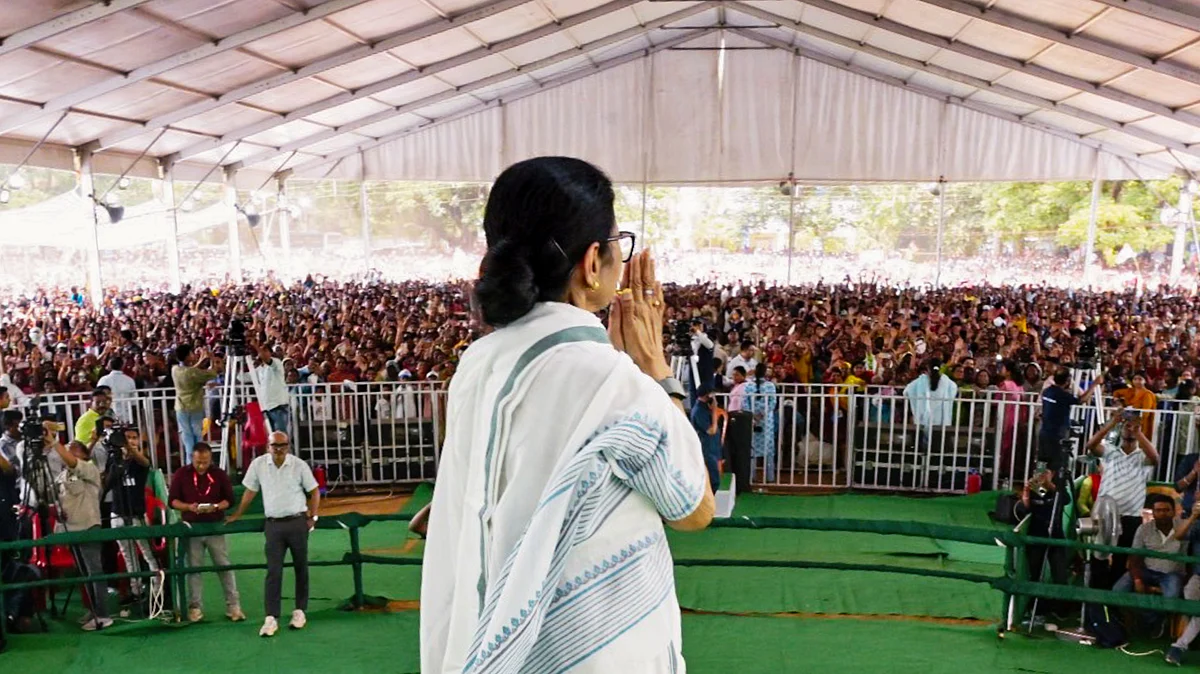


Bhabanipur is the constituency from which Mamata Banerjee has won three times in the past, each by substantial margins. In 2021, Trinamool Congress (TMC) heavyweight Sovandeb Chatterjee won the seat. After Banerjee lost in Nandigram, Chatterjee vacated the seat, and in the subsequent by-election, Banerjee returned to the Assembly with a comfortable victory.
Yet, according to a TMC strategist, she was advised this time to shift to a safer constituency in Kolkata amid concerns that the constituency’s demography had changed. The chief minister, however, refused. She is still expected to win, the strategist conceded, but the contest is likely to be tougher due to deletions under the special intensive revision (SIR) process as well as demographic shifts.
SIR has led to the deletion of nearly 50,000 voters in the constituency, largely during adjudication, the strategist claimed. Many of those removed were Muslims, along with non-Muslim poor and slum residents who have traditionally supported the party.
Despite this, Banerjee remained firm. "I will contest from Bhabanipur and Bhabanipur alone," she is quoted as having saidsaying. The strategist remains cautiously optimistic: "SIR deletions hurt, but TMC workers reached every home before rivals woke up. That door-to-door hustle will pay dividends."
Even in elections the party has won, decisive leads came from only three of the constituency’s eight wards. In the remaining five wards, the party often trailed in both Assembly and general elections. Paradoxically, in municipal elections, the TMC has won all eight wards. Local councillors are therefore seen as crucial in mobilising voters and persuading residents that retaining Bhabanipur’s status as a VIP constituency depends on supporting the chief minister.
Much will also depend on when Banerjee begins campaigning from 24 April, with polling scheduled for 29 April. The final days of campaigning are expected to be critical.
The constituency remains tense as BJP leader Suvendu Adhikari takes on Banerjee in a high-stakes contest. Workers of both parties have already clashed in parts of the constituency. Slogans of 'Jai Shri Ram' and 'Joy Bangla' frequently raise tempers when rival supporters cross paths. The two candidates have not refrained from personal barbs either: Banerjee has described the BJP candidate as an "outsider" and a "goonda", while he has referred to her as a "corrupt queen".
Ward 70 has a sizeable Gujarati population — often viewed as a BJP support base — though Bihari and Bengali slum residents could tilt the balance towards TMC. Ward 72 has a large Bengali-speaking electorate, yet TMC has lost here repeatedly, reflecting sections of the bhadralok’s scepticism towards Banerjee. The recent entry of Chandra Kumar Bose, a member of Netaji Subhas Chandra Bose’s extended family who had joined the BJP in 2014, is seen by party workers as a morale booster.
Ward 71’s sizeable Bihari population has historically leaned towards TMC, with families settled for generations often delivering narrow leads. However, many names have reportedly been removed from electoral rolls following the SIR process. Ward 73, represented by councillor Kajari Banerjee, has traditionally given the TMC a solid lead, while Ward 74 slipped away in 2024. Ward 82, associated with Kolkata mayor Firhad Hakim, remains a stronghold. Ward 77 in neighbouring Khidirpur also contributes significantly to the tally.
Residents take pride in the constituency’s association with towering figures such as Subhas Chandra Bose and other luminaries. The area enjoys relatively strong civic services and VIP status. "People might complain in five wards," one resident observed, "but they value the prestige that comes with living in such a constituency. Mamata Banerjee is local; Suvendu Adhikari is an outsider. That may influence the final choice."
The polarised nature of the contest is evident in everyday conversations. During a short auto-rickshaw ride through the narrow lanes, one passenger complained while searching for cash: "Why can’t we pay by QR code? Look at Karnataka and Delhi — it’s available everywhere." The co-passenger, who had remained silent until then, responded sharply: "Why blame Trinamool for everything? This is a shuttle service covering short distances where fixed fares apply, not longer journeys charged by meter." The driver listened with a quiet chuckle.
Later in the afternoon, this correspondent overheard two Punjabi transporters, Raghuveer Singh and Pavan Singh, discussing the lack of opportunities in the city while leaning against an idling truck. "There are no industries and our trucks are under-utilised," Raghuveer said. Pavan added that frequent traffic fines were becoming a burden. "We pay fines from our own pockets — it is becoming unbearable. We are unhappy with this state government. We want a BJP government in 2026. Enough is enough," they said.
Their scepticism extended to welfare schemes as well. "Rs 1,500 every month for youth up to the age of 40 — is a man at 40 still young?" Raghuveer asked. "And the Rs 5 rice meal? Absurd. We want better business opportunities so we can earn more and support our families without depending on handouts." When asked about the BJP’s performance at the Centre, they conceded disappointment there too. "Promises of Rs 15 lakh in our accounts were just lies," Pavan admitted with a smile. Yet their frustration with the state government remained stronger.
A third-year BCom student, Shakib Ali, who had been listening nearby, interjected: "We don’t trust Shah or Modi. How many Rohingyas were actually identified in the SIR exercise? Didi will return. Suvendu is all noise and no substance."
Across the street at the famed Srihari Sweets, opposite Bhabanipur police station, a worker reflected on Banerjee’s long political journey. "When Mamata Banerjee left Congress, we were worried about what would happen next. But Bengalis supported her strongly — she became chief minister three times. She is one of us. She will return again."
Another resident, Bapi, agreed. "People from other states are taking over everything here. Kerosene has disappeared from ration shops. Tea and roti prices have risen because of the LPG crisis. Many non-Bengalis are already saying the BJP has won. Now it is up to Bengalis to respond. She will win, though perhaps with a reduced margin. Didi fights for us — Suvendu fights only her."
Asim Pradhan, a newspaper vendor, pointed to unsold Bengali newspapers and books at his stall. He believes the demographic balance is shifting as older Bengali families sell ancestral homes and move into apartments. He pointed to a plot opposite Purna Cinema once owned by an affluent Bengali family. "Now a Jain temple is coming up there. Posters on the wall read 'One Jain, one voice'."
The paradox is striking. While many Bengalis complain about declining opportunities, Gujarati and Marwari families continue to move into the area. Older trading communities remain in Kolkata because the city is relatively affordable and socially accommodating.
"Even they worry that if the BJP comes to power, businesses may be taken over by groups closer to Modi and Shah," a young motorcyclist remarked before riding away. "Why do you think lakhs of people from Bihar, Uttar Pradesh, Odisha and Gujarat live here?" he asked.
Join our official telegram channel (@nationalherald) and stay updated with the latest headlines