


Bihar: Nitish resignation draws emotional response; RJD says 'forced to quit'
JD(U), NDA leaders praise former chief minister’s legacy; RJD alleges BJP has marginalised him
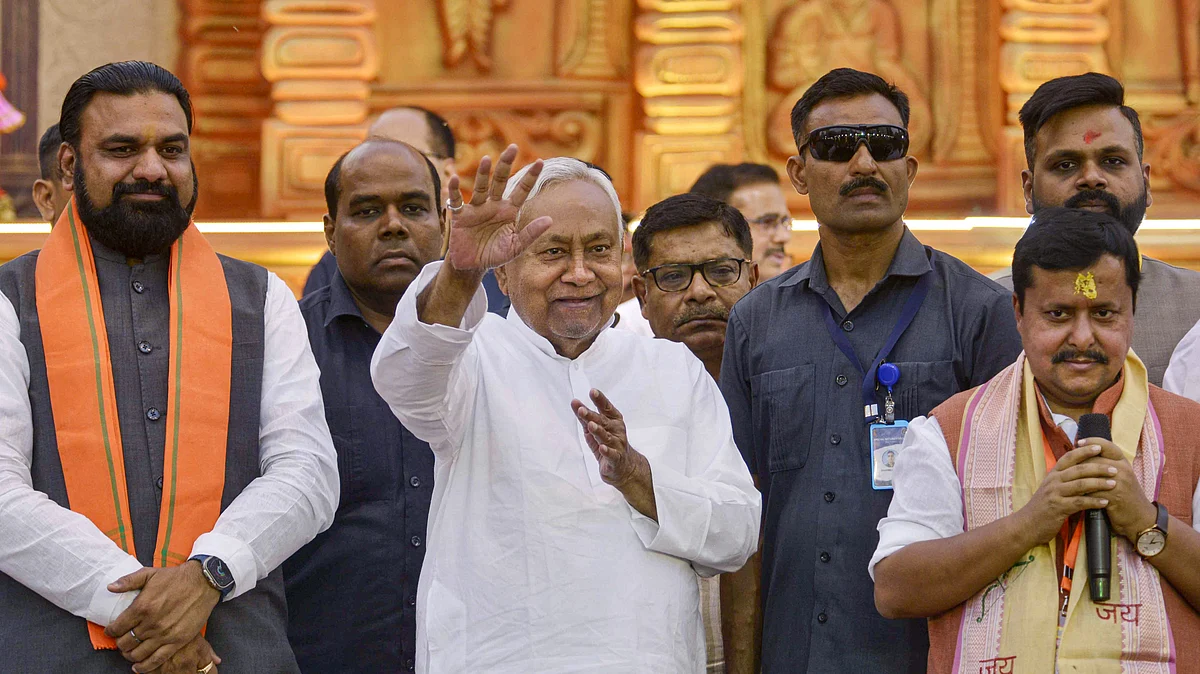


Emotions ran high within the JD(U) and the NDA on Monday after Bihar chief minister Nitish Kumar resigned from the state legislative council following his election to the Rajya Sabha earlier this month, with Opposition leaders alleging he had been “forced to quit”.
Kumar, one of Bihar’s longest-serving political figures and a key NDA ally, resigned from the legislative council after being elected to the Rajya Sabha on 16 March. BJP national president Nitin Nabin also resigned from the Bihar Assembly after being elected to the Upper House of Parliament as part of the same round of nominations.
Under constitutional provisions and the Representation of the People Act, a person cannot simultaneously hold membership of both Parliament and a state legislature, requiring Kumar and Nabin to vacate their state seats after being elected to the Rajya Sabha.
Leaders across Bihar's ruling alliance expressed regret over Kumar’s exit from the state legislature, describing his departure as the end of an era in Bihar’s legislative politics.
Legislative council chairman Awadhesh Narayan Singh said, “People in Bihar are not happy with Nitishji’s resignation. He was such a progressive chief minister who took everyone along. The pain of his resignation will always remain.”
Recalling a recent meeting with Kumar, Singh added, “Although we are visibly pained by his decision, there were no signs of worry on his face. It is difficult to fathom what is going on inside his mind.”
Assembly speaker Prem Kumar said Kumar’s role in governance and legislative functioning had been significant over several decades. “I have been associated with Nitishji since the JP Movement in the 1970s. His role in governance and legislative work has been exemplary. His presence will be missed,” he said.
BJP state president Sanjay Saraogi credited Kumar with improving governance standards in Bihar after the 1990s. “Nitishji has pulled Bihar out of ‘Jungle Raj’ and put it on the path of development,” he said, using a phrase often deployed by the BJP and JD(U) to criticise the previous RJD-led period.
Saraogi also congratulated Nabin on his election to the Rajya Sabha, saying the party leadership had entrusted him with a larger national responsibility.
JD(U) leader Vijay Kumar Choudhary said Kumar’s resignation was a procedural step following his election to Parliament. “After becoming a Rajya Sabha member, resignation from the state legislature is required under constitutional provisions,” he said.
Another JD(U) leader, Ashok Choudhary, expressed an emotional response to Kumar’s exit from the House. “He will remain our leader, but the way he guided us in the House will be deeply missed. It is a tough day for Bihar,” he said.
However, Opposition parties questioned the political context of Kumar’s move, suggesting it reflected a shift in power dynamics within the NDA.
Leader of Opposition Tejashwi Yadav alleged Kumar had been compelled to step down. “The BJP has not just swindled him but the entire electorate of Bihar,” Yadav said, arguing that the development indicated the BJP’s growing dominance within the alliance.
RJD spokesperson Shakti Yadav made similar allegations, claiming Kumar had been “trapped” politically and that the JD(U) was losing its independent influence.
Kumar, who has served multiple terms as Bihar chief minister since 2005 and has switched alliances several times between the NDA and Opposition blocs, remains a pivotal figure in state politics. His move to the Rajya Sabha is being viewed by observers as part of a broader recalibration within the NDA ahead of future electoral contests, even as both allies publicly emphasise continuity in governance.
With PTI inputs
Join our official telegram channel (@nationalherald) and stay updated with the latest headlines