


Bulldozers on the banks: Manikarnika Ghat and the march of ‘progress’
Opposition says BJP govt erasing historical heritage to put up a symbolic nameplate over Varanasi's sacred identity
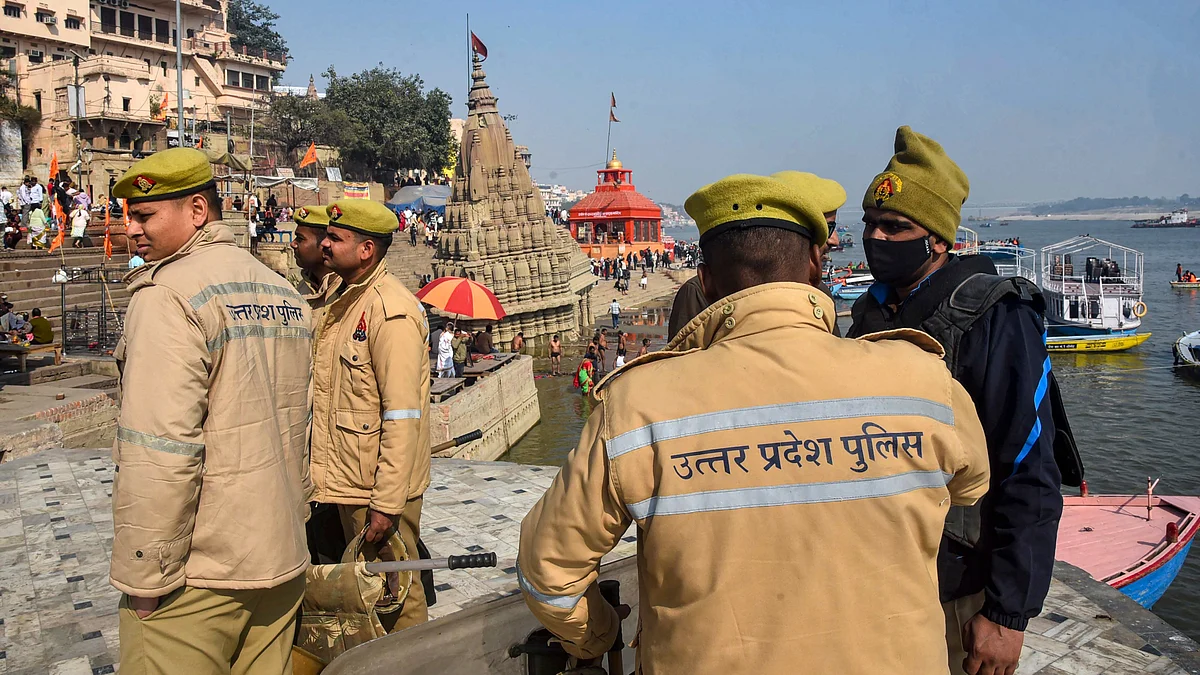


In the ancient city of Varanasi, where the sacred Ganga flows in eternal rhythm and chants of 'Ram naam satya hai' rise like incense smoke toward the heavens, a storm has erupted over the restoration of one of Hinduism’s most hallowed sites — the Manikarnika Ghat.
A quiet witness to centuries of rites of passage, the riverbank has now become the epicentre of a bitter cultural and political clash that touches the very soul of India’s living heritage.
The historic ghat, revered as one of Hinduism's holiest cremation grounds — where the faithful believe the cycle of life and death may be transcended — is undergoing ambitious 'redevelopment'.
Initiated under the banner of beautification and sanitation — and symbolically anchored to the grand vision of the Shri Kashi Vishwanath Corridor project — bulldozers have torn into narrow lanes and old structures to create wider platforms, cleaner spaces, and supposedly improved facilities for devotees and visitors alike. Officials insist the revamp will ease congestion, improve hygiene and organise storage of firewood and ritual paraphernalia along the ghats’ hallowed steps.
Yet, beneath the promise of modernity lies a palpable sense of loss and anguish. Videos circulating on social media of earthmovers reducing stone structures to rubble have ignited a firestorm of criticism across the political spectrum, with Opposition parties decrying the work as nothing less than the destruction of Hindu heritage in the name of so-called development, as reported in the media.
Critics question the party’s stance, asking what the BJP’s reaction would have been had a rival political party carried out similar demolitions. Many see the move as insensitive to Hindu sentiments, given the ghat’s status as one of Hinduism’s holiest sites. Opposition leaders have accused the government of prioritising so-called development over the preservation of cultural and religious heritage.
Congress president Mallikarjun Kharge has taken aim at Prime Minister Narendra Modi, accusing the Centre and the state government of seeking to “erase every historical heritage” only to affix a symbolic nameplate over the city’s sacred identity. “In the name of beautification and commercialisation,” he wrote on social media, “bulldozers are demolishing centuries-old spiritual and cultural heritage at Manikarnika Ghat, a place described in ancient texts and lovingly restored by Lokmata Ahilyabai Holkar”.
The uproar has been amplified by members of the Holkar royal lineage themselves: Yeshwantrao Holkar, president of the Khasgi Devi Ahilyabai Holkar Charities Trust and a direct descendant of the revered Maratha queen, lamented that effigies she once installed in devotion to the Ganga now lie abandoned amid debris. Many local custodians of culture see the demolition — carried out without advance public notice, they say — as an affront to history, faith and legacy.
Uttar Pradesh Congress president Ajay Rai echoed this sentiment, warning that the “Yogi-Modi government” was razing Kashi’s soul in its march toward a polished new riverfront. He labelled the project an “attack on the city’s identity and Sanatan culture”, insisting that ancient temples, sacred trees and iconic landmarks were being swept away.
Several protest groups and cultural organisations have vowed legal challenges and street demonstrations, arguing that relocation and preservation of artefacts — such as centuries-old statues — should have preceded any demolition at all. Some claimed that the idol of Ahilyabai Holkar was destroyed in the process, a charge vehemently denied by authorities.
In response, the Varanasi district administration has sought to stem the tide of controversy by assuring devotees that every artwork and idol has been carefully preserved by the Uttar Pradesh culture department. These sacred pieces, officials say, will be reinstated in their original form once the reconstruction is complete.
“No actual deities or Shivlings have been damaged,” the district magistrate stated, urging the public not to be swayed by misinformation, and indeed threatening action against those spreading the supposed 'misinformation'.
But for many residents and pilgrims — their hearts attuned to the ancient hymns and the weight of history that lingers in every grain of the ghat’s stone — such assurances ring hollow.
As the debate unfolds, questions hang in the air like evening mist over the Ganga: should development march onward at the expense of memory? Can heritage coexist with modern infrastructure? And in the pursuit of renewal, are we in danger of losing the very essence of what makes Kashi eternal? Only time will tell whether this iconic ghat emerges from its transformation radiant once more — or diminished, its soul forever altered by the brush of contemporary ambition.
Join our official telegram channel (@nationalherald) and stay updated with the latest headlines