


Women’s reservation push meets ground reality of missing women voters
Beyond parliamentary representation, the more fundamental issue of ensuring women’s inclusion in voter lists remains inadequately addressed
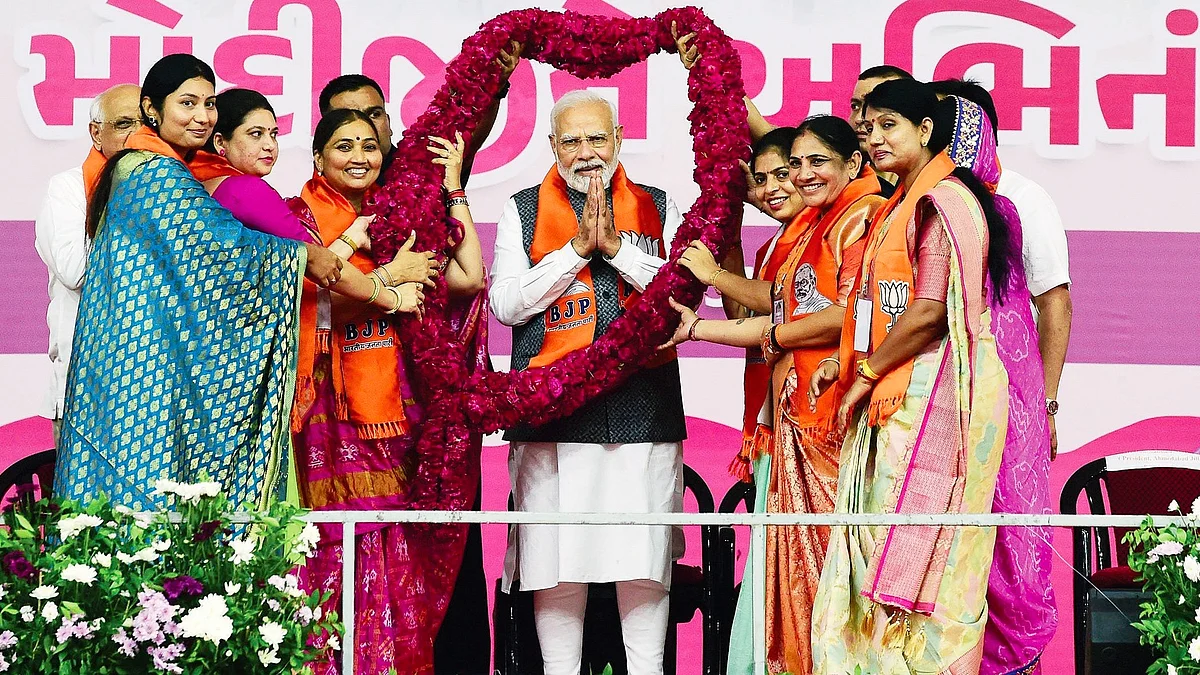


As the Union government prepares for a special session of Parliament from 16–18 April during ongoing Assembly elections, it has foregrounded the Women’s Reservation Bill — Nari Shakti Vandan Adhiniyam — as a major political reform aimed at expanding women’s representation.
The law provides for 33 per cent reservation for women in the Lok Sabha and state Assemblies for 15 years, with seats to rotate after each delimitation exercise. The rollout is currently projected for 2029.
However, emerging data from the Special Intensive Revision (SIR) of electoral rolls across several states raises questions about the social base on which such representation will rest.
Draft electoral rolls from states including West Bengal, Uttar Pradesh, Bihar and Madhya Pradesh show a disproportionate decline in the number of women voters, pointing to structural weaknesses in enumeration processes that continue to exclude women at the entry point of democratic participation.
In Uttar Pradesh, the draft roll published on 6 January recorded a 21.4 per cent drop in women voters — from 7.22 crore to 5.67 crore — compared to a 16.3 per cent decline among men. The deletions highlighted persistent verification challenges affecting women, particularly those facing name mismatches after marriage, migration-related documentation gaps and procedural hurdles.
Urban centres illustrated the scale of the problem. In Sahibabad, the gender ratio declined from 779 women per 1,000 men before the SIR in October 2025 to 646 in the draft rolls, reflecting how mobility and documentation requirements combine to disproportionately exclude women.
Although final rolls released on 10 April showed a partial recovery, with a net addition of more than 84 lakh voters including 42 lakh women, the draft phase exposed systemic vulnerabilities in voter verification frameworks.
Also Read: It’s not really about reservation for women…
A similar pattern was visible elsewhere. In Bihar, where the NDA returned to power in October 2025, women voters declined by 6.1 per cent compared to 3.8 per cent among men, resulting in nearly 7 lakh additional deletions of women. Madhya Pradesh reported a higher proportion of female deletions, while West Bengal saw 90.66 lakh total deletions, with indications of a gendered skew.
The data highlights a contradiction in the current political moment: while legislative reservation promises enhanced representation in Parliament and Assemblies, the underlying voter base continues to reflect uneven participation.
Congress president Mallikarjun Kharge on Monday said the party would convene an all-party meeting on 15 April to discuss the implementation framework of the women’s reservation law, alleging that the Centre has not undertaken adequate consultation on a reform with long-term institutional implications.
“If they call all parties and allow discussions, we can participate and offer our suggestions. But they are not prepared to call an all-party meeting. That is why we are convening one on April 15,” Kharge said.
Kharge, who is also Leader of the Opposition in the Rajya Sabha, reiterated that the Congress supports the legislation but argued that broad-based consultation is necessary to ensure effective implementation.
“None of us are opposed to the Nari Shakti Vandan Adhiniyam. We have already supported it. It was passed unanimously,” he said, adding that reforms of this scale require political consensus beyond formal passage of the law.
He pointed to the party’s earlier support for one-third reservation for women in local bodies including panchayats, zila panchayats and municipal corporations, and referred to former Congress president Sonia Gandhi’s advocacy of the measure.
The outcome of the 15 April meeting, Kharge said, would be communicated after consultations among participating parties.
The government’s emphasis on women’s reservation as a transformative political step comes at a time when electoral data indicates continuing barriers to women’s participation at the registration stage itself.
Without addressing gaps in voter inclusion, verification processes and documentation barriers, analysts say the expansion of legislative quotas risks operating as a top-down reform that enhances descriptive representation while leaving underlying patterns of exclusion largely intact.
The current debate therefore extends beyond the allocation of seats to the question of whether women are being consistently counted within the electoral system that forms the foundation of representative democracy.
With PTI inputs
Join our official telegram channel (@nationalherald) and stay updated with the latest headlines