


Congress calls Modi’s Israel speech ‘unabashed defence’ of Netanyahu
Jairam Ramesh says Narendra Modi’s remarks amount to a one-sided endorsement of Netanyahu’s position
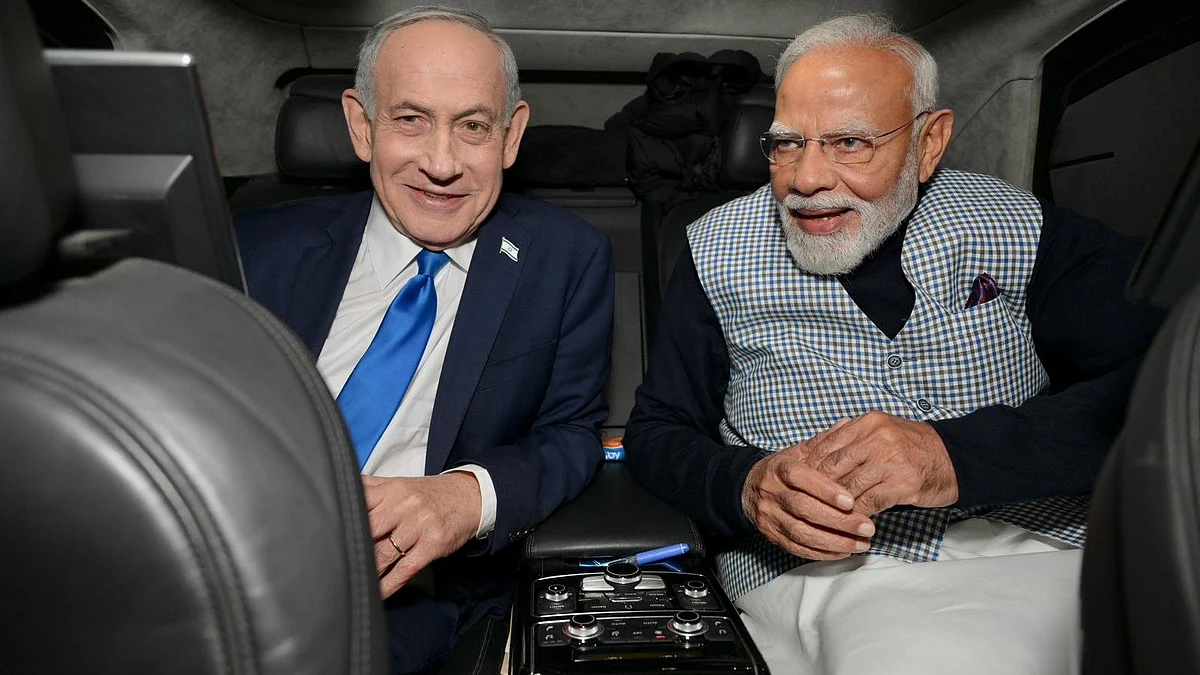


The Congress on Thursday sharply criticised Prime Minister Narendra Modi for his address to Israel’s Parliament, describing it as an “unabashed defence of his host,” Prime Minister Benjamin Netanyahu.
Speaking at the Knesset on Wednesday, Modi reiterated India’s solidarity with Israel and strongly condemned terrorism. Referring to the 7 October, 2023 attack by Hamas, he conveyed condolences on behalf of the Indian people.
“I carry with me the deepest condolences of the people of India for every life lost and for every family whose world was shattered,” Modi said. “We feel your pain. We share your grief. India stands with Israel, firmly, with full conviction, in this moment and beyond. No cause can justify the murder of civilians. Nothing can justify terrorism.”
He also described the Gaza Peace Initiative as a path toward a “just and durable peace” in the region and emphasised that “terrorism anywhere threatens peace everywhere.”
However, the Congress took exception to the tone and content of the speech. Party general secretary (communications) Jairam Ramesh said Modi’s remarks amounted to a one-sided endorsement of Netanyahu’s position.
“In his address to the Knesset — which was an unabashed defence of his host — the Prime Minister drew attention to the fact that India recognised the new state of Israel on the day he was born,” Ramesh said.
The Congress leader invoked India’s first Prime Minister Jawaharlal Nehru and cited his 11 July 1947 letter to physicist Albert Einstein regarding the creation of Israel.
Ramesh noted that Nehru had expressed sympathy for both Jews and Arabs and cautioned against solutions imposed against the will of either side. In his reply to Einstein, Nehru had written that while he had “a very great deal of sympathy for the Jews,” he also felt for the Arabs “in their predicament,” observing that the issue had become one of “high emotion and deep passion on both sides.”
Nehru questioned why, despite their achievements in Palestine, Jewish leaders had failed to gain the goodwill of Arabs and warned that approaches compelling submission would prolong conflict rather than resolve it. He also suggested that the continuation of British rule in Palestine had complicated the situation.
Ramesh further recalled that Nehru and Einstein met in Princeton in November 1949, that Einstein declined an offer to become Israel’s President in 1952, and that the two later exchanged letters on nuclear weapons before Einstein’s death in 1955.
The Congress’s remarks signal a renewed political debate over India’s West Asia policy, with the opposition highlighting Nehru’s balanced approach to the Israel-Palestine question while accusing the current government of tilting decisively toward Israel.
With PTI inputs
Join our official telegram channel (@nationalherald) and stay updated with the latest headlines