


Congress flags ‘dubious’ environmental assessment of Great Nicobar project
Ramesh says compliance reports mandated under project's environmental clearance have not been made public since March 2024
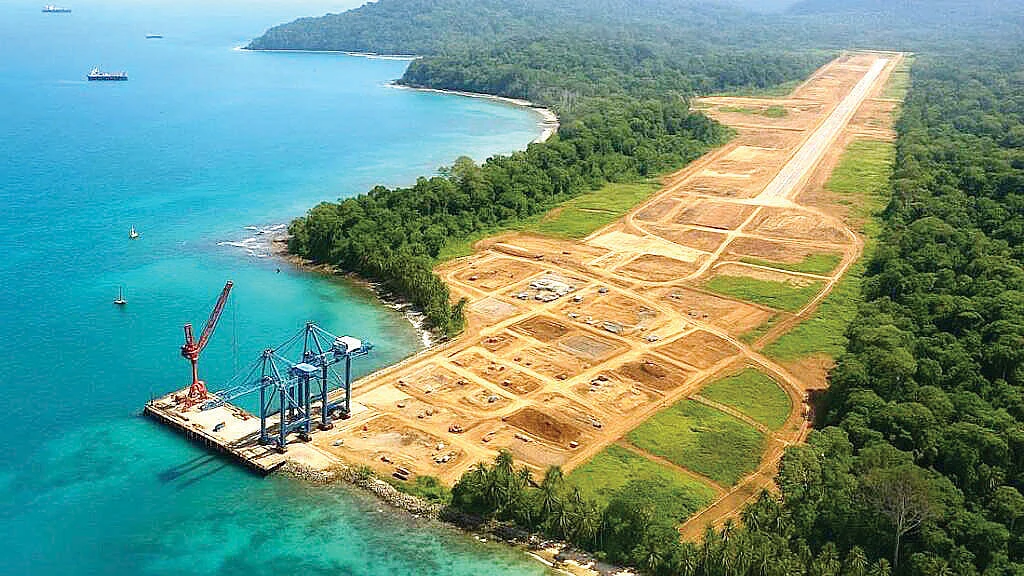


The political and environmental battle over the ambitious Great Nicobar Island Project intensified on Friday, with Congress leader and former Union environment minister Jairam Ramesh launching a fresh broadside against the Centre, accusing it of shielding crucial environmental studies from public scrutiny and pushing ahead with a project whose ecological consequences remain deeply contested.
In a strongly worded letter to Union environment minister Bhupender Yadav, Ramesh alleged that the environmental impact assessments underpinning the multi-billion-rupee project were "demonstrably inadequate" and failed to meet even the standards prescribed by the Ministry of Environment, Forest and Climate Change itself.
The latest correspondence marks another chapter in a prolonged exchange between the two leaders over a project that has emerged as one of India's most contentious development initiatives.
"Many thanks for your response, howsoever disappointing and unsatisfactory, of 13 June 2026, to my letter of 3 June 2026," Ramesh wrote.
"I am sorry to say yet again that the environmental impact assessments of different aspects of the Great Nicobar Island Project are demonstrably inadequate and fall woefully short of guidelines set by the Ministry of Environment, Forests & Climate Change itself."
At the heart of Ramesh's criticism is what he describes as a troubling lack of transparency surrounding environmental monitoring, compliance reports and mitigation plans linked to the project.
He pointed out that six-monthly compliance reports mandated under the environmental clearance conditions have not been made public since March 2024.
"Minutes of the project monitoring committee meetings are being uploaded several months after they have been held," he said, arguing that delays in disclosure undermine meaningful public oversight.
The Congress leader further questioned why a series of conservation and mitigation plans, required under the environmental clearance granted on 11 November 2022, remain unavailable in the public domain.
These plans involve some of India's leading scientific institutions, including the Wildlife Institute of India (WII), the Salim Ali Centre for Ornithology and Natural History (SACON), the Zoological Survey of India (ZSI), the Botanical Survey of India (BSI), the National Institute of Oceanography (NIO), the Indian Institute of Forest Management (IIFM) and the Andaman and Nicobar Forest Department.
"Some of these institutions had been asked to submit revised proposals after incorporating suggestions made by the Environmental Appraisal Committee. These plans too are not publicly available," Ramesh said.
He argued that the absence of these documents raises serious questions about the adequacy of the environmental safeguards being proposed for a project located in one of India's most ecologically sensitive regions.
Ramesh also claimed that several key studies remain incomplete even as construction plans move forward.
"There are at least twelve such studies by different institutions. A number of studies are still pending, proving that the environmental clearance was granted prematurely and hastily," he said.
He specifically questioned proposals involving the large-scale relocation of coral colonies, describing them as "clearly unrealistic and almost impossible".
The Great Nicobar Island Project envisages the creation of an international container transshipment port at Galathea Bay, a civilian-cum-naval airport, a greenfield township and a power plant. The Centre has projected the development as a strategically significant initiative capable of strengthening India's maritime presence in the Indo-Pacific and boosting economic activity in the region.
However, environmentalists and opposition leaders have repeatedly warned that the project could irreversibly damage one of the country's richest biodiversity hotspots, home to pristine rainforests, endangered wildlife and fragile marine ecosystems.
Ramesh also renewed his demand that the report of the High-Powered Committee appointed by the National Green Tribunal, along with the field survey conducted by the National Centre for Sustainable Coastal Management, be placed in the public domain.
According to him, these documents form the basis of decisions relating to the Coastal Regulation Zone classification of the proposed transshipment port but remain inaccessible to the public.
"Serious questions on its environmental impact assessment and legitimate concerns on its grave ecological consequences remain unanswered and unaddressed by your sadly evasive replies," he told the minister.
"I am simply unable to understand the extraordinary level of non-transparency that is being adopted to hide reports, studies and plans."
The Congress has stepped up its campaign against the project in recent weeks. On Wednesday, the party alleged that the proposed transshipment port at Galathea Bay would trigger large-scale destruction of coral colonies and wreak ecological havoc in the island chain.
The debate has also drawn in senior Congress leader Rahul Gandhi, who has accused the government of masking commercial interests behind claims of strategic necessity.
"The argument that this project is about defence and a transshipment port is a lie," Rahul Gandhi said recently, alleging that the real objective was to facilitate large-scale commercial development, including hotels and casinos, in an ecologically fragile region.
Earlier this month, Rahul Gandhi released a documentary-style video based on his visit to the Andaman and Nicobar Islands and urged citizens to support a petition calling on the government to prioritise environmental conservation.
As the Centre continues to defend the Great Nicobar Project as a cornerstone of India's strategic and economic ambitions, the growing chorus of environmental concerns and demands for greater transparency ensures that the controversy surrounding the island's future is far from over.
With PTI inputs
Join our official telegram channel (@nationalherald) and stay updated with the latest headlines