


Delimitation Bill: Why the hurry and how the numbers are stacked
In Rajya Sabha, which reconvenes on 2 December, the Bill needs 161 votes to pass, while NDA currently has 142 MPs in the House
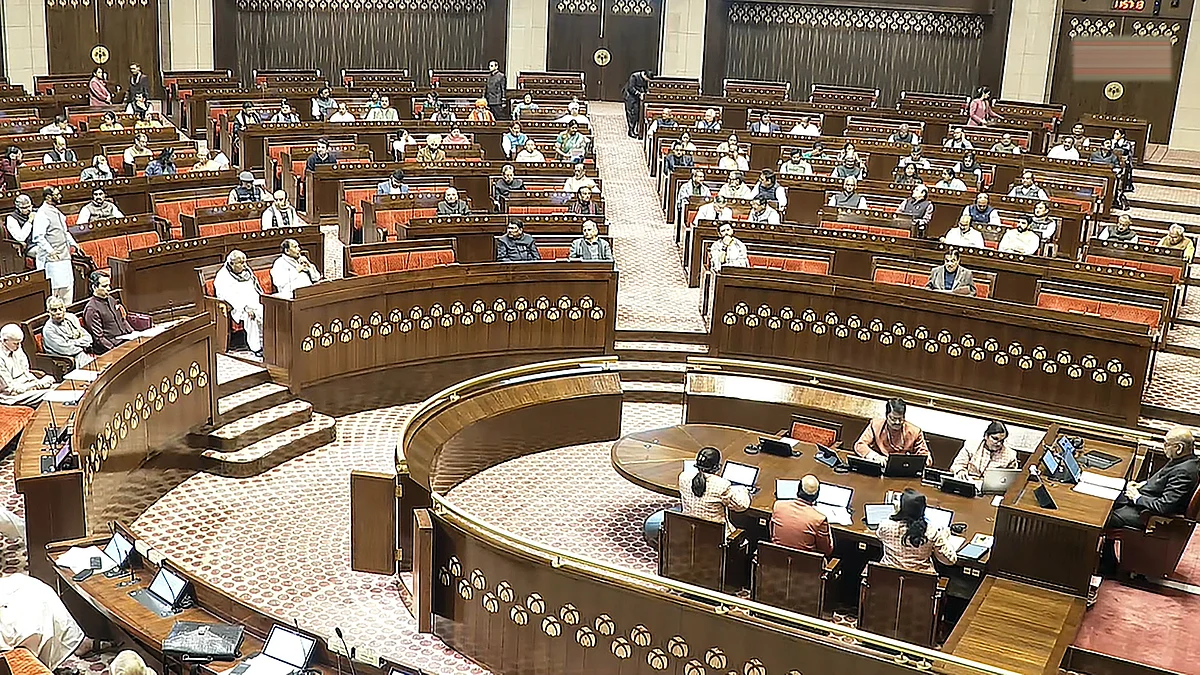


A constitutional amendment bill that changes the existing framework governing seat allocation requires under Article 368 a majority of the Members voting for the Bill (272 in the Lok Sabha) and not less than two-thirds of the members present and voting
If 60 MPs abstain, the threshold to pass the Bill in the Lok Sabha will be 320 if all the remaining members ( Lok Sabha has a membership of 540 following three vacancies) attend and vote
In the Rajya Sabha, which meets on 2 December, the Bill will require the support of 161 MPs while NDA currently has 142 MPs in the House
The Union cabinet is expected to clear the draft of the amended Delimitation Bill on Friday, 27 November. It is not clear when the draft will be circulated to Members of Parliament though. Media reports have speculated that the amended Bill, which had failed to pass in the Lok Sabha in April, provides for a uniform 50 per cent increase in seats from each state in the Lok Sabha. The Bill is also likely to freeze delimitation based on the 2011 Census for 25 years.
The decision to convene a brief special session of Parliament, with the Lok Sabha meeting on Monday, 30 November, and the Rajya Sabha on Wednesday, 2 December, is being interpreted as a sign that the government believes it has secured the numbers required in both Houses. It is reportedly counting on defectors from the Trinamool Congress, along with support or abstentions from the DMK and the NCP (Sharad Pawar faction), to get the controversial Bill passed.
Both Supriya Sule and DMK leaders have been quoted as saying that they need not oppose the BJP on everything; that they would support the Bill if it ensures a uniform increase (which may mean that the government is ready to junk the population criteria even as the draft of the Bill is awaited) in seats from states and the percentage of the states’ share of seats remains unchanged.
The government could have introduced the Bill in the winter session of Parliament too, if it has the numbers. The reason why it has opted for a special session is almost certainly because it does not want Parliament to discuss any other issue. There will be no Question Hour or Zero Hour during the special session and only ‘Government Business’ will be taken up for discussion.
What will also be watched closely is the fine print of the Bill which may explain the government’s haste and desperation to pass the Bill even as Census 2027 is still on. Why the government is not willing to wait for the Census exercise underway to complete before re-introducing the Bill is yet to be explained. The government wants to strictly control the Delimitation exercise, which would in any case be required after the Census as per the Constitution, and the Delimitation Commission is cited as a possible reason.
In the 540-member Lok Sabha – three seats are vacant – the DMK has 22 MPs and NCP (SP) eight. If cleared by Lok Sabha, the Bill is expected to go to Rajya Sabha when it meets on 2 December. In the 245-member Upper House, the NDA has 142 MPs. Support of 161 members will be required for the constitutional amendment, so the ruling alliance needs support of 19 additional members. The DMK has eight Rajya Sabha MPs, NCP (SP) one. Non-NDA parties, including regional parties, account for around 100 members and the BJP is said to be confident of securing adequate support in the Upper House too.
Since April, when the legislative package, including the Delimitation Bill, was defeated by a united Opposition in the Lok Sabha, the seat arithmetic in the House has changed. Twenty TMC MPs broke away and merged with the Nationalist Citizens Party of India (NCPI), pledging support to the NDA. TMC challenged the split, which is currently under Lok Sabha Speaker Om Birla’s review. The NCPI faction, on Tuesday (24 November 2026), 84 days after TMC’s challenge, submitted replies to Mr. Birla, defending its decision and asserting that the move did not violate any parliamentary or constitutional provisions.
Six Shiv Sena (UBT) MPs joined the Eknath Shinde-led Shiv Sena. Following the recent alliance between the BJP and the Shiromani Akali Dal (SAD), the lone SAD MP is also expected to vote with the government. It is also learnt that the YSR Congress, which has four MPs in the Lok Sabha, will extend support to the government on the Bill.
The DMK, meanwhile, has not made any public remarks on the issue. Though, as per sources, the government has reached out to the party informally. A dominant section of the DMK is leaning towards the argument that not supporting the present constitutional amendment could mean further reduced representation for Tamil Nadu.
“The freeze under Articles 81 and 82, which prevents the readjustment of seats allotted to each State in the Lok Sabha, has an inbuilt sunset clause. It provides that the freeze shall cease to operate once the relevant figures of the first Census undertaken after 2026 are published. If a constitutional amendment is not brought, the freeze will automatically lapse,” they have argued. If the post-2026 Census figures are taken into consideration, a top DMK leader argued, the State could end up losing as many as 12 seats in the Lok Sabha.
A senior NDA leader has been quoted as saying that the government is confident of the support of at least 358 MPs, just two short of the required strength if all 540 MPs are present and voting.
Join our official telegram channel (@nationalherald) and stay updated with the latest headlines