


Delimitation turns decisive as TN campaign closes with anti-Centre undercurrent
Delimitation shifts from legal issue to mass movement, giving DMK-Congress a late edge
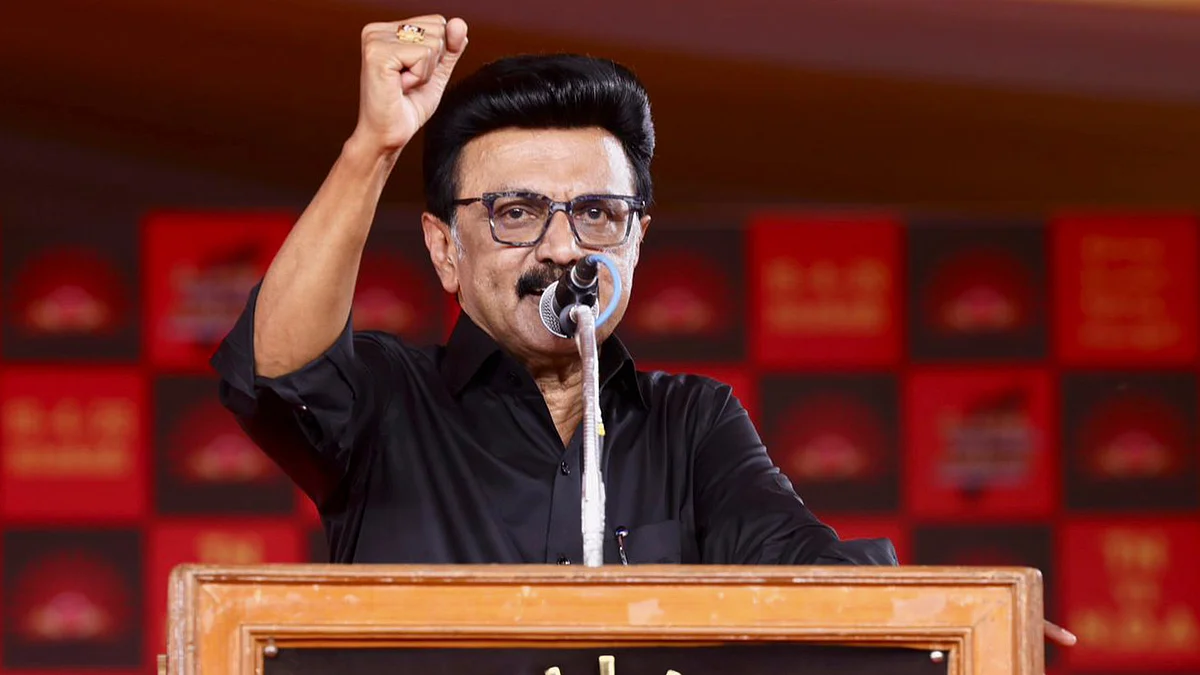


As public campaigning for the Tamil Nadu assembly election drew to a close on the evening of 21 April, what began as a relatively confined constitutional debate within Parliament transformed into the single most defining political issue on the ground, reshaping the contours of the contest in its final phase and handing a clear narrative advantage to the DMK-Congress alliance.
Delimitation, which until recently remained a subject of technical discussion and legislative contention, especially after it was voted down by a combined opposition in Parliament, acquired an emotional and political charge in Tamil Nadu that few other issues managed to generate during this election cycle. The DMK successfully framed it as an existential question of representation and identity, arguing that the state stood to lose disproportionately if the exercise were carried out in the manner proposed by the Narendra Modi and Amit Shah leadership at the Centre.
This framing did more than merely sharpen campaign rhetoric. It altered the balance of the contest by pushing the already fragmented Opposition, led by the AIADMK and including the BJP, into a defensive position from which it struggled to recover. The final days of campaigning, marked by intense mobilisation, roadshows, and sharp exchanges, increasingly resembled a collective assertion of Tamil Nadu’s political anxieties over the delimitation proposal. The issue cut across party lines among voters, creating a wider sense of unease that the opposition found difficult to counter convincingly. AIADMK leaders and their allies were repeatedly forced to clarify that they were not acting against Tamil interests, a position that appeared reactive rather than assertive in the face of a rapidly consolidating narrative.
Tamil Nadu’s electoral landscape is vast, layered, and historically complex, with 234 Assembly constituencies that reflect varied social coalitions, regional identities, and political traditions. Yet, in this election, the projection of delimitation as the central campaign issue by chief minister M.K. Stalin cut across these diversities and resonated widely. The symbolism was unmistakable. Large numbers of people turned up wearing black attire, even in the sweltering heat, as Parliament debated the bill, signalling not just political alignment but a shared sense of grievance.
Within the alliance, seat-sharing arrangements reflected both political pragmatism and underlying tensions. The DMK contested the lion’s share of 164 constituencies, while the Congress fielded candidates in 28 seats. The remaining constituencies were distributed among smaller allies, including the VCK, CPI, CPI(M), DMDK, MDMK, IUML, MMK, SDPI, and MJK, each of which holds influence in specific pockets. While murmurs of dissatisfaction emerged within Congress ranks over the allocation of winnable seats, and parties such as the CPI(M) expressed concerns about shrinking political space, these frictions were contained effectively. In districts like Sivaganga and Kanyakumari, local disagreements over candidate selection did surface, but they did not escalate into larger disruptions. The leadership ensured that the broader political message remained intact, with Stalin publicly acknowledging the role of Rahul Gandhi and Mallikarjun Kharge in opposing delimitation and reinforcing a sense of shared purpose.
In contrast, the opposition presented a far more disjointed picture. The AIADMK, still attempting to regain coherence after the demise of J. Jayalalithaa, continued to grapple with leadership ambiguity and internal factionalism. Its alliance structure appeared fluid, shaped more by local calculations than by a cohesive state-wide strategy. The BJP, which contested a significant number of seats either directly or through allies, invested heavily in campaign visibility, deploying central leaders and pushing a mix of national and cultural narratives. However, its long-standing structural limitations in Tamil Nadu remained evident, particularly when confronted with the delimitation issue. Party leaders struggled to reassure voters that the proposed changes would not harm Tamil Nadu, and even within the party there was a quiet acknowledgement of the difficulty in overcoming the prevailing perception.
This is not the first time the BJP has attempted to expand its footprint in the state. Over the years, it has experimented with multiple strategies, including alliances with both the DMK and AIADMK, emphasis on national security and welfare schemes, and efforts to build a local leadership base. Yet, these efforts have yielded only limited success. As C. Lakshmanan, a former faculty member at the Madras Institute of Development Studies, observes, “The reasons lie deep in Tamil Nadu’s political culture. The state’s electorate has consistently prioritised regional identity, linguistic pride, and social justice narratives shaped by the Dravidian movement. Attempts to impose a homogenised national political framework have often met with resistance. Policies perceived as central overreach, whether related to language, education, or resource allocation, have triggered strong reactions.” The delimitation debate fits squarely within this pattern of resistance.
At its core, the issue raises a fundamental question about representation and fairness. Tamil Nadu, which has successfully controlled population growth and achieved significant human development outcomes, fears that it could lose parliamentary representation precisely because of these achievements. The state’s fertility rate is among the lowest in India, while several northern states continue to record higher population growth. A redistribution of seats based purely on population would therefore shift political power away from states like Tamil Nadu, altering the federal balance in ways that many here view as unjust.
For voters, this concern is neither abstract nor distant. It has been framed as a direct and tangible loss, one that could reduce the state’s influence over national policy, weaken its bargaining power in fiscal matters, and diminish its voice within the Union. In a political culture that has historically asserted federal rights with clarity and conviction, this prospect has struck a deep chord. As political observer S Satheesh Kumar notes, “The DMK recognised the political potential of this issue early in the final phase. Chief minister M.K. Stalin’s campaign took on a sharper tone, positioning delimitation as a direct threat to Tamil Nadu’s interests. His speeches repeatedly emphasised that the state was being penalised for its achievements. The argument was simple, but it resonated widely.”
The Congress amplified this message at the national level, with Rahul Gandhi and Mallikarjun Kharge framing delimitation as a challenge to the federal structure itself. Their interventions elevated the debate beyond state politics, giving it constitutional significance and reinforcing the DMK’s position on the ground. In public meetings across Tamil Nadu, Congress leaders reiterated their commitment to resisting any move that could undermine the state’s representation, helping to bridge minor fissures within the alliance and present a unified front.
The response among the public was both visible and widespread. Black protests became a defining feature of the campaign’s closing days, with demonstrations taking place across Chennai, Coimbatore, Madurai, and smaller towns. Students, traders, farmers, and professionals participated in various forms, from wearing black attire to waving black flags and organising discussions. In Tirunelveli, college students held meetings explaining the implications of delimitation, while in the delta districts, farmers linked the issue to long-standing concerns over water sharing and perceived neglect by the Centre. In industrial hubs like Hosur, workers expressed apprehension that reduced political weight could affect future investments and policy attention.
The opposition’s response remained tentative and fragmented. The BJP attempted to reassure voters that delimitation would be conducted fairly and with adequate safeguards, arguing that fears were being exaggerated for political gain. However, these assurances failed to counter the growing perception of risk. The AIADMK, constrained by its political positioning, found itself unable to articulate a strong and independent critique, choosing instead to focus on governance issues, corruption allegations, and anti-incumbency narratives that struggled to gain traction in the face of the dominant discourse.
Underlying this entire phase of campaigning was a broader anti-Centre sentiment that has been building in Tamil Nadu over the past decade. Issues such as the National Education Policy, NEET, language debates, and fiscal devolution have contributed to a perception of increasing centralisation. Delimitation emerged as the most potent expression of this sentiment, encapsulating concerns about autonomy, identity, and fairness within the federal structure.
For the DMK-Congress alliance, this convergence of issues provided a strategic advantage. It allowed the alliance to reposition the election not merely as a judgment on governance but as a larger battle to protect Tamil Nadu’s rights and representation. In doing so, it also managed to subsume internal tensions under a unifying narrative, shifting the focus from seat-sharing disputes to the stakes involved for the state as a whole.
As the campaign closed, the election stood at a critical juncture, with delimitation having redefined the political conversation in its final phase. What began as a technical constitutional proposal evolved into a powerful political movement, exposing the limitations of the opposition and reinforcing the strengths of the DMK-Congress alliance. Tamil Nadu has long demonstrated a capacity to resist political currents it perceives as misaligned with its identity and interests. This election appears to have reaffirmed that instinct, turning a complex policy debate into a decisive electoral force that could shape the outcome when votes are finally counted.
Join our official telegram channel (@nationalherald) and stay updated with the latest headlines