


Pradhan defends withheld Central funds, says states ‘can’t set terms’
Kerala, Tamil Nadu and Bengal accused of non-compliance; opposition MP alleges political arm-twisting
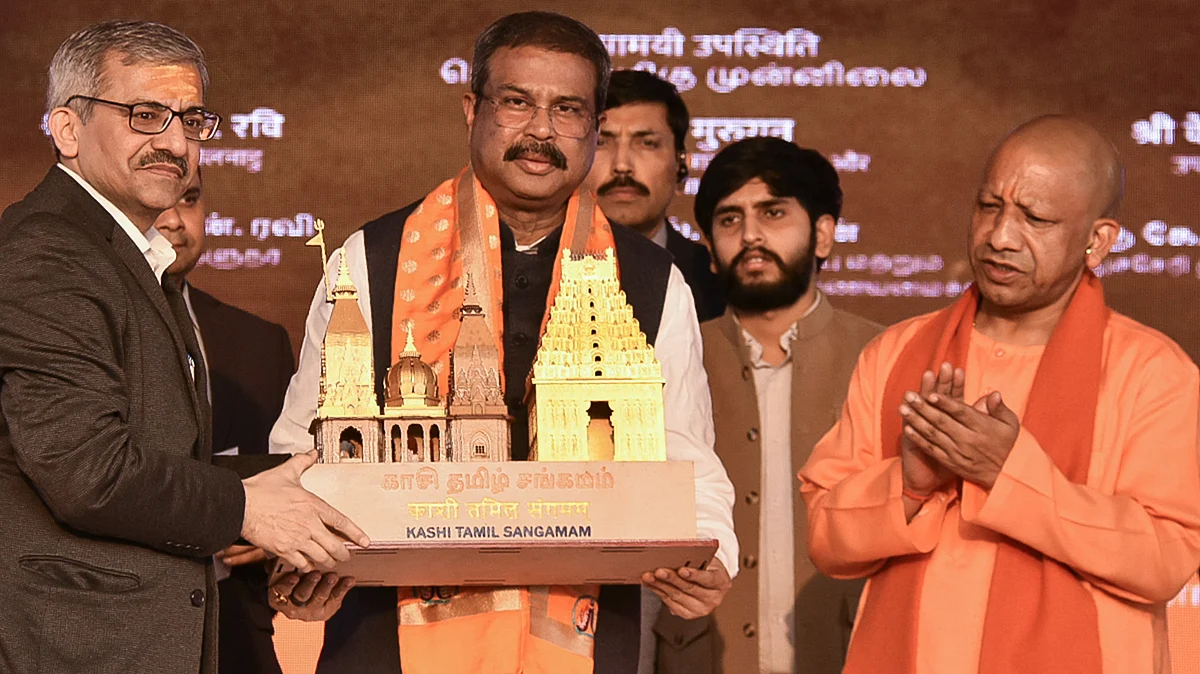


Union education minister Dharmendra Pradhan used a Rajya Sabha intervention on Wednesday to underline what he described as a structural principle of India’s centrally-sponsored education schemes: Central funds flow only when states adhere to the policy architecture and compliance conditions attached to them. His remarks came in response to questions on why allocations to Kerala and Tamil Nadu under Samagra Shiksha and other schemes had been delayed.
Pradhan argued that the issue was not one of discrimination but of non-compliance, asserting that both states had either declined to implement or had placed additional conditions on the rollout of centrally designed programmes, most notably the PM-SHRI (Prime Minister Schools for Rising India) scheme.
According to him, such departures from the agreed framework meant that the Centre was not in a position to release funds until policy alignment was restored. He added similar criticism of West Bengal, alleging misuse of Central funds for partisan ends.
At the heart of the dispute is the conditional nature of federal transfers under centrally sponsored schemes. Pradhan emphasised that programmes such as Samagra Shiksha, the National Education Policy (NEP) 2020, and the PM-SHRI initiative operate on a collaborative but rule-bound basis.
States propose their annual plans, the Centre appraises them, and funds are released only when utilisation certificates, audit reports, progress statements, matching state contributions, and adherence to scheme norms are in place. This, he argued, is not optional but fundamental to the fiscal design of such schemes.
Against this backdrop, Pradhan framed Kerala’s and Tamil Nadu’s reluctance over PM-SHRI as a breach of that compact. He claimed Kerala had initially agreed to sign on before withdrawing, while Tamil Nadu had also reversed an earlier readiness to participate — decisions he characterised as driven less by pedagogical objections and more by “internal contradictions” within their political alliances. “If a state chooses not to implement the framework, the Centre cannot simply release funds attached to that framework,” he said.
Pradhan also invoked a recent Supreme Court observation questioning why Tamil Nadu was not permitting the establishment of Central schools such as Jawahar Navodaya Vidyalayas, arguing that the state “cannot put conditions” on nationally applicable schemes, especially when the funds involved ultimately benefit its own children.
Opposition MPs challenged this logic, accusing the Centre of policy linkage — tying unrelated schemes together to indirectly pressure states into adopting PM-SHRI. CPI(M) member John Brittas argued that Samagra Shiksha, a long-standing umbrella scheme, should not be held hostage to a newer initiative, and described the Centre’s stance as “arm-twisting”. He said the refusal to release Kerala’s Samagra Shiksha funds raised concerns about whether political considerations were overshadowing federal norms.
Pradhan rejected this, countering that the Centre continues to release funds to several Opposition-governed states — including Karnataka, Punjab, Himachal Pradesh and Telangana — which have complied with the required procedures. He reiterated that Kerala’s entitlement for the current financial year, around Rs 452 crore, was fully available and would be released “subject to the conditions of implementation” already agreed upon under NEP and Samagra Shiksha.
In a written reply tabled in the House, the ministry restated the formal criteria: central assistance is contingent on timely submission of utilisation certificates, audit compliance, demonstrated physical and financial progress, state contribution, and conformity with approved Annual Work Plans and Budgets. These are appraised by the Project Approval Board, which clears the release of the Centre’s share.
The debate encapsulates a familiar federal tension: states accuse the Union government of using conditional funding to consolidate control over policy priorities, while the Centre insists that conditionality is intrinsic to scheme-based financing and necessary for accountability. As implementation disputes sharpen, education funding has become another arena where national policy objectives and state-level political calculations collide.
With PTI inputs
Join our official telegram channel (@nationalherald) and stay updated with the latest headlines