


Elected govt is in place in J-K without powers it should have, statehood needed: Farooq
National Conference leader says elected government lacks powers it should have despite assurances of full statehood
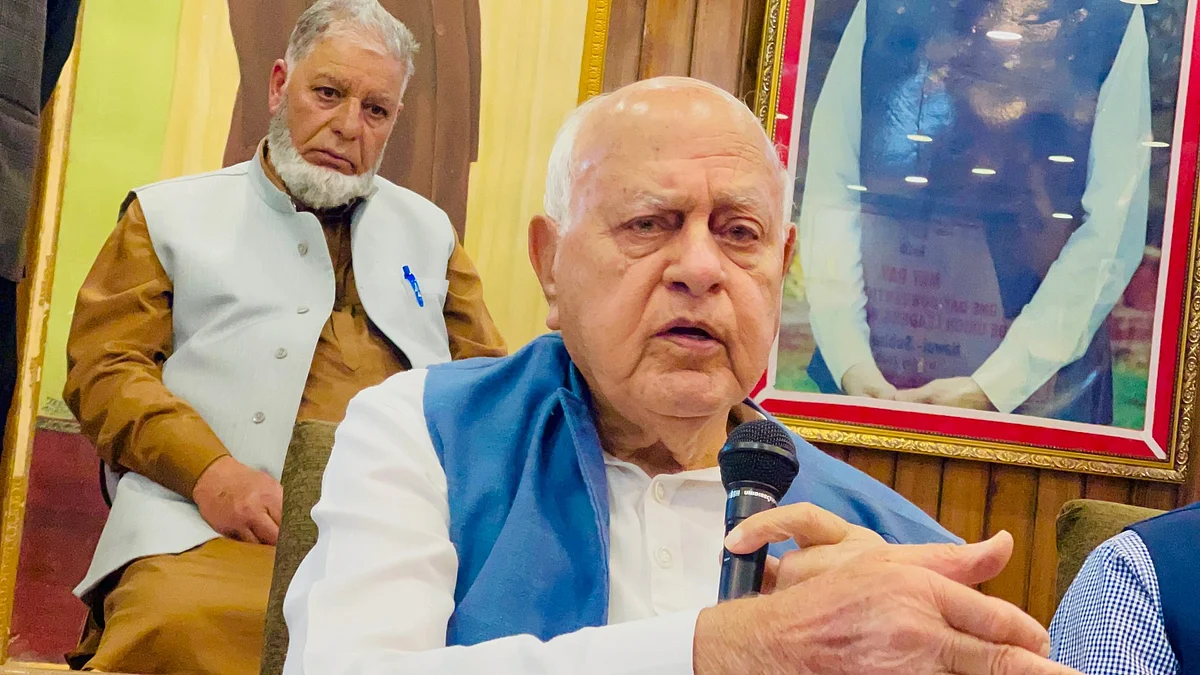


National Conference president Farooq Abdullah on Thursday reiterated the demand for restoration of full statehood to Jammu and Kashmir, saying the elected government in the Union Territory does not possess the powers it should have.
Speaking to reporters here, Abdullah said elections in Jammu and Kashmir were conducted with the assurance that full statehood would be restored.
“The biggest issue is that there is an elected government, but it does not have the powers it should have. Elections were held with the promise that statehood would be restored and people’s difficulties would be addressed. Years have passed — where is that statehood?” Abdullah said.
He added that assurances regarding restoration of statehood had been made both in Parliament and before the Supreme Court.
Concerns over governance and economy
Responding to a question about remarks by Congress president Mallikarjun Kharge linking a recent attack on Abdullah to the absence of statehood, the National Conference leader said crime occurs across the country and cannot be attributed to a single factor.
“Crime exists everywhere in the country. Poverty is increasing and the global situation, especially because of the war involving Iran, will affect us as well,” he said.
Abdullah warned that rising global tensions could worsen economic conditions and lead to an increase in prices, particularly for energy.
“The prices of everything are rising. The price of oil will go up and you may not even get gas. What will people do then?” he said, adding that the middle class would face the greatest difficulties if inflation continued to rise.
Remarks on social harmony
Commenting on the broader situation in the country, Abdullah said social divisions had deepened and cautioned that the space for voices advocating communal harmony was shrinking.
“The biggest tragedy is that hatred in the country has taken deep roots. There is very little space left for those who talk about friendship and love between religions,” he said.
He added that no religion promotes hatred and that all faiths emphasise compassion and mutual assistance.
Calls for investigation into alleged attack
Responding to claims by some leaders of his party that a recent attack on him involved a conspiracy, Abdullah said any such allegation should be properly investigated.
“If there is any conspiracy, it should certainly come out. But I request the Centre and the Lieutenant Governor that when they repeatedly say the situation has completely improved, they should examine whether the environment has truly become safe enough for us to move around with dignity,” he said.
Abdullah also emphasised that differences of opinion are natural in a democracy and that India’s strength lies in its secular and democratic character.
“Our opinions may differ but India is an independent and secular nation. Everyone has the right to express their voice. We may disagree, but we all have to live together,” he said.
Appeal for peace and reconciliation
Calling for peace globally, Abdullah said world leaders should work to end ongoing conflicts.
“I would request them as there is friendship with Donald Trump and also with Benjamin Netanyahu. For God’s sake, tell them to stop the war. Ending the war is necessary,” he said.
Commenting on the Supreme Court granting bail to separatist leader Shabir Shah, Abdullah said people should work towards improving the country and fostering harmony.
Referring to the continued displacement of Kashmiri Pandits, he stressed the need for reconciliation and communal harmony.
“Our Hindu brothers are still living away from their homes. How long will this continue? It has been 34 years. The time has come for us to live together,” Abdullah said.
Join our official telegram channel (@nationalherald) and stay updated with the latest headlines