


Gujarat: Surat court allows govt plea to lift sedition case on BJP MLA Hardik Patel
Patel was once portrayed by the state machinery as a dangerous agitator who allegedly incited violence against the police
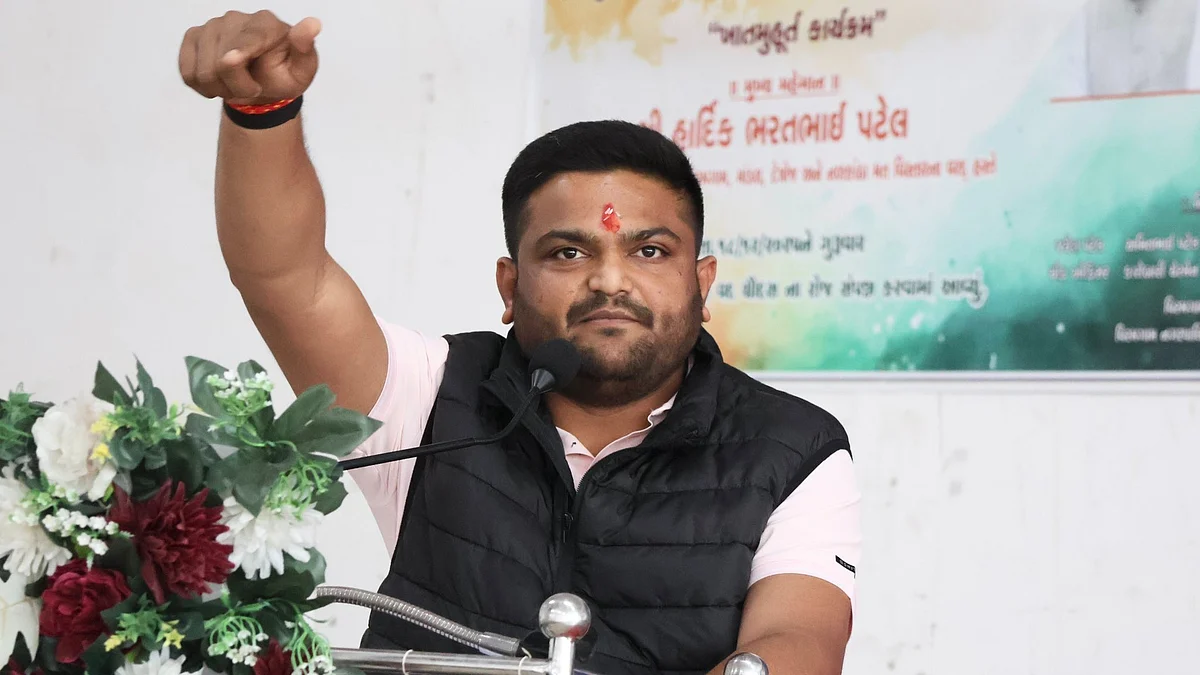


In yet another reminder that sedition, like many other serious charges, appears to be a flexible concept in Gujarat, a Surat court on Thursday allowed the state government to withdraw a sedition case dating back to the 2015 Patidar reservation agitation against BJP MLA Hardik Patel and three others — bringing formal closure to a case that once carried the threat of life imprisonment.
The application to withdraw the case was accepted by principal district and sessions judge R.A. Trivedi, clearing Patel, now a ruling BJP legislator, along with his former associates Alpesh Kathiria, Vipul Desai and Chirag Desai. Patel, it may be recalled, was once portrayed by the same state machinery as a dangerous agitator who allegedly incited violence against the police. That phase, it seems, belongs to a less politically convenient past.
The sedition case stemmed from Patel’s role as the convener of the Patidar Anamat Andolan Samiti (PAAS) during the violent agitation for OBC reservation in 2015. An FIR was registered at Surat’s Amroli police station in October that year after Patel allegedly made remarks urging Patidar youth to kill police personnel instead of choosing suicide — comments that police then said crossed the line from protest into criminal conspiracy.
Accordingly, Patel was charged under Indian Penal Code sections 124A (sedition), 115 (abetment of offence) and 201 (causing disappearance of evidence). At the time, the chargesheet spoke ominously of pre-planned violence, inflammatory messaging and a coordinated attempt to destabilise law and order — language that has aged rather differently now that Patel sits on the treasury benches.
This is not the first time Patel has benefited from the state’s newfound generosity. In March this year, a sessions court in Ahmedabad had already permitted the withdrawal of another sedition case against him and four others linked to the same agitation. That case, too, had once been presented as a grave threat to public order, until the threat conveniently dissipated.
Patel’s political journey, meanwhile, has been nothing if not instructive. After leading an agitation that left parts of Gujarat burning, he joined the Congress in 2019 and was elevated to working president in 2020. Two years later, he crossed over to the BJP, contested the 2022 Assembly elections from Viramgam and won — after which the legal baggage that once defined him began to lighten with notable speed.
Patel’s lawyer Yashwant Vala said the withdrawal followed a state government notification ordering the closure of nearly 90 per cent of cases related to the Patidar agitation, including sedition cases. “On the basis of this notification, the public prosecutor moved the court seeking withdrawal of the case, which was allowed,” he said, adding that all four accused stood acquitted.
The original chargesheet, filed in 2016, had accused Patel and his aides of deliberately inciting Patidar youths to violence as part of a larger conspiracy to pressure the government into accepting quota demands.
Police had also invoked Section 153A of the IPC (promoting enmity between groups), though the Gujarat High Court later struck down that charge while upholding the sedition count — a decision that, too, now sits quietly in the background.
According to investigators, Patel’s brief detention at the GMDC ground in Ahmedabad on August 25, 2015 after a massive rally was followed by what they described as a deliberate campaign of misinformation by PAAS leaders, claiming he had been wrongfully arrested. Those messages, the chargesheet said, helped trigger riots across the state, forcing curfews in several districts.
The violence lasted nearly four days, during which property worth around Rs 40 crore was damaged, 203 police personnel were injured, and one constable, Dilip Rathva, died in Surat — a toll that once justified the state’s hardline posture, but now appears to have been absorbed into the costs of political reconciliation.
With Thursday’s order, Hardik Patel’s transformation from sedition-accused agitator to respectable BJP MLA is complete, at least in the eyes of the law. As for sedition — once invoked with great urgency — it appears that, like many sins in Indian politics, it is eminently forgivable, provided one eventually joins the right party.
With PTI inputs
Join our official telegram channel (@nationalherald) and stay updated with the latest headlines