


How strong is India’s passport? Global index ranks it 125th, fuelling political sparring
According to Global Passport Index 2026, India ranks 125th among 197 countries, down from 124th last year
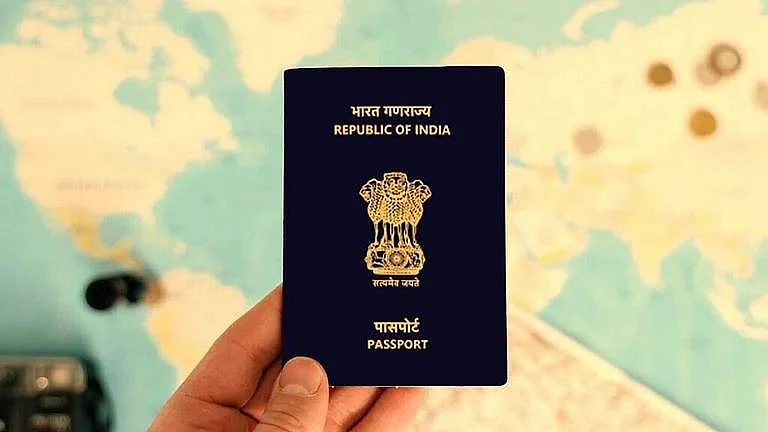


Amid the ongoing debate over whether a passport can serve as documentary proof of citizenship, a fresh global ranking has ignited a political row, with the Congress accusing Prime Minister Narendra Modi of weakening the Indian passport and questioning the government's claims of making India a 'Vishwaguru'.
According to the Global Passport Index 2026, India ranks 125th among 197 countries, down from 124th last year. Published by Global Citizen Solutions, the index assesses passports based on global mobility, investment potential and quality of life.
The report says Indian passport holders currently enjoy visa-free access to just 26 countries. In the overall rankings, India is placed behind countries such as the Philippines, Morocco, Uzbekistan and Namibia.
Seizing on the findings, the Congress took a swipe at Prime Minister Narendra Modi's oft-repeated assertion that India has become a "Vishwaguru", saying, "Numbers speak louder than jumlas."
The Congress argued that despite the government's claims of enhanced global influence, ordinary Indians continue to face significant travel restrictions abroad.
The Congress also contrasted the current ranking with that during the UPA years, noting that the Indian passport ranked 72nd on the Henley Passport Index under former PM Manmohan Singh.
While the comparison is not exact, as the Henley and Global Passport indices use different methodologies, the Congress said the trend undercuts the BJP's narrative of India's rising global standing.
The Global Passport Index, launched in 2021, evaluates passports using a three-pillar framework: Enhanced Mobility (50 per cent), Investment Potential (25 per cent) and Quality of Life (25 per cent). By contrast, the Henley Passport Index primarily measures the number of destinations accessible without a prior visa, making direct historical comparisons difficult.
While passport rankings are not a definitive measure of national power, they are widely seen as a reflection of a country's diplomatic reach, international trust and the ease with which its citizens can engage with the world.
A stronger passport reduces travel barriers, facilitates business and investment opportunities, simplifies access to overseas financial services and can provide greater flexibility in times of political or economic uncertainty.
For millions of Indians seeking employment, education or business opportunities abroad, passport strength has practical implications that go far beyond symbolism.
In the latest Henley Passport Index, Singapore holds the top position, followed by Japan, South Korea, the United Arab Emirates and Sweden.
The latest ranking is therefore likely to fuel a broader debate over whether India's growing economic and geopolitical profile is translating into greater mobility and privileges for its citizens on the global stage or is it just another Jumla?
Join our official telegram channel (@nationalherald) and stay updated with the latest headlines