


‘Nagpur Communal Ecosystem for Rewriting of Textbooks’ is the real NCERT: Congress
Jairam Ramesh alleges prime minister is expressing “fake outrage” while distancing himself from developments under his watch
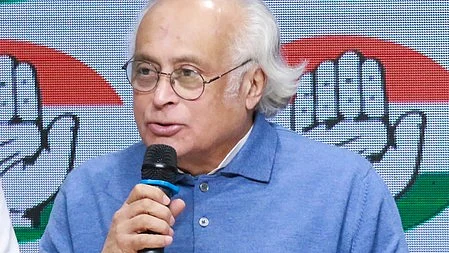


The Congress on Friday sharpened its attack on Prime Minister Narendra Modi amid the escalating controversy over revisions in school textbooks, alleging that the prime minister himself has “guided and shaped” what it described as the “Nagpur Communal Ecosystem for Rewriting of Textbooks” — which, it claimed, is the “real NCERT”.
The Opposition’s remarks came a day after the Supreme Court of India imposed a “complete blanket ban” on any further publication, reprinting or digital circulation of a Class 8 social science textbook brought out by the National Council of Educational Research and Training (NCERT). The court observed that the book contained “offending” material relating to corruption in the judiciary and remarked that “a gunshot has been fired, and the institution is bleeding”.
A bench headed by Chief Justice of India Surya Kant directed that all physical and digital copies of the textbook in circulation be seized and removed from public access without delay. Show-cause notices were also issued to the NCERT director and the secretary of the Department of School Education, asking them to explain why action should not be initiated against those responsible for introducing the controversial chapter. The court further warned that any attempt to reintroduce the same content through electronic means or alternative titles would amount to wilful disobedience of its order.
The disputed textbook had stated that corruption, pendency of cases and shortage of judges are among the key challenges facing India’s judicial system. After sharp observations from the apex court, NCERT withdrew the book from its website, apologised for the “inappropriate content” and assured that it would be rewritten in consultation with appropriate authorities.
On its part, the Union government expressed concern over the inclusion of the controversial section. Union education minister Dharmendra Pradhan promised accountability and action against those involved in drafting the chapter.
However, Congress general secretary (communications) Jairam Ramesh dismissed the government’s response as a “damage-control exercise”. In a post on X, he alleged that the Prime Minister was expressing “fake outrage” over the issue while distancing himself from developments that had unfolded under his watch.
Ramesh charged that over the past decade, the prime minister had presided over a network of “academic quacks” who had systematically reshaped textbooks with ideological intent. According to him, the revisions were not isolated lapses but part of a deliberate campaign of “indoctrination”. He described the rewriting process as an organised effort that had transformed textbooks into instruments of polarisation and political score-settling.
Calling it “sheer hypocrisy” for the Prime Minister to disassociate himself from the controversy, Ramesh said the next logical step for the Supreme Court would be to order a comprehensive investigation into how textbooks were revised and how such content was cleared for publication.
The apex court, in its observations, indicated that there appeared to be a “deep-rooted conspiracy” and a “calculated move” to undermine the dignity of the judiciary. Its strong remarks have now placed the spotlight not only on the content of the textbook but also on the processes governing curriculum review and publication.
With the court’s intervention, the NCERT has begun corrective steps, but the political battle over textbook revisions — and the broader question of academic autonomy and ideological influence — appears far from over.
With PTI inputs
Join our official telegram channel (@nationalherald) and stay updated with the latest headlines