


NEET goes online, but UGC-NET row puts CBT fix under scanner
As NTA shifts NEET to CBT after this year's leak, Congress says fresh UGC-NET claims show exam mode alone cannot stop irregularities
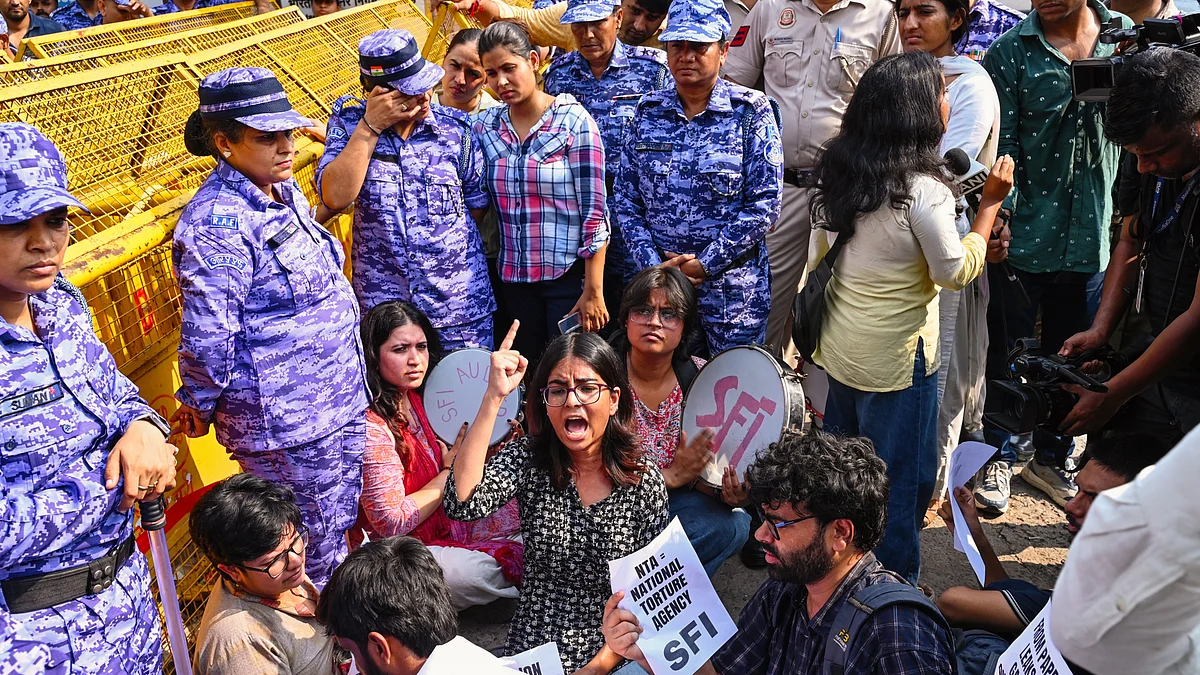


The medical entrance examination NEET-UG, which will be conducted as a computer-based test (CBT) from next year, is likely to be spread over at least six days across more than 1,000 centres, sources said on Thursday, 9 July.
The move follows the controversy over the paper leak and other irregularities in this year's NEET-UG examination. However, it also comes amid fresh allegations of irregularities in the computer-based UGC-NET examination, prompting questions over whether shifting examinations online by itself can safeguard the integrity of high-stakes entrance tests.
The National Eligibility-cum-Entrance Test (NEET)-UG is the country's largest undergraduate entrance examination, with nearly 25 lakh candidates appearing every year for admission to medical colleges.
Following the controversy over this year's examination, the Centre announced that NEET-UG would be conducted as a CBT instead of the existing pen-and-paper format. The proposal is not new and has been deliberated for several years by the education and health ministries, but gathered momentum after the latest controversy.
"Just like JEE, which is conducted for admission to engineering colleges, the exam will be spread over at least six days. The examination centres will be selected after scrutiny of their credibility and infrastructure availability," a source said, adding that the detailed plan is still being finalised.
The National Testing Agency (NTA) conducts NEET every year for admission to undergraduate medical courses. Around 1.08 lakh MBBS seats are available across the country, including nearly 56,000 in government colleges and about 52,000 in private institutions. NEET scores are also used for admissions to undergraduate courses in dentistry, Ayurveda, Unani and Siddha.
The decision to move NEET online comes even as the Congress steps up its attack on the Centre over alleged irregularities in the UGC-NET examination held in end-June.
Congress general-secretary (communications) and Rajya Sabha MP Jairam Ramesh on Thursday cited media reports claiming that the Sociology paper in the UGC-NET examination held on 30 June had been leaked despite being conducted as a CBT, an allegation Lok Sabha Leader of Opposition Rahul Gandhi had made on Wednesday.
Days after the NEET-UG paper leak earlier this year, education minister Dharmendra Pradhan had announced that NEET would be conducted as a CBT from next year. The implicit assurance, Ramesh argued, was that computer-based examinations would be insulated from paper leaks.
"Now there are reports that the UGC-NET Sociology examination this year appears to have been leaked despite being a CBT. Earlier we had seen that questions in the UGC-NET English Exam were wholesale lifted from past papers without any changes," Ramesh said.
Also Read: Leak, cancel, repeat: not so NEET, after all
Alleging that the examination system had been repeatedly compromised, he demanded Pradhan's resignation and called for the NTA to be disbanded.
Gandhi had made the allegation a day earlier, claiming that a 100-page PDF relating to the Sociology paper had been circulated before the examination and that nearly 90 questions matched those asked in the test. There was no immediate response from the NTA to the allegations.
The latest controversy has once again put the spotlight on India's examination system, which has witnessed numerous high-profile paper leak and examination fraud controversies over the past decade.
Among the most prominent were the cancellation of the All India Pre-Medical Test (AIPMT) in 2015, the CBSE Class 10 and 12 paper leak cases in 2018, the UPTET paper leak in 2021, the Rajasthan Eligibility Examination for Teachers (REET) leak, the cancellation of UGC-NET in 2024 after inputs that its integrity had been compromised, and the NEET-UG paper leak, also in 2024.
The alleged leak in this year's NEET examination itself marked a repeat of concerns that have surfaced periodically across major competitive examinations, underscoring that examination fraud has persisted despite successive reforms.
Education experts have argued that while computer-based testing may reduce vulnerabilities associated with transporting and storing physical question papers, the integrity of high-stakes examinations ultimately depends on the security of the entire testing ecosystem, including question paper preparation, digital infrastructure, access controls and administrative oversight.
In June 2024, the education ministry constituted a high-level committee headed by former ISRO chairman K. Radhakrishnan to recommend reforms aimed at strengthening the conduct of public examinations. The shift to CBT for NEET is among the key changes being implemented in the aftermath of the controversy.
With PTI inputs
Join our official telegram channel (@nationalherald) and stay updated with the latest headlines