


Neha Bora recalls 1942: Here are 10 steps taken to crush Quit India movement
As government seeks to impose virtual lockdown in New Delhi, here are 10 reminders of what the colonial government did in 1942


"Thousands of protesters have been placed under house arrest; metro and trains are being cancelled; police are looking for us everywhere. This is nothing but an open state of Emergency; but just as the Quit India Movement had not ceased with the arrest of leaders, this movement too will not cease. If we get arrested tomorrow, you will have to assume the leadership. Sit down wherever you are detained, at railway stations or in trains. Reiterate the demands. Roll back the SIR. Gyanesh Kumar must go. Government must be made accountable. There is no turning back. It is we, the people vs the BJP."
This was the message that Neha Bora, AISA national president, delivered in a video statement on Friday, 9 October.
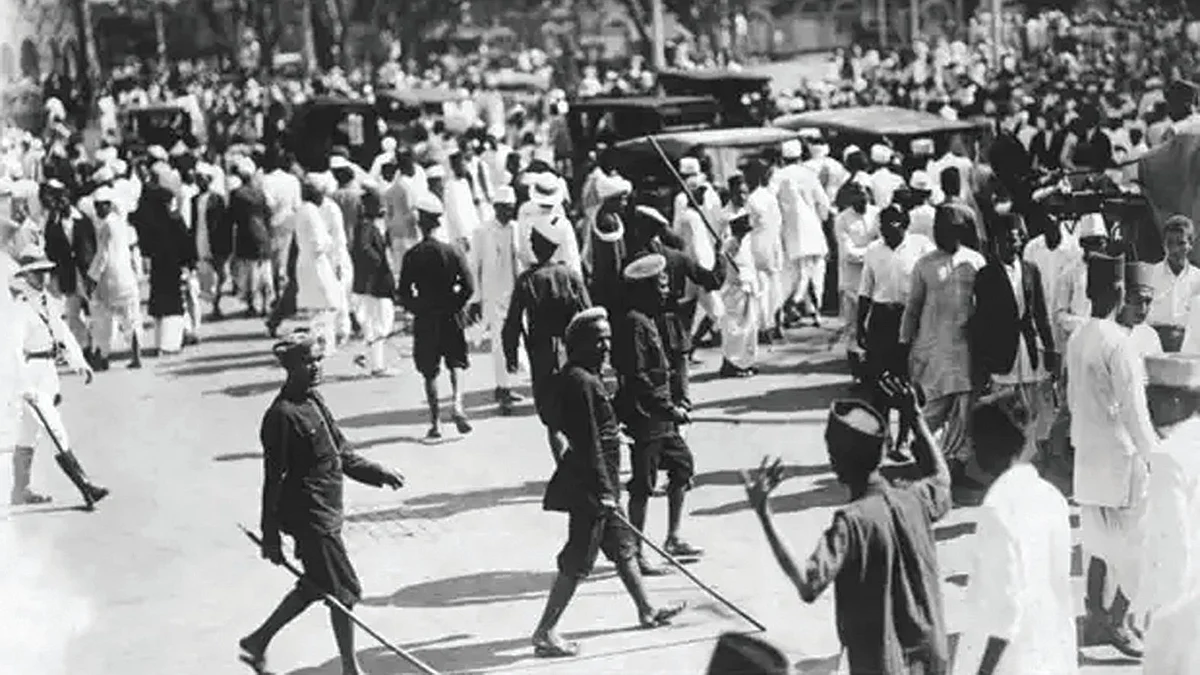
Even as protesters allege that printing presses in and around Delhi are refusing to print posters and publicity material under pressure of the police, here is a reminder of what a repressive British Government did in August 1942 to crush the Quit India Movement. It was one of the harshest crackdowns in history. The objective was to decapitate the movement before it could develop into a coordinated nationwide revolt.
Mass arrests and detentions: Within hours of the Quit India resolution being passed on 8 August 1942, almost the entire top leadership of the Indian National Congress, including Mahatma Gandhi, Jawaharlal Nehru, Vallabhbhai Patel, Maulana Azad and others, was arrested without trial. Tens of thousands of activists, students, workers and local leaders were imprisoned under wartime emergency regulations. Roughly 60,000 people had been arrested by the end of 1943, according to the most conservative estimates.
Censorship and suppression of civil liberties: Newspapers were heavily censored. Publication of statements, speeches and reports of protests was restricted. Public meetings, demonstrations and political gatherings were prohibited under emergency powers.
Use of extraordinary wartime laws: The authorities relied extensively on the Defence of India Rules and special ordinances to detain people without normal judicial safeguards. Special powers were granted to district magistrates and police to search, arrest and punish suspected supporters.
Police and military force: Police resorted to widespread lathi charges, firing on crowds and mass beatings. Troops were deployed in many districts where protesters attacked railways, telegraph linesand government offices.
Collective fines: Villages, towns and localities suspected of supporting the movement were subjected to collective fines. The Collective Fines Ordinance empowered authorities to impose financial penalties on entire communities regardless of individual guilt.
Whipping and physical punishments: In several areas people were flogged, beaten up and subjected to other corporal punishments.
Property seizures and punitive raids: Homes of activists were searched and sometimes confiscated. Authorities imposed punitive levies and damaged property in areas considered centres of resistance.
Suppression of underground networks: Secret presses, underground radio stations and clandestine organisations were hunted down.
Leaders were pursued relentlessly by intelligence and police agencies
Military operations and aerial action: In some regions, especially Bihar, the government used Royal Air Force aircraft for reconnaissance and attacks against crowds and suspected insurgent concentrations. The repression in Bihar included shootings, arrests, collective fines and aerial operations.
Curfews and restrictions on movement: Curfews were imposed in disturbed districts. Villages and towns were subjected to intensive surveillance, checkpoints and restrictions on travel and assembly.