


Not allowed to speak; House represents whole country, not one party: Rahul Gandhi
Congress leader makes the remarks while intervening during a debate on a resolution seeking the removal of speaker Om Birla
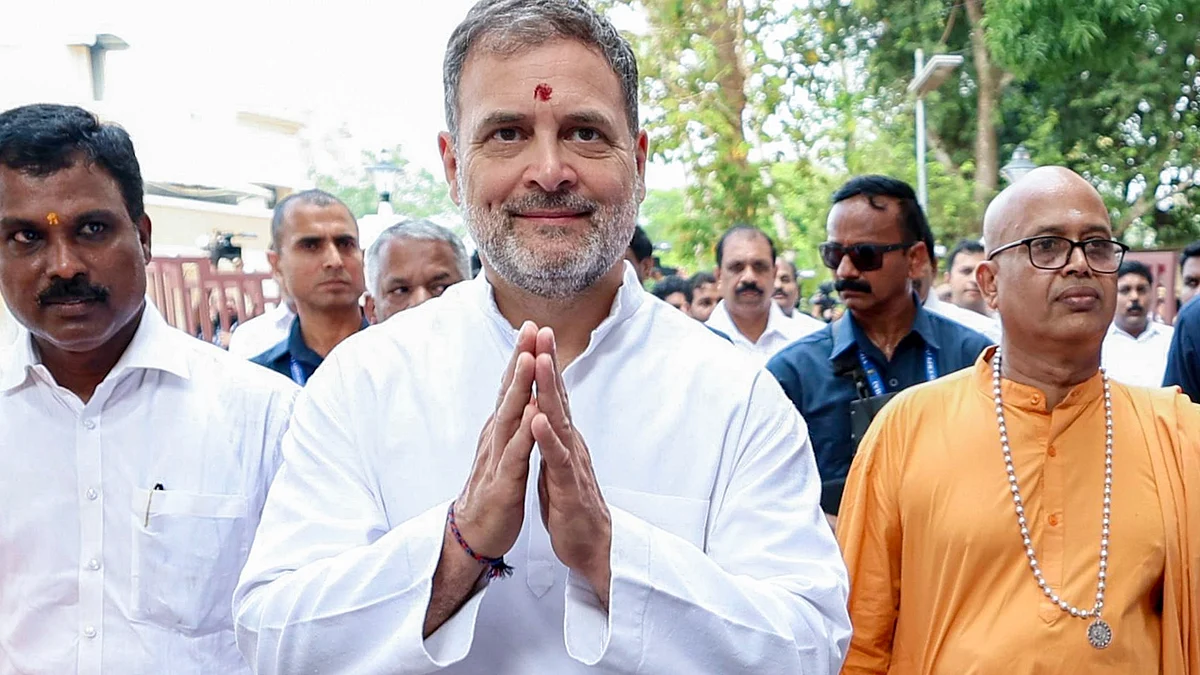


Leader of Opposition Rahul Gandhi on Wednesday claimed he had been repeatedly prevented from speaking in the Lok Sabha and asserted that the House represents the will of the entire nation, not any single political party.
Rahul Gandhi made the remarks while intervening during a debate on a resolution seeking the removal of speaker Om Birla. The Congress leader alleged that the parliamentary forum, which should function as the voice of the people, was increasingly being used to silence opposition voices.
During his intervention, Rahul Gandhi also alleged that Prime Minister Narendra Modi had been “compromised”, adding that “everybody knows the result of that.” His comments came as tempers flared during the debate, with members from the treasury benches objecting to his remarks.
Responding to criticism from senior BJP leader Ravi Shankar Prasad, Rahul Gandhi said his name had been repeatedly invoked during the debate and that “vile things” were being said about him in the House.
“The discussion here is about the democratic process and the role of the Speaker. But multiple times my name is being raised and vile things are being said about me,” Rahul Gandhi said. “This House is the expression of the people’s will. It does not represent one party; it represents the whole country.”
He further alleged that the Opposition was frequently prevented from raising important issues in Parliament. “Every time we get up to speak, we are stopped. The last time I spoke, I raised fundamental questions about the compromises made by our prime minister,” he said.
Rahul Gandhi also claimed that he had recently been denied an opportunity to participate in a parliamentary debate, describing it as unprecedented. “Just a few days ago, for the first time in India’s history, the leader of Opposition was not allowed to speak during a debate,” he said.
Referring to his earlier speech in Parliament, Rahul Gandhi said he had raised several issues that he believed were of national importance. “I raised the issue of Mr Manoj Mukund Naravane, I raised the issue of Epstein, I raised the issue of Adani, and I was silenced. These issues are fundamental to the people of India,” he said.
Reiterating his claim, Rahul Gandhi added, “Our prime minister has been compromised; everybody knows the result of that.”
Earlier in the debate, Ravi Shankar Prasad had criticised the opposition’s move to bring a resolution against the Speaker, arguing that such motions should not be used as political tools.
Participating in the discussion, Prasad said the motion to remove the Speaker should not be “weaponised” merely to “satisfy the ego of a leader.” He described it as unfortunate that the House was being forced to debate such a resolution.
Citing parliamentary conventions and the book Practice and Procedures of Parliament, Prasad also said the leader of Opposition must exercise caution in his remarks, particularly when referring to matters concerning national security. He urged Rahul Gandhi to measure his words carefully and avoid partisan rhetoric.
His comments triggered a sharp reaction from Opposition members, leading to loud protests in the House.
Later, BJP MP Dilip Saikia, who was presiding over the proceedings at the time, allowed Gandhi to respond to the allegations and present his defence before the House.
The exchange added to the charged atmosphere in Parliament as the debate over the resolution against speaker Om Birla continued, reflecting the growing tensions between the treasury benches and the opposition over parliamentary functioning and the space available for dissent.
With PTI inputs
Join our official telegram channel (@nationalherald) and stay updated with the latest headlines