


Not official yet but dropping ‘Mahatma Gandhi’ unlikely to improve MGNREGA
Will renaming ‘Mahatma Gandhi’ rural employment guarantee scheme to ‘Pujya Bapu’ scheme improve its implementation?
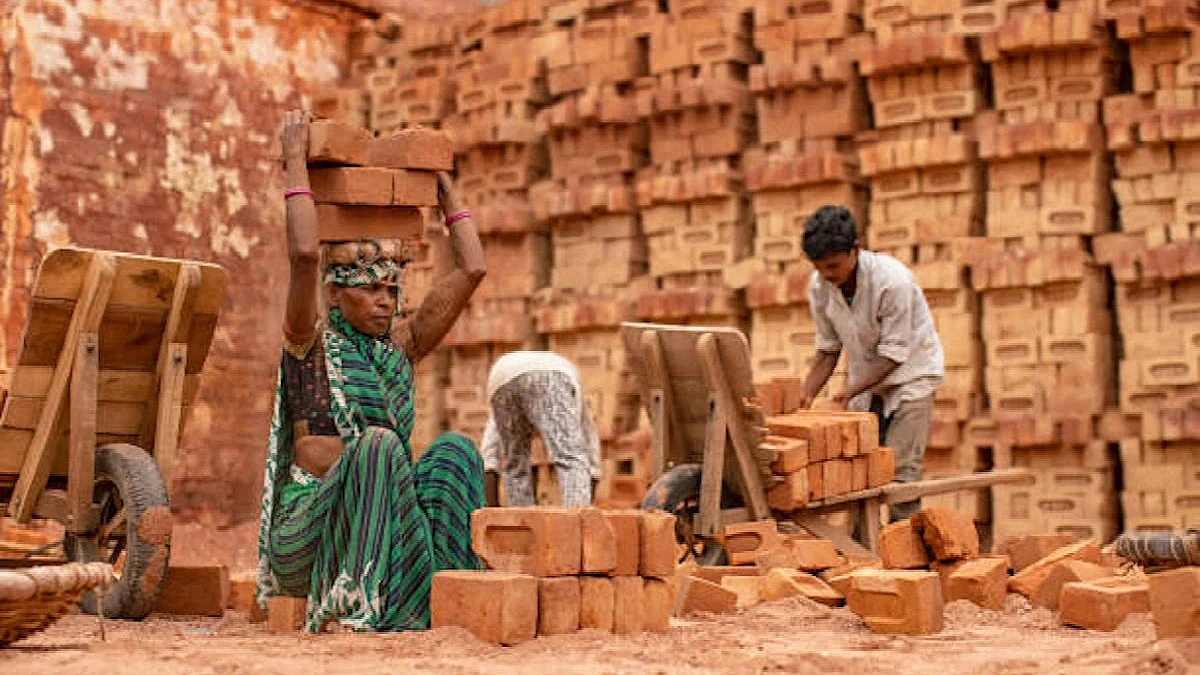


No, the name of the Mahatma Gandhi National Rural Employment Guarantee Act (MGNREGA) has not been changed yet. Mainstream media, however, went on overdrive on Friday, 12 December, to suggest that the change is imminent and a Bill is about to be introduced to this effect in the ongoing winter session of Parliament.
Why does the Union government feel the necessity to drop ‘Mahatma Gandhi’ and replace the words with ‘Pujya Bapu’, though? No explanation has been forthcoming so far, even as critics have pointed out that in the past, Prime Minister Narendra Modi has addressed convicted rapist Asaram Bapu as ‘Pujya Bapu’ too.
Another spin being offered on social media is that the government is keen to drop the word ‘Mahatma’, an honorific bestowed on Gandhiji by Rabindranath Tagore. The insinuation being that the move is designed to insult both Gandhi and Tagore, who did not encourage the ideology of the Sangh Parivar.
The amended Bill, according reports, was cleared by the Union cabinet in its meeting held on Friday. There was no official announcement on the proposal, however, at the cabinet briefing addressed by Union minister Ashwini Vaishnaw. The original Bill passed by Parliament on 25 August 2005 was called 'National Rural Employment Guarantee Act'. The suffix 'Mahatma Gandhi' was added in 2009.
Some notable recent developments on the implementation of schemes under MGNREGA are as follows:
In March, Congress leader Sonia Gandhi accused the BJP-led Centre of systematically undermining the rural employment guarantee scheme and demanded raising of the minimum wage under it to Rs 400 per day, and the number of guaranteed workdays to 150 days a year from 100.
She pointed out that the budget allocation (for the scheme) remained stagnant at Rs 86,000 crore, a 10-year low as a percentage of GDP, besides other challenges including the exclusionary Aadhaar-based payment and the National Mobile Monitoring System, persistent delays in wage payment and wage rates not being adequate to compensate for inflation.
Nearly 27 lakh workers’ names were deleted from the MGNREGA database between 10 October and 14 November, far exceeding the 10.5 lakh additions during the same period. The spike in deletions coincides with the Union government’s push to conduct e-KYC — an electronic know your customer process — for all rural workers, to weed out ineligible beneficiaries. This “unusual” rate of deletions was flagged by Lib Tech, a consortium of activists and academicians.
The LibTech study revealed that only 7 per cent of households got 100 days of work, the guarantee under MGNREGA. The study reported an increase in the total registered households under the programme from 13.80 crore in FY 2023-24 to 14.98 crore in 2024-25.
It also reported a decline in days of average employment provided per household from 52.42 person days in FY 2023-24 to 50.18 person days in FY 2024-25. This, the LibTech report stated, reflected a mismatch between the scheme’s coverage and its delivery, raising questions about implementation.
The MGNREGA Management Information System (MIS) lists 12 reasons for deletions of workers and job cards. Some of which are “duplicate applicant”, “fake applicant“, “not willing to work” etc. In the last four years, names of 10.43 crore MGNREGA workers across India appear to have been deleted.
The Parliamentary Standing Committee on Rural Development raised concerns over reduction in budget allocation. People’s Action for Employment Guarantee (PAEG) had recommended a budget allocation of Rs 2.64 lakh crore for the MGNREGS for FY 2022-23 itself. However, the Union government has allocated only Rs 86,000 crore for FY 2024-25, which remained unchanged in 2025-26.
Join our official telegram channel (@nationalherald) and stay updated with the latest headlines