


‘Notional’, not national clean air programme: Congress hits out at govt
Jairam Ramesh calls the govt’s NCAP a “Notional Clean Air Programme”, taking a swipe at lofty claims and little real relief
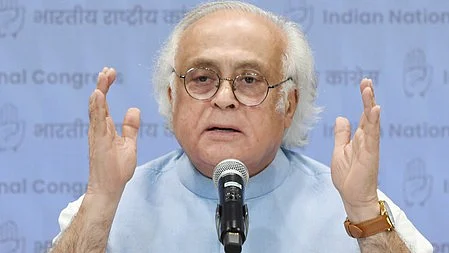


The Congress on Sunday cited a new report to argue that air pollution in India has become a nationwide, structural crisis and accused the government of responding with policies that are “exceedingly ineffective and inadequate”.
The party called for a comprehensive overhaul of the National Clean Air Programme (NCAP).
Congress general secretary in charge of communications Jairam Ramesh said an analysis by the Centre for Research on Energy and Clean Air (CREA) confirmed what he described as India’s “worst-kept secret” — that air pollution affects large parts of the country and that government action has failed to match the scale of the problem.
Ramesh said the study, based on satellite data, found that nearly 44 per cent of India’s statutory towns — 1,787 out of 4,041 assessed — suffer from chronic air pollution, with annual PM2.5 levels exceeding national standards for at least five years between 2019 and 2024, excluding 2020.
Despite this, he said, only 130 cities are covered under the NCAP. Of these, 28 reportedly still lack continuous ambient air quality monitoring stations. Among the 102 cities with monitoring infrastructure, 100 recorded PM10 levels at 80 per cent or higher, he added. In effect, the NCAP currently covers just about 4 per cent of India’s chronically polluted towns.
Describing the programme as a “Notional Clean Air Programme”, Ramesh said the NCAP requires a thorough overhaul and fundamental reform. He argued that the first step must be acknowledging air pollution as a major public health crisis and revisiting both the Air (Prevention and Control of Pollution) Act of 1981 and the National Ambient Air Quality Standards (NAAQS) notified in 2009.
Under the NAAQS, permissible PM2.5 levels are 60 micrograms per cubic metre for a 24-hour period and 40 micrograms annually, compared to the World Health Organisation’s guidelines of 15 micrograms for 24 hours and 5 micrograms annually, Ramesh noted.
He also urged the government to sharply increase funding under the NCAP. The current allocation — about Rs 10,500 crore, including NCAP funds and 15th Finance Commission grants — is spread across 131 cities, he said, arguing that urban centres need 10 to 20 times more funding. He proposed expanding NCAP into a Rs 25,000 crore programme covering the 1,000 most polluted towns.
Ramesh said the programme must adopt PM2.5 levels as its primary performance metric and focus on major sources of pollution, including solid fuel burning, vehicular emissions and industrial activity. He also called for giving the NCAP legal backing, stronger enforcement mechanisms and comprehensive data monitoring across all cities, rather than limiting action to “non-attainment” cities.
The Congress leader further demanded immediate enforcement of pollution norms for coal-fired power plants, including mandatory installation of flue gas desulphurisation units by the end of 2026. He also called for restoring the independence of the National Green Tribunal and rolling back what he described as “anti-people” environmental law amendments introduced over the past decade.
Ramesh accused the Modi government of repeatedly downplaying the health impacts of air pollution, alleging that it was attempting to conceal the scale of its “incompetence and negligence.” The Congress reiterated its position that India cannot afford to “pollute its way to prosperity” and said emergency measures such as the Graded Response Action Plans should not remain the primary focus of clean-air policy.
With PTI inputs
Join our official telegram channel (@nationalherald) and stay updated with the latest headlines