


Paint Paresh Baruah, not Che: Assam CM's idea of an Assamese revolutionary
Himanta Biswa Sarma appears to be overlooking both his own past and Assam's Left icons
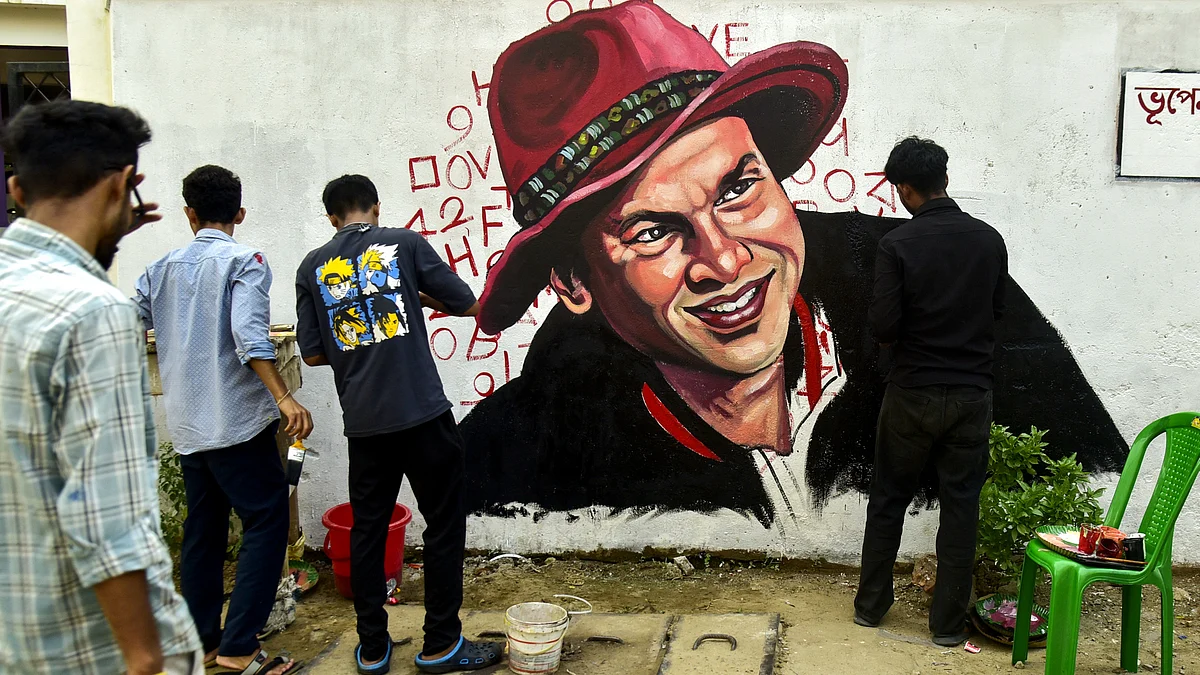


Assam chief minister Himanta Biswa Sarma on Friday found himself in the unusual position of urging artists to paint the portrait of a secessionist insurgent while railing against a long-dead communist revolutionary.
Weeks after the controversy over the partial erasure of a mural of the late singer Zubeen Garg, Sarma said those wishing to depict a "revolutionary" in Assam should paint Paresh Baruah, head of the secessionist ULFA (Independent), a faction of the banned United Liberation Front of Asom (ULFA), rather than Che Guevara, insisting the Cuban icon had no connection with the state.
"If you want to draw a revolutionary, then draw Paresh Baruah. He has been continuing his struggle for 30 years, whether it is for good or bad is a different matter. He has to live away from his family. Draw pictures of Parag Das," Sarma said, as reported by PTI and India Today NE.
The chief minister quickly added that he neither accepted Baruah's ideology nor supported him. Yet his decision to praise the endurance of a man who continues to lead a secessionist insurgency while dismissing Guevara as irrelevant sits uneasily with the BJP's uncompromising rhetoric on militancy.
The remarks are also likely to revive memories of Sarma's own political journey. Long before he became the BJP's foremost face in Assam and one of its most strident advocates of muscular nationalism, Sarma was widely perceived to have maintained channels of communication with ULFA during the insurgency years and later played an important role in facilitating peace initiatives with sections of the outfit. Against that backdrop, holding up Paresh Baruah as Assam's preferred revolutionary is a striking political choice.
The comments came in the wake of the controversy surrounding Zubeen Garg's mural under Guwahati's Ganeshguri flyover, which was partially erased during a government-led beautification drive before being repainted following public outrage.
Ironically, Garg himself never concealed his admiration for Che Guevara, often naming the Cuban revolutionary alongside Charlie Chaplin and Assamese cultural icon Bishnu Prasad Rabha as personal inspirations.
Rather than defend that artistic choice, Sarma argued that Assam should celebrate its own icons, naming Rabha, Jyotiprasad Agarwala and Bhupen Hazarika.
That argument, however, carries its own contradictions. Rabha was an avowed communist and one of Assam's foremost Marxist intellectuals, while Hazarika's artistic and political evolution was deeply shaped by the Left through the Indian People's Theatre Association. By rejecting Che Guevara while embracing Hazarika and Rabha, Sarma appeared to overlook the very ideological traditions that helped shape two of Assam's greatest cultural figures.
Sarma, meanwhile, professed ignorance about Guevara. "Who is Che Guevara? I have visited Cuba and have studied about them. Most drug trade happens there. What link do we have with him?" he said, before launching into a critique of present-day Cuba's infrastructure and economy—an argument that conflated the revolutionary icon with the country's contemporary condition.
The chief minister also revisited the mural controversy, denying that the government had ordered Garg's portrait to be erased.
"The two painters recorded their statement in the police station that they erased the mural as it did not look like Zubeen Garg's. They are not Muslims or Bangladeshi-Miyas, they are Assamese painters. The contractor who had undertaken the job is also an Assamese and all three are fans of Zubeen," he said.
The unsolicited reference to Muslims and "Bangladeshi-Miyas" stood out, given that neither religion nor ethnicity had featured in the controversy, once again inserting the chief minister's preferred political binary into an otherwise unrelated debate over public art.
Sarma also accused the artists involved of belonging to the Students' Federation of India (SFI), alleging they had first opposed the construction of flyovers before using them as canvases for "free publicity".
"I won't allow this party to draw on the flyovers they oppose... I have ordered the officials to arrest them if they try to draw again," he said.
He further argued that the Ganeshguri flyover, being the site of the 2008 serial blasts, should feature "anti-violence" imagery, suggesting that Garg's murals be shifted elsewhere.
With PTI inputs
Join our official telegram channel (@nationalherald) and stay updated with the latest headlines