


PM in waiting Balen Shah defeats Oli in Jhapa, signals major political shift in Nepal
Rapper-turned-politician secures landslide victory as Rastriya Swatantra Party surges in parliamentary elections
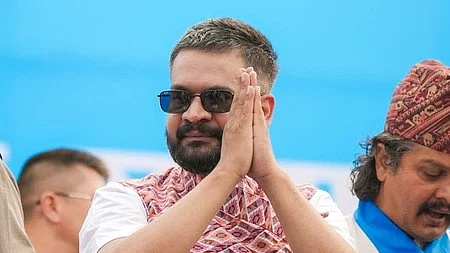


Rapper-turned-politician Balen Shah has won a decisive victory in eastern Nepal, defeating former Prime Minister K. P. Sharma Oli in the parliamentary constituency of Jhapa 5 constituency in what many observers described as a key contest shaping the country’s next leadership.
Shah, the prime ministerial candidate of the Rastriya Swatantra Party (RSP), secured 68,348 votes, far ahead of Oli, who received 18,734 votes. The result marks one of the most significant defeats in Oli’s political career and underscores the growing influence of a new generation of political leaders in Nepal.
The vote tally achieved by Shah is reported to be the highest recorded by a candidate in Nepal’s parliamentary elections since the restoration of multiparty democracy in 1991.
Oli, the chairman of the Communist Party of Nepal (Unified Marxist–Leninist), had long considered Jhapa his political stronghold. However, the constituency has seen major electoral shifts before. In 2008, Maoist candidate Bishwadip Lingden defeated Oli during the sweeping victory of the Maoists in the country’s Constituent Assembly election.
When Shah, who previously served as Mayor of Kathmandu, decided to contest from Jhapa-5, the move was widely seen as a bold challenge to Oli’s dominance. The gamble appears to have paid off, with the RSP riding a strong electoral wave across the country.
Preliminary trends suggest the RSP has secured 61 seats and is leading in another 61 constituencies among the 165 seats contested under the first-past-the-post system. The party is also performing strongly in the proportional representation vote, raising the possibility of a commanding majority in the 275-member House of Representatives of Nepal.
Shah entered politics only recently but quickly gained national prominence. He first rose to political office after winning the mayoral election in Kathmandu in 2022 as an independent candidate, an upset victory that captured public attention and highlighted growing dissatisfaction with traditional political parties.
The success of Shah and the RSP has been widely attributed to voter frustration with established parties such as the Nepali Congress, the CPN-UML, and the Communist Party of Nepal (Maoist Centre), which many critics accuse of failing to address corruption and governance challenges.
Shah’s outspoken style, including frequent criticism of established political leaders on social media, has helped him build strong support among younger voters.
Political developments in Nepal over the past year also set the stage for the election. A youth-led protest movement in September triggered the collapse of the government led by Oli and eventually led to the formation of an interim administration under Prime Minister Sushila Karki, along with the dissolution of the national parliament.
Ahead of the 5 March elections, Shah and former media personality Rabi Lamichhane united under the RSP banner, a move widely viewed as strengthening the party’s appeal.
With the RSP now emerging as the dominant force in the elections, Shah is widely expected to lead the next government, potentially with a strong parliamentary majority that could enable him to pursue the party’s reform agenda.
With IANS inputs
Join our official telegram channel (@nationalherald) and stay updated with the latest headlines