


VB-G RAM G act weakens MGNREGA’s rights-based framework, claims Priyank Kharge
Karnataka minister warns the legislation strips the previous act of its core promise as a rights-based rural employment programme
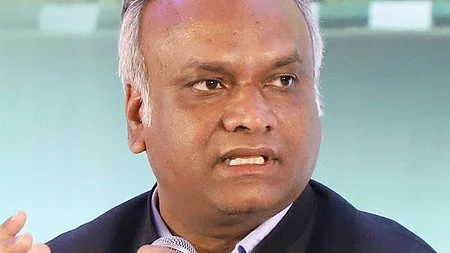


Karnataka minister Priyank Kharge on Monday launched a scathing critique of the Union government’s newly enacted VB-G RAM G Act 2025, which replaces the two-decade-old Mahatma Gandhi National Rural Employment Guarantee Act (MGNREGA).
Kharge warned that the legislation undermines the very soul of the previous act, stripping it of its core promise as a rights-based rural employment programme.
In a detailed post on social media platform X, Kharge argued that the new law transforms the scheme from a demand-driven legal entitlement into a supply-driven mechanism, gradually eroding citizens’ ability to claim their right to work. He further highlighted that while the Centre would retain sweeping decision-making powers, states would be left to shoulder the brunt of financial and administrative responsibilities.
“Much has been spoken about the VB-G RAM G Bill. But beyond everything else, these changes will slowly make the scheme untenable and eventually kill the idea of a rights-based rural employment guarantee,” Kharge, who oversees Rural Development, Panchayat Raj, and IT and Biotechnology in Karnataka, wrote.
The minister also decried the move as a blow to fiscal federalism at a time when state resources are already stretched thin. He pointed to a decline in tax devolution to states — from 34 per cent to 31 per cent, well below the 42 per cent recommended by the Finance Commission — while centrally sponsored schemes grow increasingly restrictive.
Kharge warned that centralising powers under the new act would weaken the 73rd Constitutional Amendment, which grants constitutional status to Panchayati Raj Institutions, thereby eroding the role of local bodies crucial for implementing rural employment schemes on the ground.
Questioning the rationale behind the Union government’s “reform,” Kharge asked how the legislation could be called a strengthening of MGNREGA when it appears to reduce a legal right to mere “token” employment.
His father, Congress president Mallikarjun Kharge, on Sunday echoed the criticism, accusing Prime Minister Modi of deliberately dismantling MGNREGA to make poor villagers and farm labourers subservient to the wealthy. “We fought for the retention of the original MGNREGA, and whatever provisions exist in it must be preserved. I condemn the new Act—it only serves the government’s interests,” he said.
The VB-G RAM G Bill was passed by Parliament on 18 December, and received the assent of President Droupadi Murmu on Sunday, formally replacing the 20-year-old MGNREGA. The new law guarantees 125 days of rural wage employment annually, but critics like Priyank Kharge fear it could fall short of preserving the hard-won rights of rural workers.
With PTI inputs
Join our official telegram channel (@nationalherald) and stay updated with the latest headlines