


Rahul meets farm union leaders, urges national push against India–US trade deal
Interaction follows sharp Parliament speech and escalating political row over impact on farmers
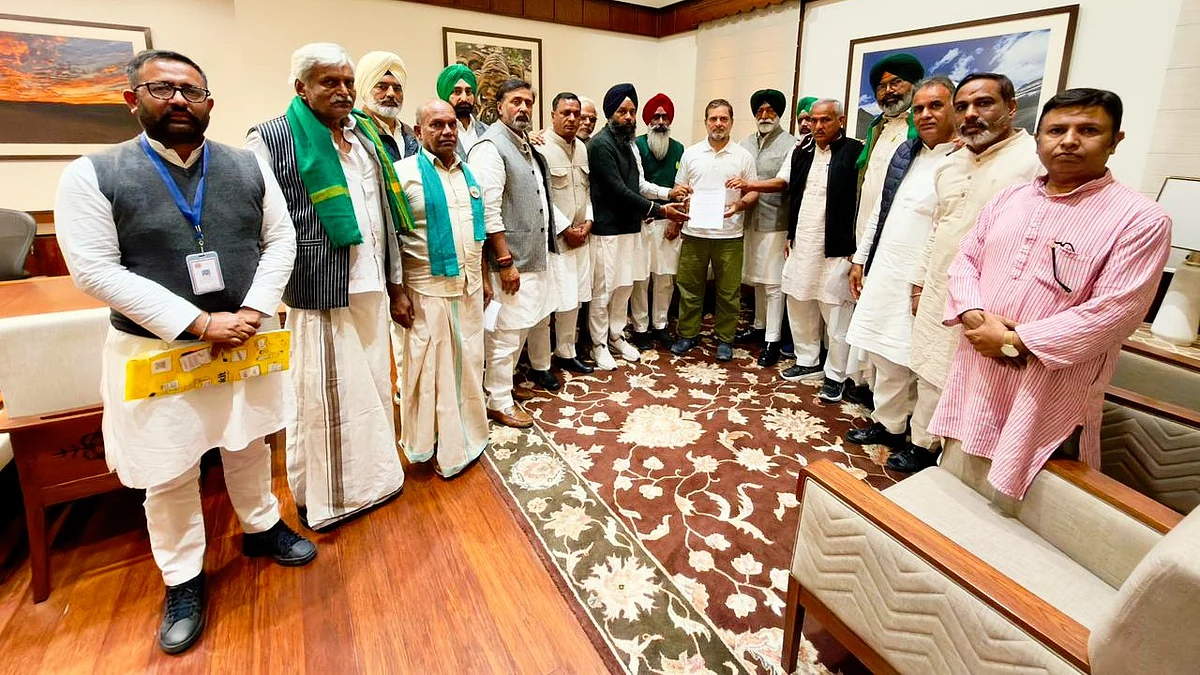


Lok Sabha Leader of Opposition Rahul Gandhi on Friday met representatives of farm unions from across the country in the Parliament House complex, with discussions centering on the proposed India–US interim trade deal and the need to safeguard the livelihoods of farmers and agricultural labourers.
According to the Congress, union leaders conveyed strong opposition to the agreement and raised concerns about its potential effect on producers of corn, soybean, cotton, fruits and nuts. Gandhi reiterated that the deal had opened the door to agricultural imports and warned that other crops could soon be affected. The meeting, the party said, also examined the possibility of building a nationwide mobilisation to challenge the pact and protect rural incomes.
The meeting came against the backdrop of Gandhi’s escalating political offensive on the issue, including pointed remarks in Parliament during the ongoing Budget session.
In his recent intervention in the Lok Sabha, he questioned the government’s approach to economic and strategic decision-making, arguing that trade and foreign policy choices must prioritise domestic stability and livelihoods. He framed the debate around food security and rural distress, insisting that agricultural interests must not be subordinated to diplomatic or commercial expediency.
His critique has been even sharper outside the House. In a video statement shared on social media a day earlier, Gandhi accused the government of undermining farmers and alleged that the trade agreement amounted to a betrayal of national interests. He declared that he would continue speaking out despite the threat of legal or parliamentary action against him.
“File an FIR, register a case, or bring a privilege motion — I will fight for the farmers,” he said. “Any trade deal that takes away the farmers’ livelihood or weakens the country’s food security is anti-farmer. We will not let the anti-farmer Modi government compromise on the interests of the food providers.”
In the same remarks, he went further, describing the pact as a “sell out”, accusing the government of “selling” the country through the agreement — a charge that has since become central to the Opposition’s political messaging on the issue.
The Centre has rejected these allegations, maintaining that the interim arrangement is calibrated to protect domestic producers while enhancing economic engagement. Ministers have dismissed Gandhi’s claims as unfounded and politically motivated, underscoring the widening divide between the government and Opposition over the agreement’s implications.
It ought to be stated that while the US administration has issued more than one official statement on the proposed deal, no such statement has yet come from Indian authorities.
Against this backdrop, Friday’s meeting with farm representatives assumed added political significance. Among those present were All India Kisan Congress chief Sukhpal S. Khaira; Ashok Balhara of the Bharatiye Kisan Mazdoor Union, Haryana; Baldev S. Zira of BKU Krantikari; R. NandKumar of the Progressive Farmers Front; Amarjit S. Mohri of BKU Shaheed Bhagat Singh; Guramneet S. Mangat of the Kisan Mazdoor Morcha — India; and Hameed Malik of the J-K Zamidara Forum, among others.
Congress said the farm leaders and Gandhi discussed organising a large-scale campaign to oppose the deal and emphasised the need to defend the economic security of agricultural communities. The meeting followed Gandhi’s public assertion a day earlier that he would “stand strongly with farmers” despite threats of cases or privilege proceedings, and his charge that the government was acting against their interests through the agreement.
The India–US interim trade pact has become a flashpoint in national politics, shaping confrontations in Parliament as well as public messaging by the Opposition. Gandhi’s outreach to farmer organisations signals an attempt to translate his parliamentary criticism into wider mobilisation beyond the legislature, positioning agricultural concerns at the centre of his party’s political strategy as the debate over the agreement continues.
With PTI inputs
Join our official telegram channel (@nationalherald) and stay updated with the latest headlines