


Rajasthan budget draws Opposition fire over jobs, debt and project gaps
Critics say the 11 February Budget failed to address employment and major infrastructure priorities
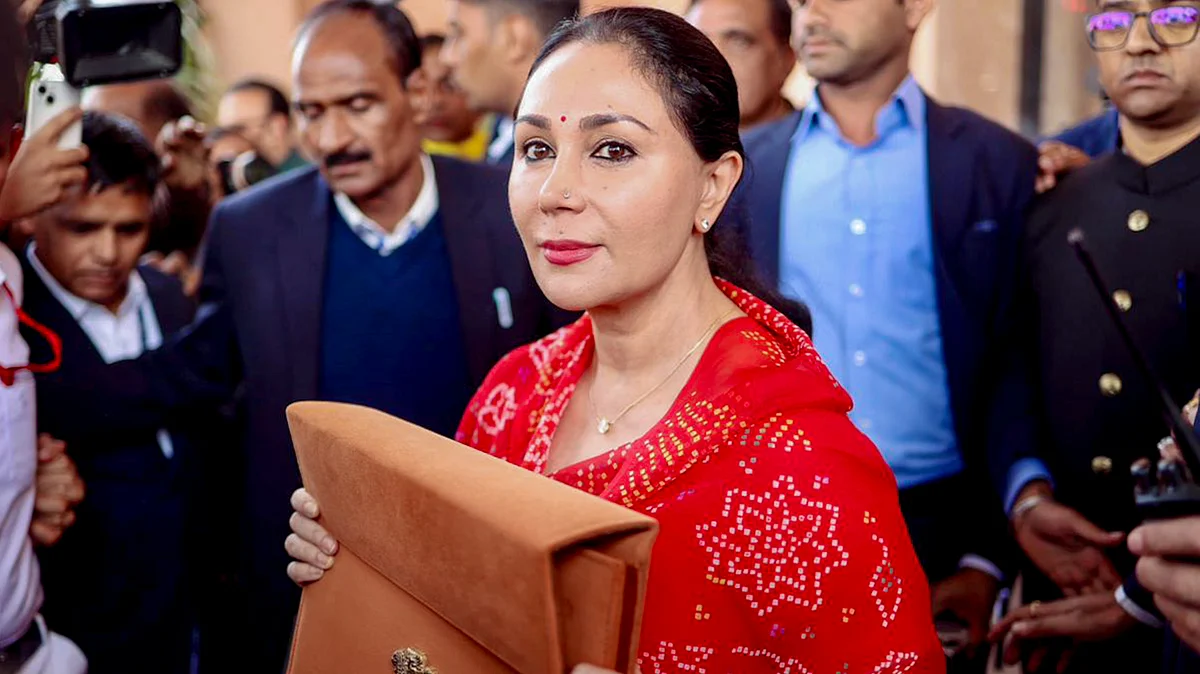


Deputy chief minister and finance minister Diya Kumari presented Rajasthan’s Budget for the 2026–27 financial year in the state Assembly on Wednesday, 11 February, outlining the Bhajan Lal Sharma government’s policy priorities for the coming year.
However, Opposition leaders said the Budget fell short of addressing the challenges of job creation. It had been expected that the finance minister would announce the creation of 1 lakh new jobs, but no such announcement was made.
The Budget stated that 1 lakh jobs had been filled and more than 1.43 lakh posts were being filled, yet critics argued these were largely vacancies arising from retirements rather than new employment generation. They also said 1 lakh private-sector jobs promised earlier had not materialised, citing weak investment inflows.
Opposition leaders claimed that nearly 70–75 per cent of the announcements were routine, covering social security, drinking water and existing schemes. The ruling BJP was also accused of taking credit for initiatives launched under the previous Congress government. Under the Jal Jeevan Mission, for instance, the BJP government claimed to have provided 14 lakh connections, while more than 10 lakh were completed during the Congress government's tenure, they said.
This was the third Budget of the Bhajan Lal Sharma government, yet only about 30 per cent of last year’s announcements were completed, according to the Opposition, while another 30 per cent had not progressed beyond initial stages.
The Pachpadra refinery project — begun under the Congress government and scheduled to start operations in August — remains incomplete, said Assembly Leader of Opposition Tikaram Jully, noting its partnership with Hindustan Petroleum.
Jully also questioned the state’s financial condition. He said Rajasthan’s debt level was approaching the Fiscal Responsibility and Budget Management (FRBM) ceiling of 37 per cent, having reached 36.8 per cent. Borrowings over the past three years, he claimed, exceeded cumulative borrowing in earlier decades and risked pushing the state into a debt trap.
The finance minister herself acknowledged fiscal strain in her Budget speech, noting pressures on state finances. According to reports cited by critics, the state had taken an overdraft from the Reserve Bank of India once, while the budget size is projected to grow from Rs 3.72 lakh crore in 2022–23 to Rs 6.10 lakh crore by 2026–27.
Opposition leaders said the debt burden was expected to rise by Rs 79,492 crore, while per capita income — at Rs 202,349 — showed only marginal gains when adjusted for inflation and lagged behind leading states such as Tamil Nadu, Maharashtra and Karnataka.
Pradesh Congress president Govind Singh Dotasra criticised the government’s investment claims under the 'Rising Rajasthan' initiative, saying announcements of large-scale investment and rapid land allocation lacked clarity about actual industrial arrivals or job creation.
Former chief minister Ashok Gehlot expressed surprise that the Eastern Rajasthan Canal Project (ERCP), intended to supply drinking and irrigation water to 22 districts, received no mention. He argued that the absence of funding provision suggested the project remained stalled, with the detailed project report yet to be finalised.
The ERCP delay, along with slow progress on the Pachpadra refinery, was described by Congress leaders as evidence of missed infrastructure priorities. They also alleged that the Union government had withheld clearance earlier and that progress remained elusive despite the BJP now governing both state and Centre.
Gehlot further noted that previous budgets had provided for a 15 per cent annual rise in social security pensions, whereas the current budget contained no comparable enhancement — a move he said would disappoint nine million beneficiaries. He added that promises of 6 lakh jobs over five years remained unmet, with recruitment largely limited to filling retirement vacancies.
Former Union finance secretary Arvind Mayaram characterised the budget as routine and said it did not answer three central questions: whether the state economy would outpace the national average, whether growth would create jobs, and whether it would raise per capita income.
He stressed that employment intensity should be a key metric in infrastructure planning, arguing that projects must be evaluated not only for cost efficiency but for jobs created per rupee invested. Growth that fails to absorb labour will not raise incomes, he said, while productivity and fiscal discipline remain essential for durable prosperity.
Rajasthan possesses demographic strength, renewable potential and industrial capacity to move into the top tier of Indian states. Yet, critics said, the Budget presented a cautious and underwhelming roadmap that left major structural concerns unresolved.
Join our official telegram channel (@nationalherald) and stay updated with the latest headlines