


Wangchuk’s detention helped bring Leh violence under control: Centre tells SC
Government says activist was ‘chief provocateur’; court to hear habeas plea on 16 February
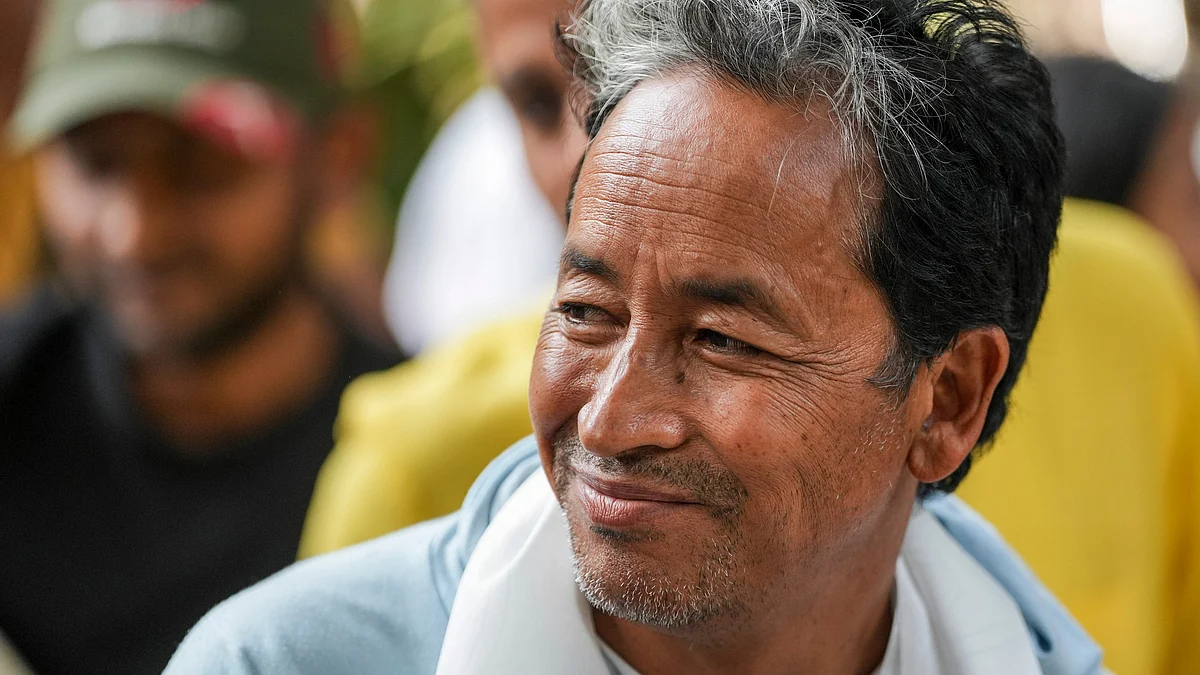


The Centre on Thursday told the Supreme Court of India that the detention of climate activist Sonam Wangchuk played a decisive role in bringing the situation under control following violence in Leh on 24 September last year, in which four people were killed and around 60 injured.
Appearing for the Centre, Additional Solicitor General K.M. Nataraj told a bench of Justices Aravind Kumar and P.B. Varale that Wangchuk was the “chief provocateur” behind the agitation that led to the violence, and that normalcy returned after he was taken into preventive custody.
“He was the chief provocateur that led to the violence in which four were killed and 60 injured. The detention order shows an expressed link and a clear application of mind,” Nataraj submitted. “After his detention, the agitation and violence came under control. Hence it is proved that the detention order is a perfect order and was justified in the situation.”
The law officer argued that all procedural safeguards prescribed under the law had been followed in issuing the detention order. “All procedural requirements under the law have been meticulously complied with. Once there is compliance with statutory requirements, there is no question of sitting over the subjective satisfaction of the detaining authority,” he said, adding that such orders could be passed on the basis of suspicion or reasonable probability.
The bench posted the matter for further hearing on 16 February.
Wangchuk is currently lodged in Jodhpur jail in Rajasthan under the provisions of the National Security Act, which empowers the Centre and states to detain individuals to prevent them from acting in a manner prejudicial to the defence of India. The maximum period of detention under the Act is 12 months, though it can be revoked earlier.
On Wednesday, the Centre had informed the court that Wangchuk had undergone medical examinations 24 times since his detention and was “fit, hale and hearty”, contending that there were no medical grounds for his release.
Solicitor General Tushar Mehta had submitted that the grounds on which the detention order was passed continued to subsist and that releasing Wangchuk on health grounds was not feasible.
The Supreme Court is hearing a habeas corpus petition filed by Wangchuk’s wife, Gitanjali Angmo, seeking to declare his detention illegal. Angmo has contended that the violence in Leh on 24 September could not be attributed to Wangchuk’s actions or statements.
According to the petition, Wangchuk had publicly condemned the violence through social media posts and had said that violence would lead to the failure of Ladakh’s peaceful struggle of the past five years. Angmo described the day of the violence as the “saddest day” of his life, asserting that he consistently advocated non-violent means.
Join our official telegram channel (@nationalherald) and stay updated with the latest headlines