


Stalin warns on ‘delimitation’, others call bluff on ‘women’s reservation’
Centre uploads drafts of three bills ahead of special session; Opposition alleges delimitation push under cover of women’s quota plan


Barely 36 hours before the parliament re-convenes for a three-day special session, draft of three bills to be introduced in the session were uploaded on the members’ portal of Parliament. There was outrage over the timing as the Opposition questioned the urgency and asked why the session could not wait till the elections get over in Tamil Nadu and West Bengal by the end of April. They also questioned the haste with which the Delimitation Bill is being pushed, pointing out that for women’s reservation, the delimitation bill and increasing the size of the Lok Sabha and state assemblies are not necessary.
Akhilesh Yadav of the Samajwadi Party questioned the sincerity of the BJP and accused the Centre of seeking to bypass the caste census while removing the restrictive clauses on women’s reservation that the Centre itself had imposed in 2023. Pointing out that though the BJP currently has 1,656 MLAs across the country, only about 10 per cent of them are women, he added that only 15 per cent of BJP’s Lok Sabha MPs are women, and in the Rajya Sabha that figure drops further to around 10 per cent Trinamool Congress leaders pointed out that 39 per cent of its MPs are women without the bills.
While there is unanimity among parties to ensure 33 per cent reservation of women, the Delimitation Bill has raised widespread outrage and suspicion. If the bills are passed, southern states estimated the Hindi speaking states in North India will see their share of Lok Sabha seats rise from the current 38.1 per cent to 43.1 per cent while the southern states will see theirs shrink from 24.3 per cent to 20.7 per cent.
UP’s share of seats in the Lok Sabha will rise from 14.73 per cent to 16.24 per cent while Kerala’s will shrink from 3.68 per cent to 2.7 per cent. Bihar will move from 40 seats (7.37 per cent) to 72 seats (8.47 per cent); and Tamil Nadu from 39 to 50 — a reduction in its current share from 7.18 per cent to 5.88 per cent.
The bills propose an inter-state redistribution of Lok Sabha seats based on the latest Census figures and an increase in the size of the Lok Sabha to a maximum of 850 seats — 815 for States and 35 for Union Territories — against the current ceiling of 550, while carving out 33 per cent for women. The current freeze on the readjustment of Lok Sabha seats written into Articles 81 and 82 was based on a political consensus negotiated by BJP Prime Minister Atal Bihari Vajpayee in 2001 and enacted through a constitutional amendment. The Narendra Modi government is now proposing to remove that safeguard and effect an immediate redistribution of Lok Sabha seats based on the latest Census — which, as of now, is that of 2011.
The States of Tamil Nadu, Kerala, Karnataka, Telangana, and Punjab had demanded an extension of the existing freeze for another 25 years beyond 2026. Not only has that demand been overlooked, the Centre is now seeking parliamentary approval for an immediate redrawing of India’s representative map.
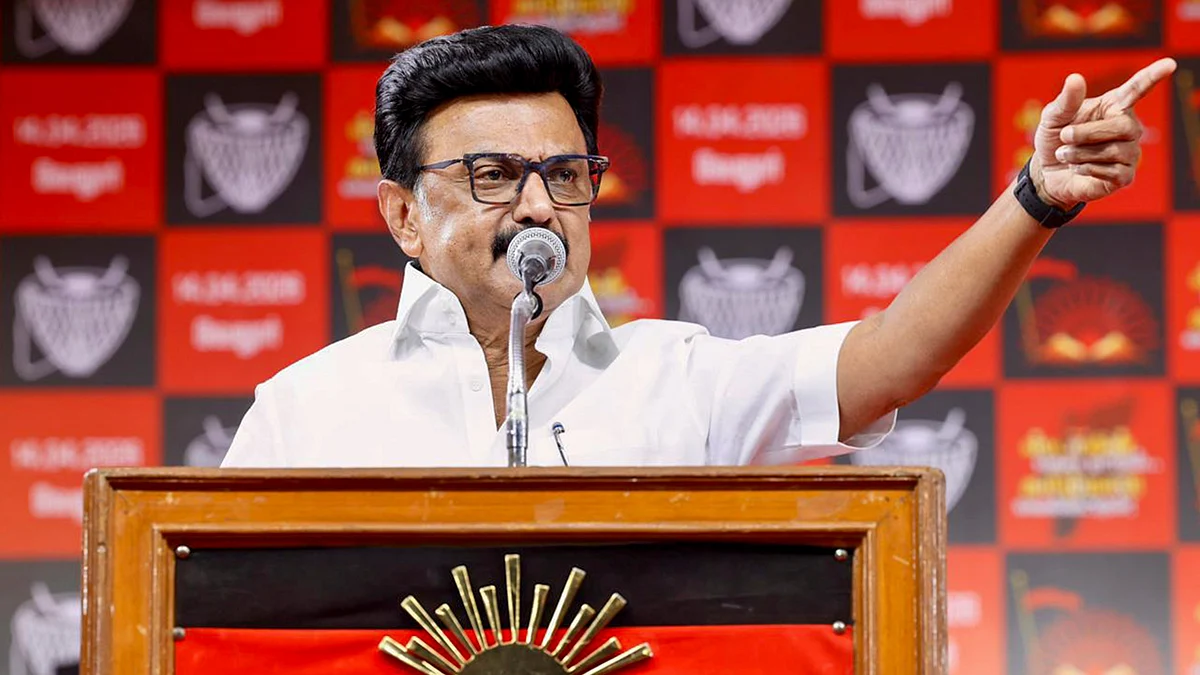
Tamil Nadu chief minister M.K. Stalin, who had warned of this plan of the BJP and had hosted a conclave of chief ministers of opposition-ruled state in March, 2025, issued a warning on Tuesday. “You will see a Tamil Nadu you have not seen before. India will once again see the DMK of the 1950s and 1960s… every family will take to the streets,” he said in a video message. “I say it in the name of Ambedkar: if Tamil Nadu is affected, we will draw India’s attention. Prime Minister [Narendra Modi], this is the final warning from Tamil Nadu. Tamil Nadu will fight. Tamil Nadu will win,” he said.
The Telangana chief minister Revanth Reddy wrote to the prime minister and chief ministers of southern states seeking a political consensus on the proposed increase in Lok Sabha seats and urging immediate implementation of women’s reservation without linking it to seat expansion. He proposed a hybrid model. If Lok Sabha seats are increased from 543 to 850, he proposed, half of the additional seats should be allocated based on population, while the remaining half should be distributed based on Gross State Domestic Product (GSDP) indicators. “The hybrid model will ensure that no state is penalised for progress while maintaining democratic representation and giving all regions a fair voice in national governance,” Mr. Reddy said.
“The Bills being introduced in the name of implementing women’s reservation amount to a death warrant for federal India,” said John Brittas, CPI(M) MP. Abhishek Manu Singhvi, Congress MP said, “in the present proposals there is not a whisper of the repeated assurance by the government that the inter-state seat distribution percentages will remain intact.” Barely 36 hours before Parliament reconvenes, without any multi-party meetings despite repeated demands, and with no attempt to refer these Bills to a parliamentary committee, the government is trying to unilaterally enforce its wishes on the country, he added.
“This has nothing to do with women’s reservation and everything to do with delimitation for BJP’s 2029 election plans,” he said.
Join our official telegram channel (@nationalherald) and stay updated with the latest headlines