


UGC equity rules 'under reconsideration', Centre tells SC
With upper-caste groups and BJP functionaries opposing the rules, the Centre’s rethink comes months before Uttar Pradesh votes in 2027
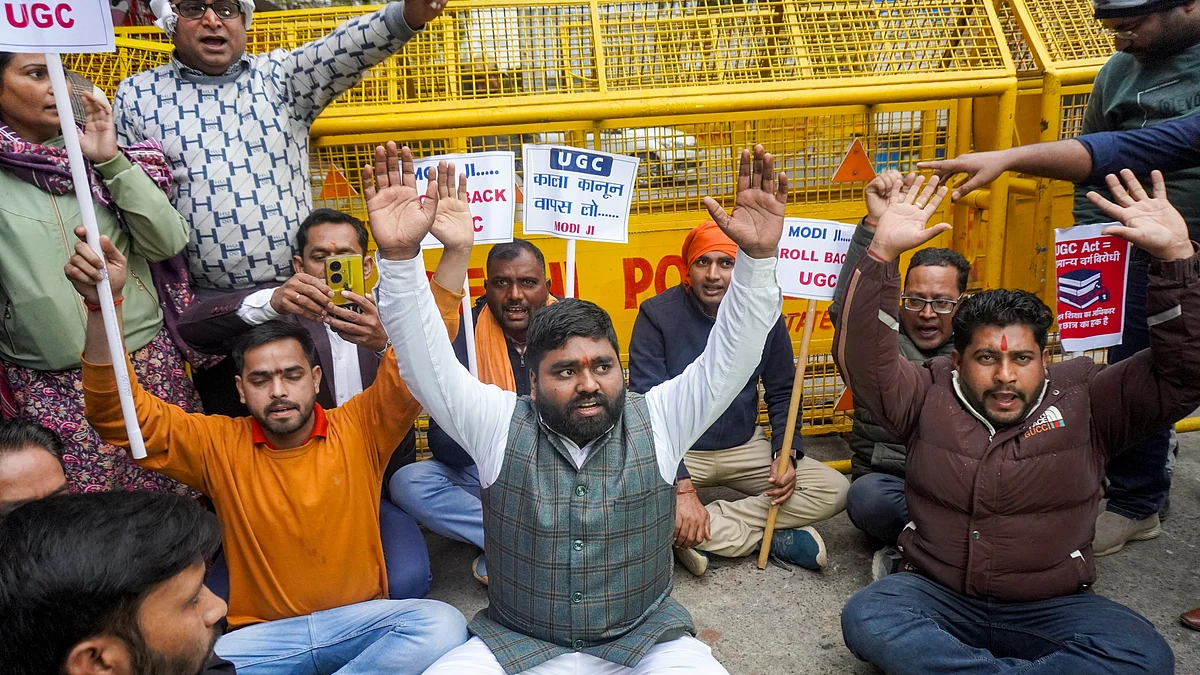


The Centre on Thursday, 20 August told the Supreme Court that the 2026 University Grants Commission (UGC) regulations aimed at preventing caste-based discrimination on campuses are under reconsideration, a move that comes amid sustained opposition from upper-caste groups and unease within the BJP’s own support base in Uttar Pradesh.
The development assumes political significance with Uttar Pradesh headed for Assembly elections in 2027, where the BJP will be keen to retain its broad social coalition while preventing a consolidation of upper-caste voters against it.
“This is the UGC regulation matter. It is under reconsideration,” solicitor-general Tushar Mehta told a bench comprising Chief Justice of India Surya Kant and Justices Joymalya Bagchi and V. Mohana. The bench asked the UGC to file a comprehensive counter affidavit within four weeks. The petitioners may file their rejoinder, if any, within two weeks thereafter.
The Supreme Court was hearing a batch of pleas challenging the validity of the University Grants Commission (Promotion of Equity in Higher Education Institutions) Regulations, 2026.
On 29 January, the apex court had directed that the regulations be kept in abeyance, observing that the framework was ‘prima facie vague’, could have ‘very sweeping consequences’ and might end up dividing society with a ‘dangerous impact’. The court had also directed that the UGC’s 2012 equity regulations would continue to remain in force until further orders.
The 2026 regulations had triggered protests across several parts of the country, particularly in Uttar Pradesh, where sections of students, upper-caste groups and BJP functionaries vehemently opposed them. Critics argued that the rules could expose general category students to harassment through false complaints and create caste-based divisions on campuses.
The opposition has also caused visible unease within the BJP. Several party office-bearers in Uttar Pradesh resigned in protest against the regulations, while Bareilly city magistrate Alankar Agnihotri also resigned. BJP functionaries and upper-caste groups described the rules as biased against general category students.
The controversy has consequently become more than a campus issue for the BJP, touching a section of its traditional upper-caste support base at a politically sensitive time. The party has historically enjoyed strong backing among upper castes, including Brahmins, in Uttar Pradesh. Recent reporting has suggested that the UGC row has contributed to growing unease among these voters, with the BJP itself assessing the issue ahead of the 2027 Assembly elections.
The political implications could be significant if the controversy feeds into a wider perception among upper-caste voters that the BJP is taking them for granted. At the same time, any rollback or dilution of the regulations could provide Opposition parties with an opportunity to accuse the government of compromising on safeguards against caste discrimination.
The Samajwadi Party, for instance, has backed the regulations while saying that no section should face injustice, positioning itself on the social-justice side of the debate.
The Supreme Court had earlier flagged specific concerns with the 2026 regulations, including the need for a separate definition of ‘caste-based discrimination’ under Regulation 3(1)(c), when Regulation 3(1)(e) already provides a broad definition of ‘discrimination’. It had also questioned why ragging was excluded from the scope of the regulations despite being a common form of harassment in educational institutions.
The apex court had said the language of the regulations appeared ‘prima facie vague’ and was ‘capable of misuse’.
Advocate Vishnu Shankar Jain, appearing for one of the petitioners, had challenged Regulation 3(1)(c), which defines caste-based discrimination as discrimination ‘only on the basis of caste or tribe’ against members of the Scheduled Castes, Scheduled Tribes and Other Backward Classes.
The regulations were notified by the UGC on 13 January with the stated aim of addressing discrimination in higher educational institutions and promoting equity and inclusion, particularly for students from marginalised communities. The rules provide for equity committees, helplines and monitoring mechanisms to address complaints of discrimination.
The Centre’s statement in the Supreme Court on Thursday leaves the fate of the controversial regulations open, but the political stakes are already clear: any decision on the rules will have to balance demands for stronger protection against caste discrimination with the growing resentment they have triggered among sections of the BJP’s upper-caste support base.
Join our official telegram channel (@nationalherald) and stay updated with the latest headlines