


Welfare vs promises: Bengal votes with TMC’s delivery edge under scrutiny
As polling begins on 23 April and continues on 29 April, welfare reach may outweigh BJP’s bigger pledges
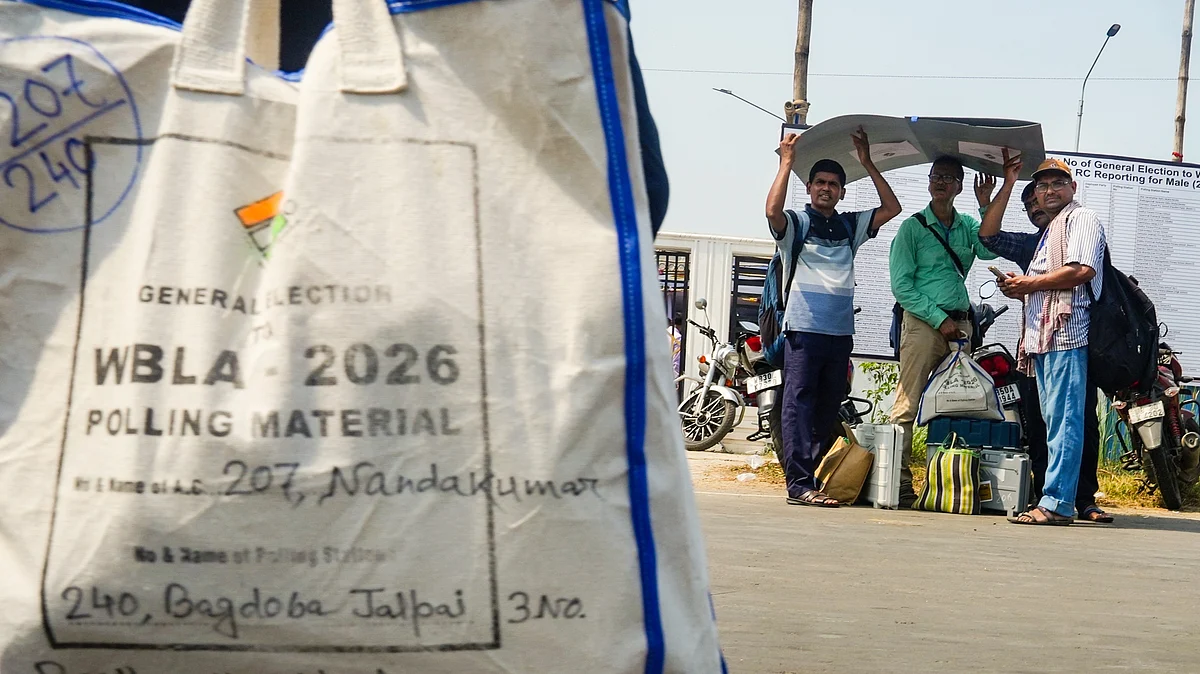


With the first phase of polling set for 23 April and the second on 29 April, West Bengal enters a high-stakes electoral contest defined less by rhetoric and more by lived experience. Across villages, towns and Kolkata’s neighbourhoods, the choice before voters is stark: a decade of welfare delivery under Mamata Banerjee’s Trinamool Congress (TMC), or the Bharatiya Janata Party’s (BJP) promise of larger payouts and structural change.
TMC leaders have sharpened their attack by citing what they call a pattern of delivery gaps in BJP-ruled states. In Madhya Pradesh, for instance, the much-publicised Ladli Behna scheme has seen periodic complaints over delays and exclusions even as beneficiary numbers expanded.
In Uttar Pradesh, Opposition parties have repeatedly flagged irregularities in pension disbursals and gaps in job creation despite headline claims around employment drives. And in Assam, schemes such as Orunodoi — while significant — have been criticised for limited coverage relative to demand and shifting eligibility criteria.
At the national level, the BJP continues to face political pushback over unfulfilled or diluted promises. The oft-cited assurance of bringing back black money and depositing Rs 15 lakh in every citizen’s account — raised during the 2014 Indian general election campaign — remains a recurring reference point for sceptical voters. Similarly, ambitious employment targets have not kept pace with demand, with joblessness continuing to feature prominently in voter concerns across states.
BJP leaders contest these criticisms, pointing to large-scale central schemes, infrastructure expansion and direct benefit transfers as evidence of governance capacity. But in Bengal’s campaign, the TMC's argument is landing with a section of voters: that scale of promise does not always translate into consistency of delivery.
At tea stalls and market crossings, the conversation is grounded in immediacy — food, healthcare, housing and cash support. TMC’s pitch rests on continuity and proof: schemes that have reached households consistently over the years. BJP, in contrast, is offering scale — higher cash transfers, job guarantees and a broader economic reset — without having governed the state to demonstrate delivery.
Pre-poll estimates suggest a TMC advantage, with projections placing it between 184 and 194 seats, against BJP’s 98 to 108.
TMC’s strength lies in its expansive welfare architecture. Over 100 schemes are delivered through Duare Sarkar camps, designed to take services directly to citizens. Lakshmir Bhandar remains its flagship: Rs 1,500 per month for general category women and Rs 1,700 for SC, ST and OBC women, following a recent increase. More than 2.42 crore women — over 60 per cent of adult females in the state — are beneficiaries.
Healthcare coverage under Swasthya Sathi extends up to Rs 5 lakh per family annually, covering crores of residents and approving lakhs of hospitalisations. Housing under Banglar Awas Yojana, farm assistance, and education support through Kanyashree further reinforce TMC’s welfare base. For many households, these are not abstract policies but regular financial lifelines.
Newer additions such as Yuvashree, offering Rs 1,500 monthly to the unemployed aged 21-40, aim to address job distress, though on a limited scale compared to demand. Banerjee’s campaign messaging has leaned into continuity — steady expansion of benefits, more funds for agriculture, and extended health outreach.
The BJP’s counter is aggressive and targeted. Its proposed 'Annapurna Bhandar' promises Rs 3,000 per month for women — double the TMC’s baseline — alongside free transport, expanded healthcare and a broader welfare package. It has also promised one job per family, support for startups, implementation of the Seventh Pay Commission for government employees, and sector-specific pushes such as jute revival and dairy expansion.
The BJP is also foregrounding issues of unemployment, law and order, and corruption — areas where voter concern remains significant. Yet its challenge is credibility: these promises remain prospective in a state it has not governed.
On the ground, this gap is evident. Rural voters, especially women, appear more inclined towards the certainty of existing benefits. Urban voters and younger demographics show some openness to the BJP’s employment-focused messaging, but often with scepticism about delivery timelines.
The campaign has also seen familiar political exchanges. BJP leaders have criticised the TMC’s welfare model as fostering dependency, while Banerjee has framed her government’s approach as responsive governance rooted in daily needs.
As polling begins, the electoral question narrows to a simple test: whether voters prioritise proven, incremental support or opt for larger, untested promises. Early indicators suggest that TMC’s embedded welfare network continues to provide it with a decisive edge — particularly in rural Bengal, where elections are often won.
The verdict, however, will unfold over the two polling days — 23 and 29 April — when that quiet calculation inside households turns into votes.
Join our official telegram channel (@nationalherald) and stay updated with the latest headlines