


West Bengal: Look who’s now talking ‘vote chori’!
BJP in Bengal is appropriating the ‘vote chori’ narrative that the Opposition claims drove BJP and NDA victories in Bihar and Maharashtra
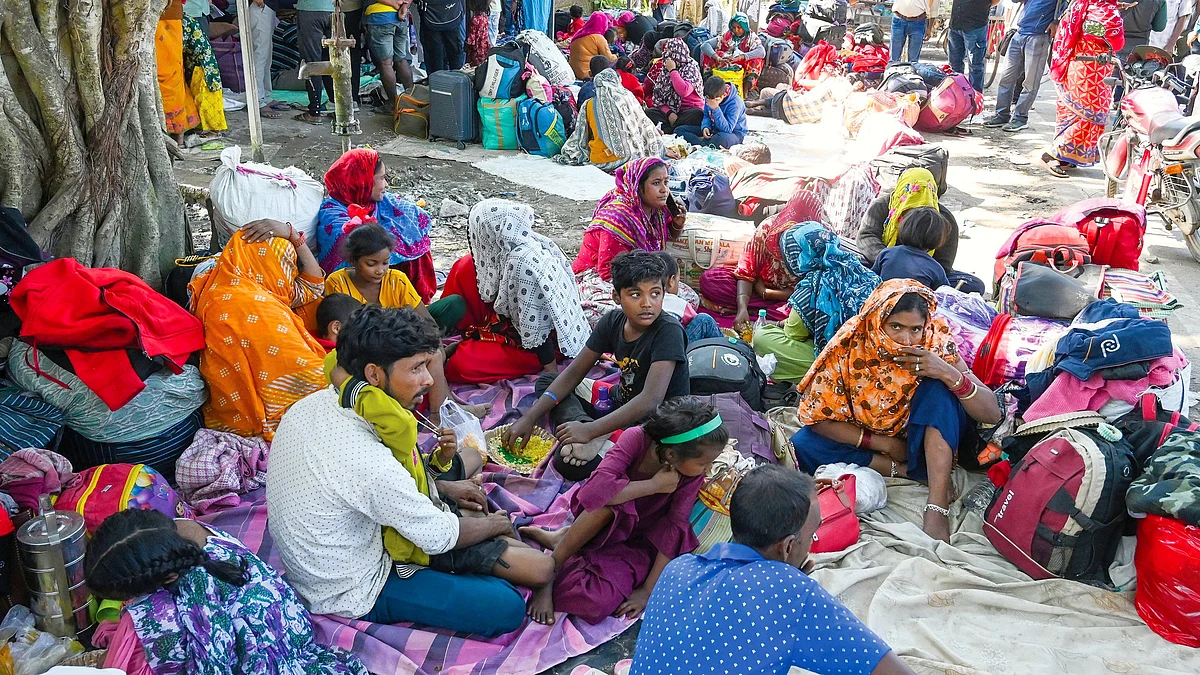


The second instalment of the Election Commission’s purge of India’s voter lists is in full swing. While the exercise is on across 12 states and Union Territories in this round, the real focus is unmistakably on one state — West Bengal.
If alleged ‘illegal migrants’ were the initial targets, now a hunt is on for ‘dead’ voters — 21 lakh of them — with the help of some judiciously leaked information from ‘sources’ in the office of the West Bengal chief electoral officer.
That’s the latest number to have emerged as the Special Intensive Revision grinds on in the state (due to conclude on 11 December, the new date set by the EC). At the beginning of December, North 24 Parganas topped the districts with the largest number of dead voters — pegged at around 2.75 lakh.
This is significant not just because so many dead voters have remained on the electoral rolls since the special revision of 2003, but also because the district lies on the border and holds both the headquarters and a major concentration of the scheduled caste Namasudra (Matua) community.
The Matuas number anywhere between 2.5 to 2.75 crore in West Bengal, out of whom 1.7 crore are voters, representing 17 per cent of the state’s schedule caste population. This makes them the second largest group after the Rajbongshis, who are mostly concentrated in North Bengal with a spillover into Assam.
While their electoral influence is undeniable, there appear to be only seven Matua MLAs in the state Assembly, six of whom belong to the ruling Trinamool Congress. This may partly explain the deletions and additions in the North and South 24 Pargana districts, as well as in Nadia, areas with a substantial concentration of Matuas.
Detecting the dead and deleting their names ought to have been a routine job with the near continuous revision of electoral rolls undertaken by the Election Commission at considerable public expense.
Prasenjit Bose, chairperson of the Special Committee to Safeguard the Right to Vote and Citizenship of the People of West Bengal — set up by the state unit of the Congress party — has raised a basic question: Why did the Election Commission not use the online Civil Registration System for births and deaths to identify dead voters? In fact, why did the Commission not draw up a list of new voters based on the births registered?
If the Commission had spent more time and resources in the run-up to the SIR, Bose suggests, the fuss over ‘absent’, ‘shifted’, ‘dead’ and ‘duplicate’ voters would have been considerably less. Not only for the booth-level officers (BLOs) handling the new-fangled method of filling and uploading enumeration forms, but also for the political parties battling each other over the roll revision process.
Had the Election Commission done its homework, the optics of preparing for the 2026 West Bengal Assembly elections would have been markedly different.
The dead, duplicate and absent voters still on the electoral rolls are potentially the names that can be used to create fake identities and provide the cover for ‘false’ voters. If the BJP and CPI(M) are to be believed, the Trinamool Congress has turned the several lakh dead, duplicate and absent voters into a vote bank that accounted for its spectacular success in previous elections.
The irony is that the BJP in West Bengal is appropriating the ‘vote chori’ narrative that the Congress and the Opposition claims is the basis for the BJP and National Democratic Alliance’s victories in Bihar and Maharashtra.
The BJP’s West Bengal unit has accused the state government of hijacking BLOs to compromise the electoral process — an allegation routinely levelled in BJP-ruled states too. It has demanded an audit of booths and constituency-wise electoral rolls with suspicious ‘entries’.
Apart from everything else, SIR 2025–26 will go down in history for the damage done to the mental health of both voters and BLOs, harassed by the complexities of a process that has stapled proof of citizenship with verification of eligible voters.
The public perception of the SIR in West Bengal is, in one word, exclusion. Who will be deleted from the electoral rolls and why — this discourse is animated by the number of Hindu voters versus the number of ‘Bangladeshi’, i.e. supposedly illegal Muslim migrants likely to be excised.
The Matuas — split between BJP supporters, Trinamool Congress supporters and those who swing between the two — stand to lose heavily if the SIR process takes away their voting rights. The same risks apply to Rajbongshis and to those (mostly) Muslim residents who were allowed to remain in India as Bangladeshi citizens.
This bizarre situation stems from India’s decision to offer stateless residents living in disputed enclaves a choice of citizenship. Under the Land Boundary Agreement (originally signed in 1974) and ratified in 2015, 51 enclaves became Indian territory, while 111 went to Bangladesh.
Of the 15,000 people in the enclaves now in India, fewer than 1,000 — mostly Hindus — chose Indian citizenship; the rest remained Bangladeshi citizens while continuing to live and work on ancestral land within India. In contrast, Bangladesh granted full citizenship to both Hindus and Muslims living in the enclaves within Bangladesh. How the SIR will reshape the lives of ‘Bangladeshis’ in India remains a story to watch.
Join our official telegram channel (@nationalherald) and stay updated with the latest headlines