


Why is Om Birla representing India in Dhaka instead of Jaishankar or Doval?
Sending Lok Sabha speaker to Bangladesh PM's swearing-in ceremony signals cautious approach and missed diplomatic opportunity
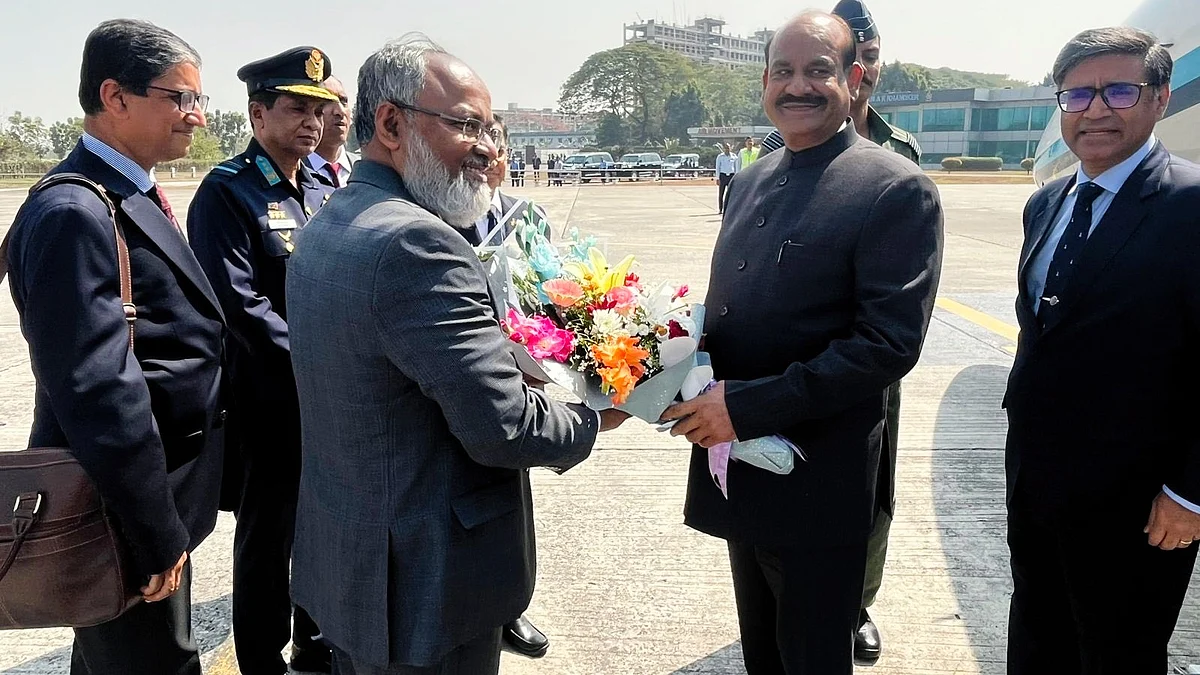


The swearing in ceremony of Tarique Rahman in Dhaka today, 17 February, will see prime ministers of Pakistan, Sri Lanka, Nepal and Bhutan in attendance. As also the prime ministers of China, Thailand, Singapore, Malaysia and Maldives. Missing from this list is our Prime Minister Narendra Modi, who turned down the invitation owing to other official engagements at home.
In his place, the government decided to send Lok Sabha Speaker Om Birla — currently facing a no-confidence motion in Parliament — to represent India. This choice suggests New Delhi remains hesitant to fully embrace the new BNP (Bangladesh Nationalist Party) government in Dhaka.
The move has also raised several questions. Is it once again a missed opportunity for India to signal that it is ready to break bread with BNP and deal with the new government with a clean slate and an open mind? Sending the Lok Sabha speaker, a political lightweight in international relations, may have appeared a safe option, but is he the right person to represent India at the ceremony?
If India did want to be cautious and wanted to send a stronger message, minister for external affairs S. Jaishankar or national security advisor Ajit Doval could have been entrusted with the task.
Both would have had the added benefit of meeting other heads of government on the sidelines. Sending the Lok Sabha speaker, therefore, appears to have been a wasted opportunity.
Then again, the choice of Om Birla may have been a signal by the prime minister and the BJP that the no-confidence resolution against him was of no consequence; but then, to use an international platform to score a point in domestic politics also appears casual and inconsequential. It does, however, make sense if the government plans to have the speaker make the dramatic and grand gesture of resigning and inducting him into the government as a minister.
From a protocol standpoint, the invitation was extended to the prime minister, so any representative should ideally be of comparable executive rank. The speaker, not part of the government’s executive, is arguably an unsuitable delegate and likely ranked lower than peer leaders from Maldives or Bhutan, potentially diluting India’s stature at the event.
A delegation led by Jaishankar, Doval, or foreign secretary Vikram Misri would have underscored India’s commitment to rebooting relations with Bangladesh and indicated the seriousness New Delhi attaches to its neighbourhood diplomacy.
Join our official telegram channel (@nationalherald) and stay updated with the latest headlines