


Xi-Trump-Putin ‘trilateral’ at Shenzhen: much ado about nothing? Does India miss APEC?
APEC has admitted no new members since 1998, despite India’s interest in joining
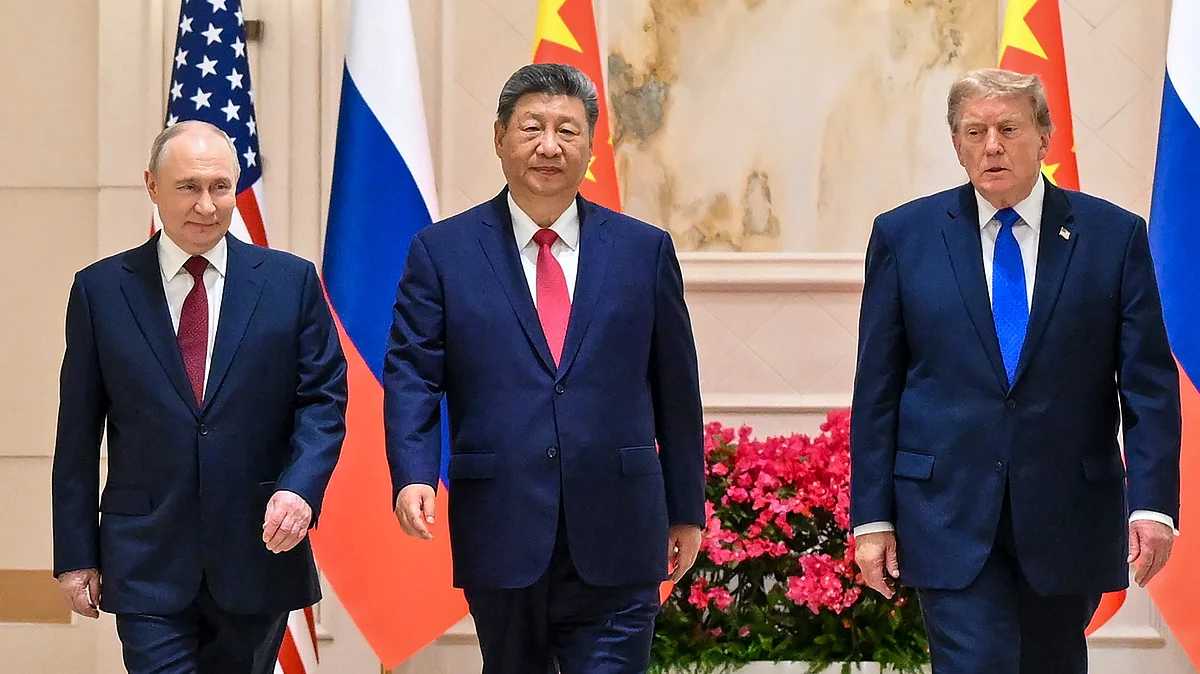


The trilateral meeting between Xi Jinping, Donald Trump and Vladimir Putin in Shenzhen overshadowed the APEC economic leaders’ meet
No concrete steps were mentioned in the joint declaration after the trilateral even as it dwelt on global security, UN reforms, nuclear non-proliferation and wars in Iran and Ukraine
India and European countries were missing from the APEC summit because they are not members of the 21-member APEC. India has been applying for APEC membership, which has remained frozen since 1997 and requires the approval of each member country
The first trilateral meeting between the leaders of US, Russia and China in Shenzhen this week has been described as historic. Some commentators compared it with the Yalta summit in 1945 between President Roosevelt, Winston Churchill and Joseph Stalin at the end of the second world war. Others have contested the claim and pointed out that the joint declaration issued in Shenzhen revealed little that could be called new or substantial.
The trilateral was still significant because this was the third time this year that Xi Jinping and Donald Trump met this year. They are likely to meet for the fourth time next month during the G-20 summit in Miami. Much was made of the fact that Xi Jin Ping personally received the US President on arrival while President Putin was received by one of the seven members of the Chinese Communist Party’s central committee. However, commentators refused to read in it a snub for Putin, pointing out that XI was merely reciprocating the gesture when Trump received him personally in the US in September.
President Purin’s presence did irk the European leaders who were meeting in Berlin to discuss the stalemate in Ukraine. In Shenzhen, Trump greeted Putin by saying, ‘he is my friend’ while they shook hands. This provoked Polish prime minister Donald Tusk to post on X, “God, protect us from such friends”.
While the joint declaration following the trilateral emphasised energy security for global peace and stability, dialogue and elimination of the possibility of nuclear war, there was remarkably little concrete commitment on trade dispute, Iran or on Ukraine and trade disputes.
“A nuclear war cannot be won and must never be fought”, said the joint statement and added that the three largest nuclear powers would hold talks on reducing nuclear risks and preventing nuclear proliferation. Trump said that the three nations are “uniquely positioned to discuss how to reduce the number of nuclear weapons” on Earth, reviving efforts to push disarmament among the world’s largest nuclear powers. The three leaders also committed to push for United Nations reform. As three of the five permanent members of the UN Security Council, they pledged to make the body “more effective in responding to global challenges”.
Xi described Thursday’s meeting with Putin and Trump as “positive, constructive and fruitful”. He emphasised that China, Russia and the US are three different countries. While they can’t change each other, the right attitude is to maintain mutual respect and to seek common ground amid differences. Xi added that the three should work together to maintain the security and stability of the world energy market.
Chairing a plenary session of the 21 Apec member economies, Xi called for deeper regional economic integration, freer trade and new sources of growth as global economic growth slows. “Economic globalisation may have setbacks, but Asia-Pacific cooperation should not turn backward,” President Xi said in his closing remarks.
India was not invited to the APEC leaders’ summit because it is not a member of APEC (Asia-Pacific Economic Cooperation). India has long sought membership and several countries have expressed support at various times, but no consensus has been reached to admit new members since 1998. India does have healthy trade relations with APEC countries and has been trying to become a member for the past many years. Membership of the four-member Quad (others being US, Japan and Australia) gives India strategic influence but since the Grouping is perceived as essentially against China, India’s membership application for APEC has made no headway.
Join our official telegram channel (@nationalherald) and stay updated with the latest headlines