


What led to dip in India’s medals tally at Aichi-Nagoya?
A late medal surge saved India’s fourth-place finish, but the 85-medal haul raises questions ahead of the 2036 Olympic ambitions


India finished fourth at the Aichi Nagoya Asian Games with 85 medals — 22 fewer than the 107 won at Hangzhou.
Athletics, shooting and badminton underperformed, while late gains in boxing, wrestling, hockey and archery salvaged the campaign.
The 25 per cent reduction in India’s contingent and the medal decline will fuel questions about the country’s preparations for its 2036 Olympic ambitions.
Goodbye Aichi Nagoya, welcome Doha — this was the usual theme marking the closing ceremony of the 20th Asian Games on Sunday, 4 October. Unlike the Commonwealth Games, which keeps struggling for relevance from one edition to another, this quadrennial showpiece has further consolidated its position as the second-largest multi-discipline extravaganza after the Summer Olympics.
It was an edition that kicked off with myriad problems in Japan — from insufficient athletes’ accommodation to forecasts of inclement weather — but eventually held on, with India retaining their fourth position from Hangzhou with a late surge of medals. The pecking order in the top three remained unchanged, with China, Japan and South Korea in that order, followed by India in fourth — albeit with an over 20 per cent drop in their medal tally.
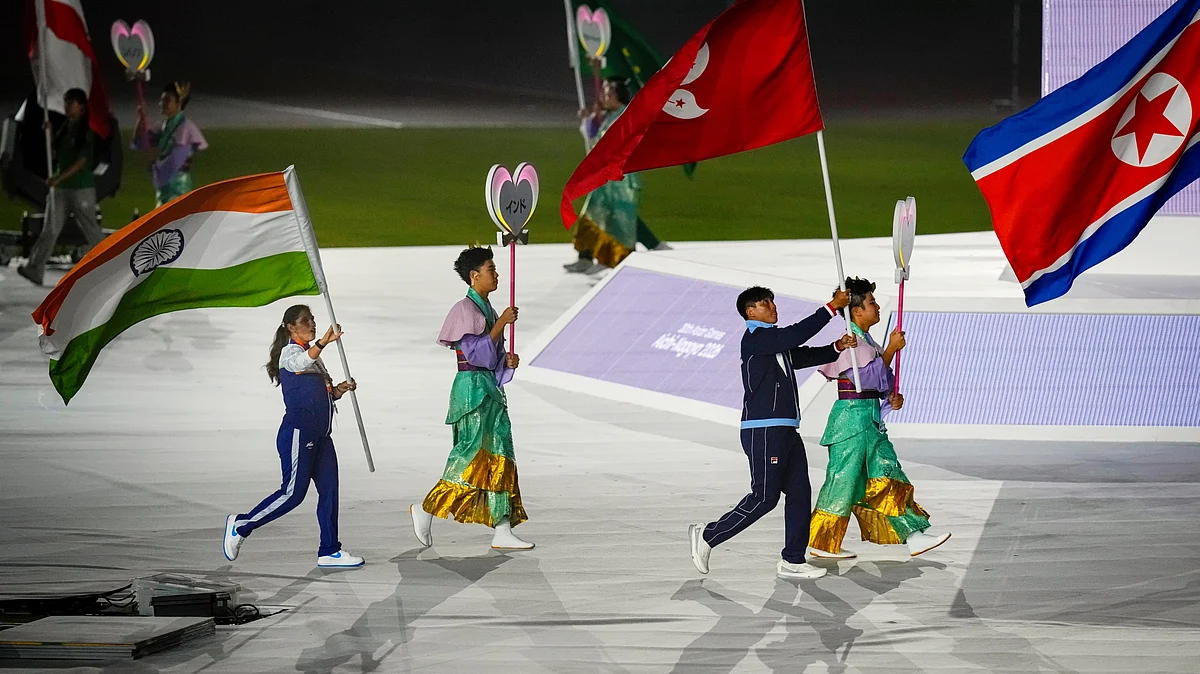
Neeru Dhanda, the Indian trap shooter who secured two gold medals and a silver at the Games, was India’s flagbearer at the closing ceremony. The last medal India won was in men’s hockey, when Harmanpreet Singh and Co. swamped Malaysia 5-1 to retain the gold on Saturday.
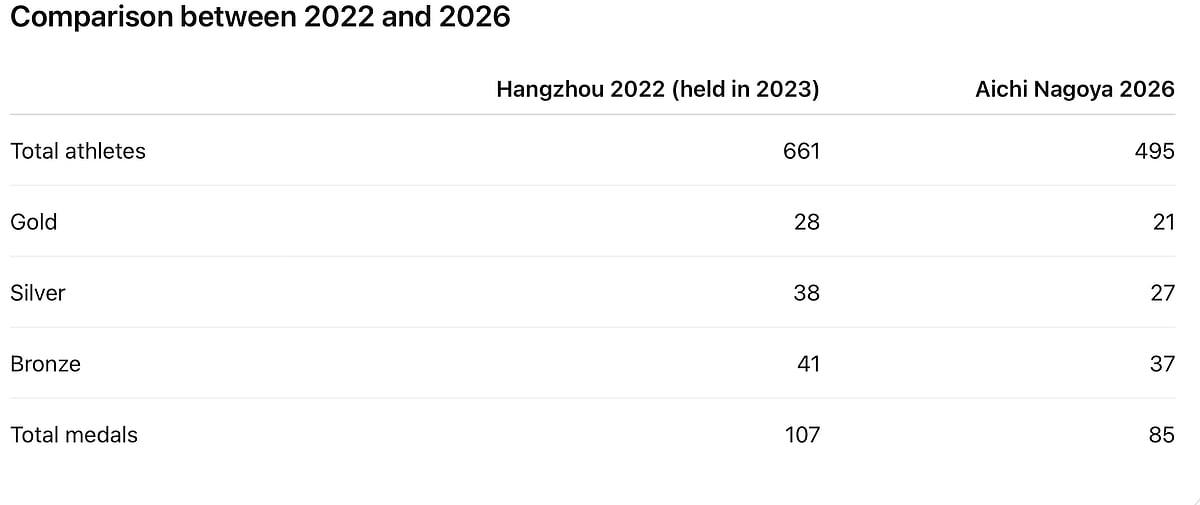
India’s 85 medals — 21 gold, 27 silver and 37 bronze — represent 22 fewer medals overall and seven fewer gold medals than the 107-medal haul from the previous edition. The breakdown three years ago was 28 gold, 38 silver and 41 bronze, prompting introspection over what caused the dip despite the Union sports ministry making public an outlay of more than Rs 700 crore for the Asian Games cycle.
China dominated the standings, finishing with 341 medals, including 169 gold. Japan were second with 269 medals, including 83 gold, while South Korea finished third with 150 medals and 39 gold. Questions are already being asked about whether such a showing poses a challenge to India’s ambitions of breaking into the top 10 at the Olympics by 2036, the year for which it has officially expressed its bid.
A closer look at the comparative figures between Hangzhou and Aichi Nagoya reveals that India sent a truncated contingent of 495 athletes, against 661 in 2023 — a 25.1 per cent reduction following stricter selection criteria that focused only on realistic top-six contenders in Asia. The drastic move, in fact, saw the Indian football team missing the cut as they were nowhere among the top eight nations of the Asian Football Confederation (AFC).
Fingers are being pointed at the drop in medals in athletics and shooting, with high-profile withdrawals such as Jyothi Yarraji and Praveen Chithravel proving to be an embarrassment for the track and field camp.
While athletics yielded the highest number of medals in Hangzhou — 29, including six gold, 14 silver and nine bronze — Aichi Nagoya produced only one gold, when the women’s 4x400m relay squad saved the blushes, along with nine silver and 14 bronze for 24 medals overall. Incidentally, the Athletics Federation of India (AFI) has ordered an internal probe into the last-minute pull-out of the duo from their events.
There was a similar story in shooting, with the total medal tally falling by 32 per cent and gold conversions taking a 57 per cent hit. However, while these two disciplines are being pilloried the most, the high expectations from the badminton contingent also ended in disappointment, with the lone medal being a bronze in the men’s team event. The likes of PV Sindhu, Lakshya Sen and the Chirag-Satwik duo drew a blank in their individual events. The medal drought in tennis, for the first time in more than four decades, did not help matters either.
A late surge in boxing, wrestling, hockey and archery helped secure a fourth-place finish in an edition where India were expected to build on their 100-plus medal tally from three years ago and break into the top three. Boxing contributed three gold medals, while India also picked up their first-ever Asian Games medals in MMA and soft tennis.