


Ever tried running for two seconds and cover 20 metres on a track?
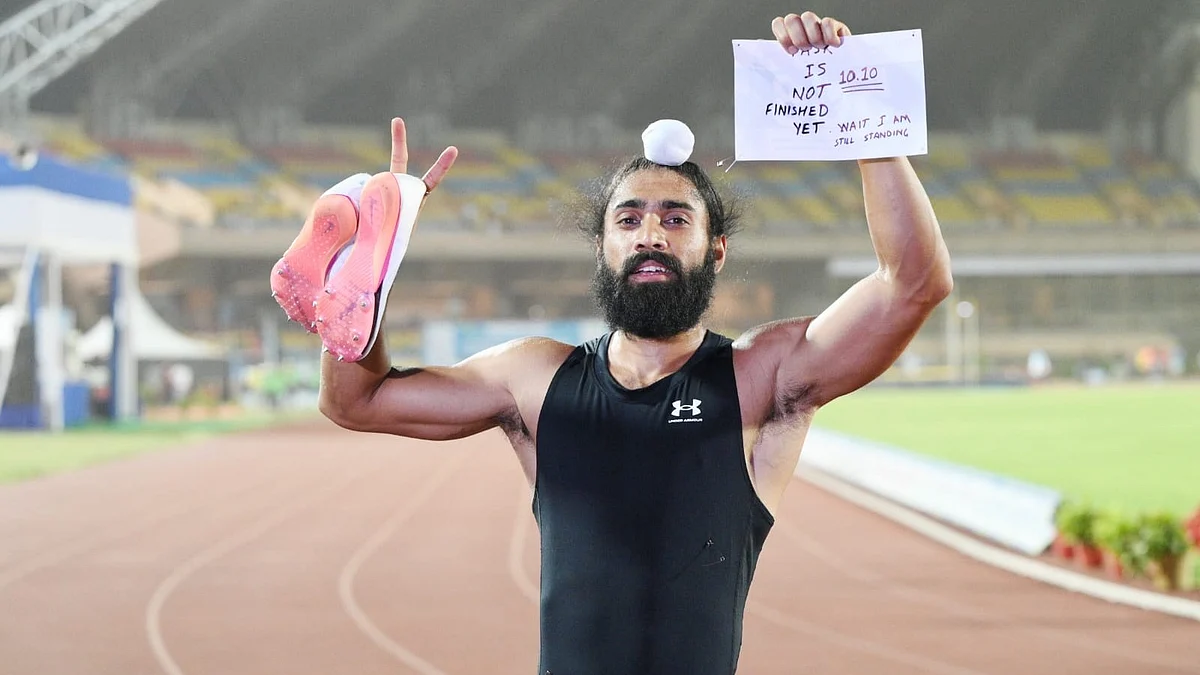
In Ranchi, Gurindervir Singh broke Animesh Kujur’s day-old Indian 100m record with a 10.09s sprint, boosting India’s 2026 Games hopes


Full disclosure. I used an AI tool and asked what a human being can do in one second? One second might feel like nothing but it is a fascinating unit of time, was the response. A human being can blink, take a breath, snap one’s fingers or speak a short word like ‘Hi’, it went on to inform. A human being’s heart can also beat once every second; or you can feel a flash of emotion, anger or irritation, surprise or joy. A human being can also notice a movement, hear a sound or identify a colour or form at a distance in that tiny blip of time.
However, a hummingbird can flap its wings 50 times in a second. A camera can capture an image. A computer can process millions of instructions and light can travel 300,000 kilometres or circle the earth 7.5 times. The earth itself moves 30 kilometres in a second along its orbit around the Sun.
In athletics, especially in sprinting, one second is massive — it can mean the difference between being a world champion and finishing last. The world’s fastest sprinter Usain Bolt’s 100m record of 9.59 seconds still stands. The current women’s 100m world record is 10.49 seconds, set by Florence Griffith Joyner (USA) in 1988. The Olympic record is 10.61 seconds, set by Elaine Thompson-Herah (Jamaica) at the Tokyo 2020 Games. Elite international male sprinters run the 100m in 9.5 to 10 seconds while female sprinters take a second more to cover the distance.
India’s two fastest sprinters are still not quite there yet. We are yet to break the 10-seconds barrier. In sprinting terms one second stands for 10 meters. Even 0.1 second’s difference can separate the athlete in the first place and the athlete who finishes fifth. The huge one-second gap is visible when one sees a 100m dash or sprint in slow motion. If Usain Bolt and Gurindervir Singh had run together and Bolt finished at 9.59 seconds and Gurvinder took 10.59 seconds, the Indian would reach the finishing line 10 meters behind Bolt.
International sprinters cover roughly 10–12 meters — about the length of a bus — in one speed at top speed. A difference of 0.1 second can put an athlete behind by one meter. Ten seconds would stretch the gap to 10 meters on the racing track.
The Internet puts it in perspective. The AI tool I used described vividly what that one second may look like.
· Runner A (Bolt at 9.58s): He’s already breaking the tape at the finishing line.
· Runner B (10.58s): At that exact moment, runner B is still about 10 meters behind, sprinting hard but nowhere near the line.
Those of us who have never been athletes and have never been a sprinter would find it hard to imagine the blood, tears and sweat that athletes and their trainers spend to run those 10-12 extra meters in one second. I tried but managed to cover far less than two meters in one second. Why don’t you try too?
Join our official telegram channel (@nationalherald) and stay updated with the latest headlines