


NZ ODIs: Bowlers win it for India but Ro-Ko conundrum returns for Gambhir
Gurnoor Brar Player of the Series with nine wickets as Men in Blue end Kiwis’ long winning streak at home
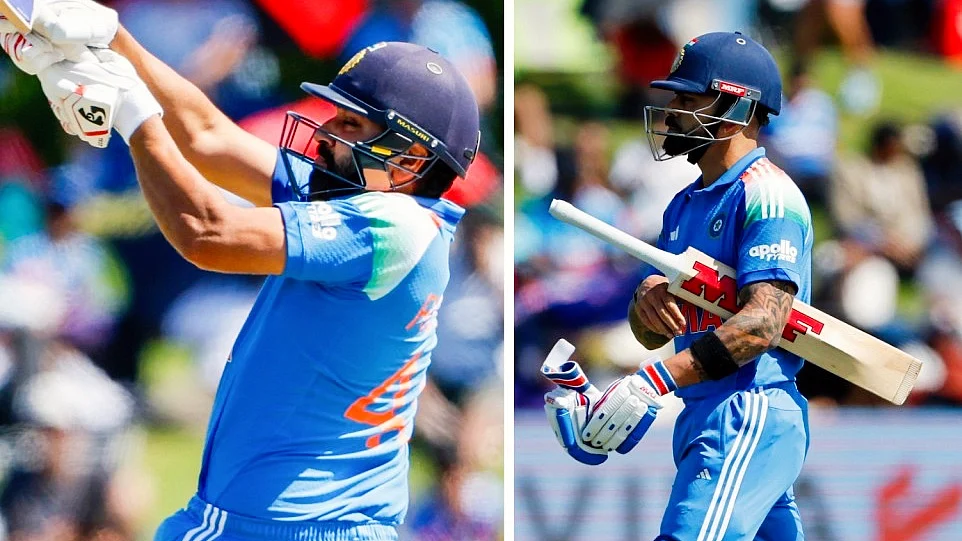


India clinch a 3-1 ODI series triumph in New Zealand, ending the hosts' long unbeaten home run.
Rohit Sharma and Virat Kohli endure a disappointing series, reviving questions over their 2027 World Cup prospects.
Gurnoor Brar, Aquib Nabi and Anshul Kamboj lead India's new-look pace attack, with Gurnoor named Player of the Series.
It has been a hard-earned 3-1 ODI series triumph in New Zealand, with India's new-look bowling attack once again playing a major role in the crucial fifth game at Bay Oval. The narrow 22-run win may have exorcised the ghosts of being bowled out for 89 at the same venue barely two days earlier, but the team management appears to be grappling with the RoKo conundrum once again.
The one-year countdown to the 2027 ICC World Cup has already begun, but questions are being raised again over whether the presence of the Big Two — Virat Kohli and Rohit Sharma — in South Africa can be taken as a given. It would be grossly unfair to single out the two stalwarts in a series in which batters from both sides struggled in testing conditions. However, head coach Gautam Gambhir dropped enough hints when he said that, ultimately, form rather than reputation would determine selection.
While one can conclude with a degree of certainty that this was the last time the two legends toured New Zealand, there was little to write home about beyond the emotional send-off from the Indian diaspora. Despite Kohli opening the series with a 74 off 51 deliveries — the only half-century by an Indian batter in the four matches played (one was washed out) — the two ended the engagement with extremely underwhelming performances.
In Mount Maunganui on Sunday, 15 November, the two failed to get past the powerplay for the second time in three days. Barely a day after they were both bowled by Matt Henry in the first over of the fourth match, which India lost by a massive 244 runs, Sharma and Kohli once again struggled to negotiate the testing conditions.
Now 39, Sharma looked uncomfortable despite opening with a boundary through extra cover. His stay was cut short in the sixth over when he mistimed a flick off Matt Fisher straight to the deep mid-wicket fielder, ending the series with just 30 runs in four innings. It was one of his poorest performances in a bilateral ODI series. His average of 7.5 is the second-lowest in a bilateral series in which he has batted at least four times, behind only his disastrous 2010 tour of Sri Lanka, where he averaged 2.5.
Kohli, too, failed to live up to expectations after the opening game. Having scored seven and zero in the previous two matches, he fell to Fisher's sharp bouncer, with the resulting top edge carrying through to wicketkeeper Tim Seifert. He thus ended the series with an average of just 21.5, his second-worst return in a bilateral series since averaging 18 during his nightmarish tour of England in 2014.
It was also only the second time in 16 years that India had lost both Sharma and Kohli for ducks in the same ODI. The senior duo had previously fallen for blobs in the same innings against Sri Lanka in Dambulla in 2010.
The biggest takeaway from the ODI series, from India's point of view, has to be the manner in which seamers Gurnoor Brar, Aquib Nabi and Anshul Kamboj shouldered the responsibility, taking the pressure off Arshdeep Singh. Mohammed Siraj, meanwhile, featured in the playing XI only for the final game. Gurnoor was adjudged Player of the Series with nine wickets, as India ended New Zealand's long unbeaten run of 11 consecutive bilateral ODI series at home over the past seven years.
Join our official telegram channel (@nationalherald) and stay updated with the latest headlines