


Israel plans demolition of 25 homes in occupied West Bank’s Nur Shams camp
Camp representatives warn the order will ultimately affect as many as 100 family homes
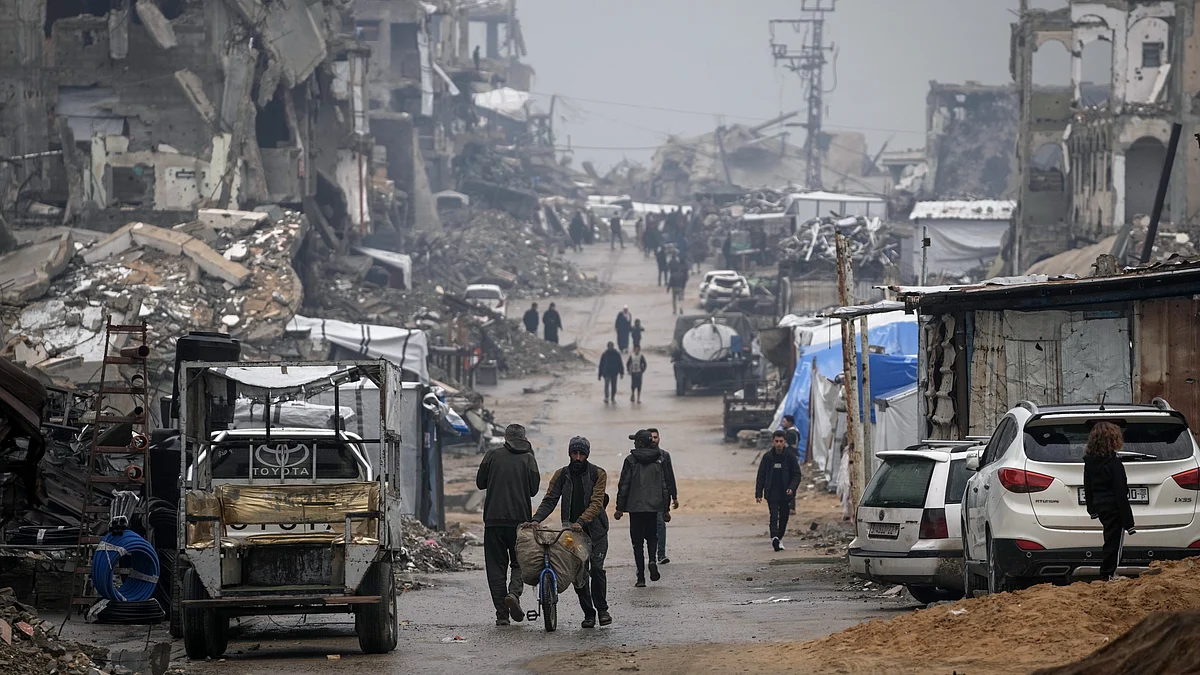


The Israeli military is set to raze 25 residential buildings in the occupied West Bank’s Nur Shams refugee camp this week, deepening fears of mass displacement, local authorities informed the Al Jazeera.
Abdallah Kamil, governor of the Tulkarem governorate where Nur Shams lies, told AFP on Monday that Israeli authorities had informed him of the impending demolitions through COGAT, the Israeli defence ministry body overseeing civilian affairs in the occupied territories. Camp representatives warn the order will ultimately affect as many as 100 family homes.
The demolitions form part of Israel’s ongoing Operation Iron Wall, launched in January and aimed, according to Israeli officials, at targeting armed groups operating in northern West Bank refugee camps. Human rights organisations, however, say the campaign mirrors tactics used during Israel’s war on Gaza, warning that it is reshaping the West Bank’s geography through force.
“This is not an isolated incident,” said Al Jazeera correspondent Nour Odeh, reporting from Ramallah. “Over the past year, at least three refugee camps have been targeted, with some 1,500 homes damaged or demolished and around 32,000 Palestinians forcibly displaced.”
Palestinians and rights groups argue the demolitions are designed to hem in communities, fracture social life and entrench Israeli control across the occupied territory. On Monday, displaced residents of Nur Shams gathered in front of armoured Israeli vehicles blocking access to the camp, staging a small but defiant protest against the demolition orders and demanding the right to return home.
The head of the Palestinian National Council, Rouhi Fattouh, condemned the move as part of what he described as “ethnic cleansing and continuous forced displacement,” according to the Palestinian news agency Wafa.
Omer Bartov, a professor of Holocaust and genocide studies at Brown University, told Al Jazeera that Israel’s actions were contributing to the systematic dehumanisation of Palestinians in the West Bank. He described a “social death” taking hold — a condition in which one population is rendered invisible to another, stripped of dignity and agency.
“It dehumanises those subjected to control,” Bartov said, “and it dehumanises those enforcing it, who must see another people as less than human.”
For residents, the threat is painfully personal. Aisha Dama, whose four-storey family home shelters around 30 people, said she felt abandoned in the face of the looming demolition. “No one checked on us. No one asked about us,” she told AFP.
“All my brothers’ houses will be destroyed,” said another resident, Siham Hamayed. “They are already on the streets.”
Nur Shams, like many refugee camps across the West Bank, was established after the 1948 Nakba, when hundreds of thousands of Palestinians were driven from their homes during the creation of Israel. Over decades, these camps evolved into dense urban neighbourhoods, where refugee status — and the memory of displacement — is passed from one generation to the next.
Now, residents fear history is repeating itself, one demolished home at a time.
Join our official telegram channel (@nationalherald) and stay updated with the latest headlines