Advertorial
5 Ways Modern Buses Are Making Commuting For Students Safer
Like all modern infrastructure school buses too are evolving with new-age engineering
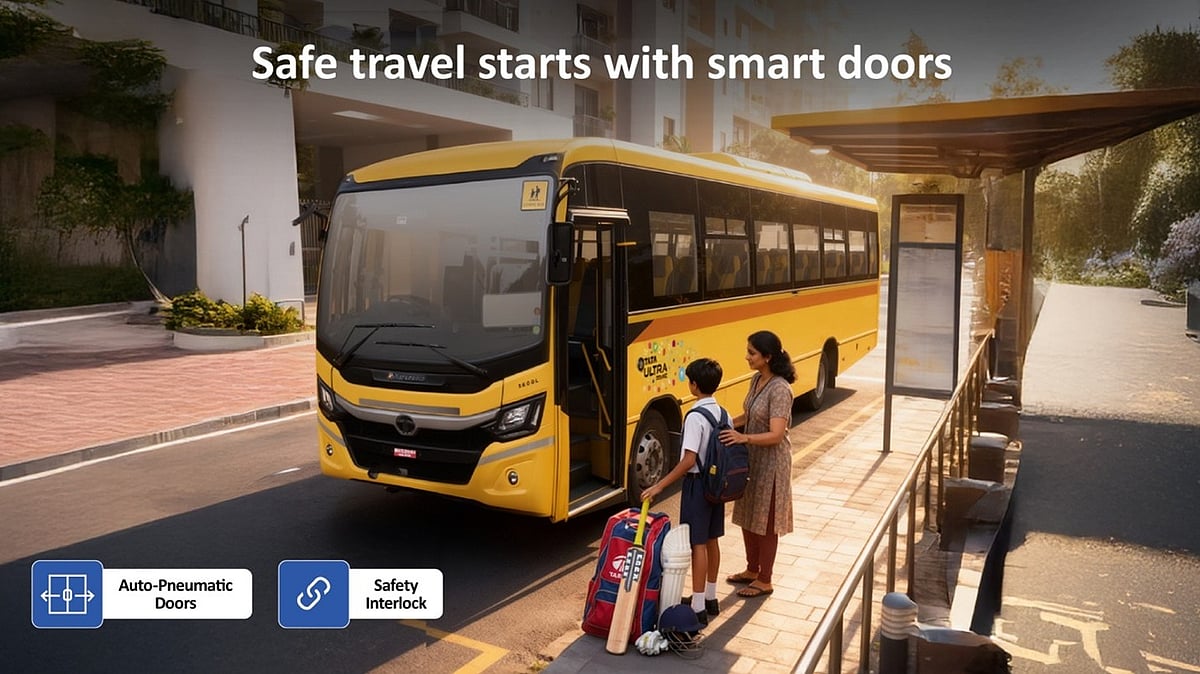
Every morning, millions of Indian parents watch a yellow tainted school bus disappear down the street, trusting that their children are safe until it returns. But their worries can be put to rest because like all modern infrastructure school buses too are evolving with new-age engineering.
GPS-enabled alerts, for instance, negates the need to handover a smartphone to a young child and the introduction of fire-suppression systems minimizes risks in the event of a hazardous or unfortunate situation.
Here are five ways technology and inclusive design is re-inventing traditional school buses.
1. Smart Eyes on Every Route
Gone are the days when parents called the driver to check if the bus had arrived. GPS-based telematics and mobile apps now make real-time tracking standard across India’s leading school fleets. Schools can monitor vehicle speed, routes, and stoppages, while parents receive instant SMS or app updates. Tata Motors’ Starbus model under the SkoolMan platform, is enabled with tracking journeys with the options to regularly review driving behaviour.
2. Designed for Small Passengers
Inside the cabin, every inch counts. Today’s buses reflect a child-first philosophy. Anti-skid flooring prevents slips during rush exits, while semi-sliding windows, padded handrails, and fire-retardant materials make interiors safer and more comfortable. Each seat is equipped with a three-point safety belt, and automatic pneumatic doors lock securely once the bus moves, ensuring no accidental openings on the move.
3. Watching Over Drivers Too
Safety doesn’t stop at the passenger seat. Advanced driver monitoring systems are now being adapted from heavy commercial vehicles into school fleets. Fatigue-detection cameras, electronic stability control (ESC), and hill-start assist technologies reduce human error — especially on long or hilly routes. New-generation school buses feature telematics alerts for over-speeding and hard braking, as well as optional Driver-Monitoring Cameras that issue drowsiness or distraction alerts.
4. Built-In Emergency Readiness
Every school bus must be prepared for the unexpected; and India’s regulatory standards ensure multiple layers of safety. Modern buses come fitted with Fire Detection and Suppression Systems (FDSS), panic switches that trigger alarm hooters and warning strobes, and at least two emergency exits, complete with hammers and photo-luminescent signage for low-light evacuation. Some CNG variants even add gas-leak detectors for extra precaution. In Tata’s Ultra model, the Fire Detection & Alarm system is integral for risk mitigation.
5. Towards Greener, Smarter School Runs
The next step in safe mobility is sustainable mobility. Electric and cleaner-fuel school buses are entering mainstream operations, reducing both emissions and noise. The Tata Ultra 9/9 EV, for instance, combines zero-tailpipe emissions with the same high-grade safety suite as its diesel siblings — from GPS tracking to automatic doors and anti-skid flooring. As cities push for greener fleets, such e-buses offer schools a way to align safety with sustainability.
A Future Built on Trust and Technology
As parents grow more vigilant and regulations tighten, the role of the school bus is being re-imagined. It’s no longer just about getting children to class — it’s about creating a connected, monitored, and environment-friendly commute that parents can trust.
With manufacturers integrating telematics, driver-assist tech, and electric drivetrains into purpose-built designs, India’s school mobility ecosystem is evolving fast.
This is an advertorial. The article is published as received.
Join our official telegram channel (@nationalherald) and stay updated with the latest headlines