Advertorial
The Simple Workspace Upgrades Helping Indian Professionals Fight WFH Burnout
Burnout among remote workers has been a recurring theme in workplace surveys since the work-from-home shift accelerated.
Work from home was supposed to be the arrangement that gave professionals their lives back. Shorter commutes, more flexibility, the ability to structure the day around how people actually work rather than when an office building happens to open. For many, it has delivered on that promise, at least in part. But for a significant number of Indian professionals, the home office setup has also introduced a different and less discussed problem: an environment that makes it very hard to switch off.
Burnout among remote workers has been a recurring theme in workplace surveys since the work-from-home shift accelerated. The reasons are layered: the collapse of physical boundaries between work and rest, the absence of commute as an unintentional transition ritual, the tendency to work longer hours when the office is always technically open. But one factor that gets less attention than it deserves is the physical setup itself. The chair, the desk, the bookshelves, the walls around you, the environment shapes the mind more than people typically account for.
Ergonomics Is Not Optional Anymore
There was a period in 2020 and 2021 when makeshift work setups were accepted out of necessity. Kitchen tables, dining chairs, laptop propped on textbooks. That was manageable as a temporary arrangement. As remote and hybrid work have settled into something more permanent for many professionals, the toll of poor ergonomics has become harder to ignore. Back pain, neck stiffness, wrist fatigue, and persistent eye strain are now among the most commonly reported health complaints from home-based workers.
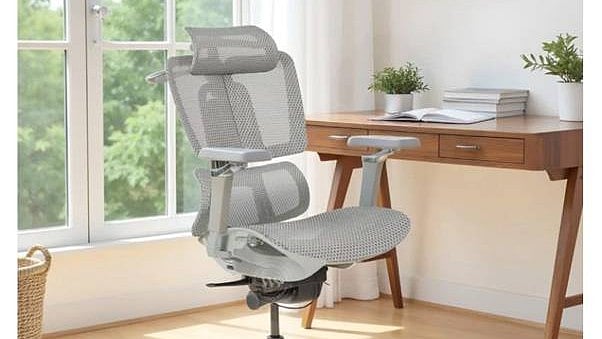
An ergonomically designed chair is the single highest-impact intervention most WFH setups need. The difference between working for six hours in a chair that supports lumbar curvature and adjustable armrests versus a dining chair is not subtle. It accumulates daily. The right Office Chair by Wooden Street with adjustable seat height, back support, and breathable material can meaningfully reduce physical fatigue over the course of a week. This is not a luxury consideration. For someone working eight or nine hours at a desk five days a week, it is closer to a health decision.
The awareness around ergonomics has also matured. Professionals who would not have considered an office chair a priority purchase three years ago are now researching mesh backs, armrest adjustability, and lumbar support settings with the same attention they give to their laptops. The home office furniture market in India has responded, with a much wider range of choices at varied price points than were available before the remote work shift.
The Environment You Work In Affects How You Work
Physical ergonomics addresses one part of the WFH burnout problem. The other part is psychological. Working in a space that feels cluttered, unfinished, or indistinct from the rest of the home makes it difficult to enter and maintain a focused state. The brain responds to visual and spatial cues. A dedicated workspace that looks and feels like a work environment primes the mind for output in ways that a cleared corner of the dining table does not.
Bookshelves are among the most effective and underrated tools for this purpose. A well-organized shelf visible from the work desk creates a sense of structure and intentionality. Exploring Wooden book shelf designs that suit the available wall space and the kind of work being done, whether that is legal files, reference books, notebooks, or simply a curated set of titles that make the space feel deliberate, adds a dimension to a home office that is hard to achieve through other means.
This is not about decoration for its own sake. Professionals who have documented their workspace setup transitions consistently report that adding proper shelving and storage to a home office changed how they felt about sitting down to work. The environment
communicated organization, and that communication had a genuine effect on focus and motivation.
Separation of Space as a Burnout Prevention Tool
One of the more practical insights from organizational psychology around remote work is the importance of spatial cues in managing the work-rest boundary. When work physically occupies the same visual space as rest, the brain has a harder time releasing work thoughts. This is why people who work in their bedrooms or living rooms often report difficulty sleeping or relaxing even when they are not working.
Creating a dedicated workspace, even within a smaller home, with its own furniture, its own lighting, and its own visual character helps re-establish that boundary. The chair that is only sat in for work. The shelf that holds only work-related materials. The desk that faces a wall rather than a sofa. These are not complicated interventions, but they have a meaningful cumulative effect on how mentally draining a remote work arrangement feels.
What the Most Productive WFH Setups Have in Common
Looking at how professionals who report the lowest WFH-related stress tend to structure their home offices, a few patterns emerge consistently. First, the chair and desk are not afterthoughts. Second, storage is organized in a way that keeps the work surface clear at the end of the day, allowing the space to visually reset. Third, natural light is prioritized wherever possible. And fourth, there is a deliberate effort to make the workspace feel distinct from the rest of the home, even if the physical separation is limited.
Indian professionals are increasingly bringing this kind of intentionality to their home setups, not as a productivity hack but as a response to the very real effects of working in poorly designed environments over extended periods. The home office has moved from a temporary arrangement to a permanent feature of working life for many people. Getting the setup right is not about aesthetics. It is about sustainability.
This is an advertorial. The article is published as received.
Join our official telegram channel (@nationalherald) and stay updated with the latest headlines