Art and Culture
Book extract: ‘Your news, in your language’
The story of Khabar Lahariya, a hyperlocal media offering run by women who dared to defy, in the badlands of Bundelkhand
Title: The Good Reporter
Authors: Disha Mullick with Geeta Devi, Harshita Verma, Kavita Bundelkhandi, Lakshmi Sharma, Lalita, Meera Devi, Nazni Rizvi, Shyamkali, Suneeta Prajapati
Publisher: Simon & Schuster India
Price: Rs 699 (hardcover)
The kernel of who and what we are, local journalists and a local news product, emerged in the nineties in India. It was a moment of globalization with new kinds of resources and ideas for ‘development’ work. We emerged in the fertile environment of policies and programmes that brought women into the public domain as proactive subjects, like the Mahila Samakhya programme and the 73rd Amendment to the Constitution.
The Mahila Samakhya programme, for instance, launched after the formulation of the National Policy on Education of 1986, introduced the idea of education as a critical tool and process to empower adult women. Chitrakoot, where we would start Khabar Lahariya, was one district where this programme was implemented. Our access to education that could question structures of power, and our introduction to local, participatory processes of literacy and knowledge creation, came from this programme.
The 73rd Amendment to the Constitution in 1992 introduced one-third reservation for women in local governance institutions. Although women have always had suffrage in independent India, this law mandated women to participate in political processes at the rural level and triggered numerous confrontations with how organizing structures like gender and caste ensured the continuation of the status quo. The control of our bodies, labour and voice was no longer the prerogative of our patriarchal homes.
Khabar Lahariya came out of an idea piloted in 1993 in a residential adult literacy centre run in the nineties in Banda district of Uttar Pradesh, as part of the Mahila Samakhya programme. A broadsheet was developed in workshops with women students and distributed to rural communities. It quickly gained popularity.
It was the first and only piece of mass media in the local language, Bundeli, centring remote rural audiences and prioritising stories of their everyday lives. And it was created by women.
This literacy product took on an unexpected significance — that prophesied its future outside of the world of development that it was born in — when the women who produced it began to price and sell it. Dehati, unpaid women selling a broadsheet! Stepping out of their homes, piling into jeeps, and wading through rivers to get people to buy and read! And people paid. This propelled the idea of a more permanent local newspaper, which eventually launched as Khabar Lahariya in 2002.
Khabar Lahariya had, at its heart, the desire to bring into the public domain stories about everyday rural lives from the perspective of those considered most unlikely — because of their castes, and their history of exclusion from education — to have a public voice. We were in a prime location to put this corrective desire into action. Uttar Pradesh is the largest state in the country, with the largest number of members of Parliament. It is densely populated and, from its cities to its smallest hamlets, holds firmly and distinctively to the norms of caste, class and gender.
Bundelkhand, where Banda is located, is on the southern border of the state — rocky, stricken by drought, and with a history of underdevelopment and poverty. Here, sensational crime abounded, yet the politics of the well-oiled, deeply striated, feudal system operating within the democratic structure of the panchayat found little space in the newspapers in circulation.
The broadsheets available were densely packed with stories in small print, in a language that no one spoke (or read, in these districts with dismal literacy rates) and mostly included stories about cities far away and unrelated to the everyday lives of rural people. They were — and mostly still are — owned by large businesses or politicians, and reporters and stringers were predominantly ‘upper’-caste’.
Khabar Lahariya became the only newspaper that represented rural lives in intimate detail, reported and distributed by women who knew life and work, hardship and violence, and the culture in these villages better than anyone else. It was written in the language we spoke and our neighbours spoke — as well as our village heads, panchayat secretaries and officials.
It made some of them smile, even snigger, but it made them subscribers. Not being able to read was no barrier; copies were bought and read aloud by the often-theatrical men found on the village chabutra, or school-going children to their mothers while they cooked and worked.
With the gaze and language of rural women, Khabar Lahariya brought an understanding of the business of the rural public space that no ‘mainstream’ newspaper had. It brought into the ambit of the public forum why Kalavati being burnt alive by ‘accidental’ fire while she was making chapatis was suspicious; why Gangaram Tiwari, with his three buffaloes, ten bighas of land and government job, had his application for a house under the rural housing scheme for the poor passed immediately, but landless, sickly Kallu Ahirwar’s application was delayed for years; why Tabassum couldn’t get her meagre widow pension from the bank; or why Raju (urf Abbas), a local stringer with a portfolio of reports praising the local administration, seemed to have more modern amenities in his house than anyone else in the village.
And since it was written in the language that was spoken not just in the rural public, but inside homes, on fields, in brick kilns, by the well, in the panchayat bhavan and the taluk office, it was anticipated eagerly, it resonated and it was relished. If it ruffled feathers — it did, it did — it also built credibility with rural audiences who saw their realities being recognised, and with local administration who acknowledged the hard work of going where others were reluctant to go.
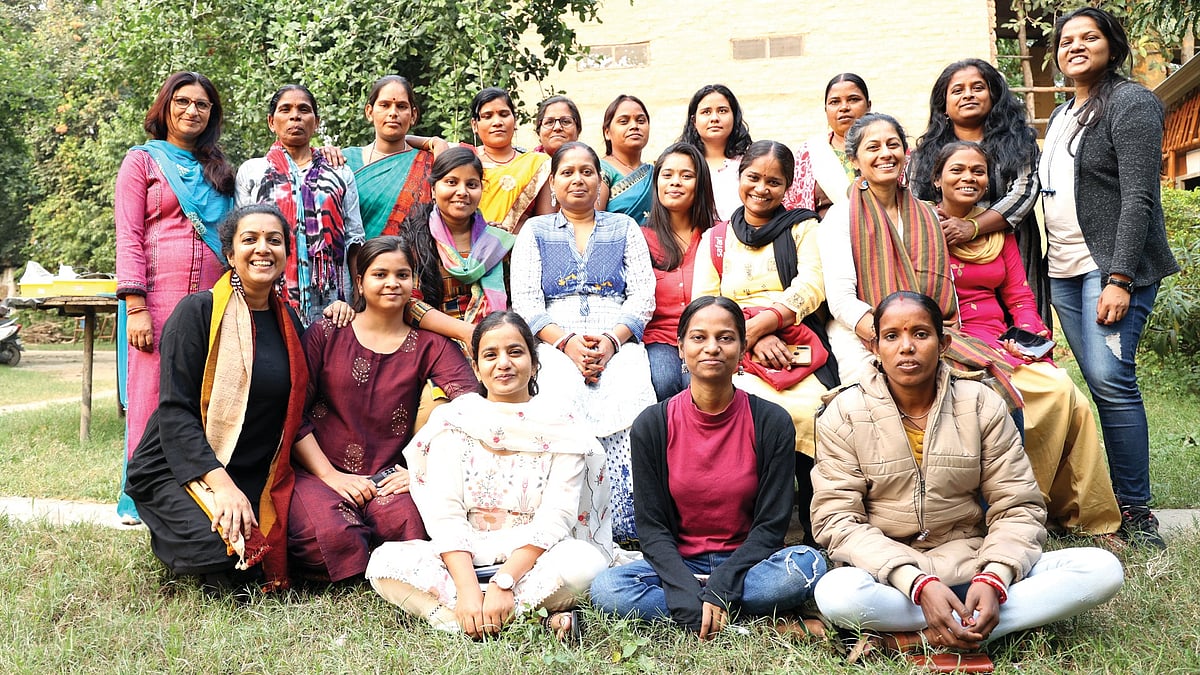
This, then, became Khabar Lahariya’s foundational principle, and eventually, our ‘brand’: ‘Aapki khabar, aapki bhasha mein’, your news, in your language. It was not media affiliated with a certain community. It was media that attempted to bring the contradictions and tensions of our unequal identities — including, and not limited to, the shifting, malleable, knotty politics of caste — into the newsroom. We were a rural newspaper run by women who were not seen by the public as knowledge creators, but who have been able to present knowledge from a perspective and idiom that lays bare the mechanics of life in rural north India.
Join our official telegram channel (@nationalherald) and stay updated with the latest headlines