Business
Airlines suspend Middle East flights as security tensions disrupt global aviation
Air France and KLM halt services and reroute aircraft amid rising geopolitical risks, raising concerns over costs, connectivity and fares
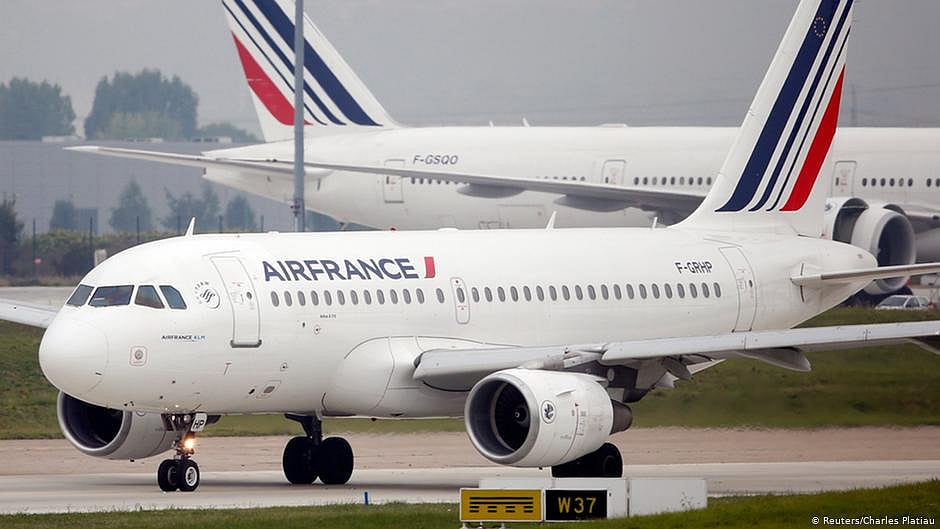
Air travel to and over the Middle East is facing renewed disruption as escalating geopolitical tensions prompt airlines to suspend services and alter flight paths, highlighting the region’s vulnerability as a critical hub in global aviation.
On 23 January, Air France announced a temporary suspension of flights to Dubai, citing a worsening security environment. The French carrier said it was closely tracking developments across the Middle East, including the airspace typically used by its aircraft, and stressed that passenger and crew safety remained its overriding priority.
KLM has taken similar steps, announcing a halt to several routes in the region. Without specifying a reason, the Dutch airline said it would suspend flights to Tel Aviv, Dubai, Dammam and Riyadh until further notice. It also confirmed that its aircraft would avoid flying over the airspace of Iraq, Iran, Israel and a number of other countries in the Gulf.
While Air France and KLM are among the first European airlines to publicly announce such measures, the situation has wider implications. European carriers with strong Middle East networks, Asian airlines operating long-haul routes linking Europe, the Gulf and the United States, and even Gulf-based carriers could all face mounting challenges if airspace restrictions expand further.
Avoiding certain parts of Middle Eastern airspace is expected to lengthen flight times, increase fuel consumption and disrupt tightly scheduled services connecting Europe, Asia and Africa. Industry analysts warn that these operational pressures could translate into higher ticket prices, alongside inconvenience for passengers due to cancellations and rescheduling.
The Middle East’s role as a major aviation crossroads has made airlines increasingly sensitive to political and security volatility in the region. Any further escalation could force more carriers to suspend routes or take costly detours, affecting not only passenger travel but also global cargo flows and airline profitability.
For now, airlines say they are monitoring the situation closely and making real-time assessments. However, the latest suspensions underscore how quickly geopolitical shocks in the Gulf can ripple through international aviation networks.
Tensions in the region have been heightened by recent remarks from US President Donald Trump, who said on Thursday that a US “armada” was heading towards the Gulf and that Washington was keeping Iran under close watch. While he downplayed the likelihood of immediate military action and suggested Tehran appeared open to talks, Trump also confirmed that military preparations were continuing.
The prospect of conflict had appeared to ease last week after the White House said Iran had halted planned executions of protesters following a wave of unrest. However, Trump has repeatedly warned of possible US strikes in response to Tehran’s actions, keeping uncertainty high and adding to concerns across the aviation industry.
With agency inputs
Join our official telegram channel (@nationalherald) and stay updated with the latest headlines