Business
Tamil Nadu Budget focuses on welfare, AI, infrastructure and industrial growth
TVK government's maiden Budget unveils gold schemes for brides and newborns, AI city, logistics parks and expanded social welfare initiatives
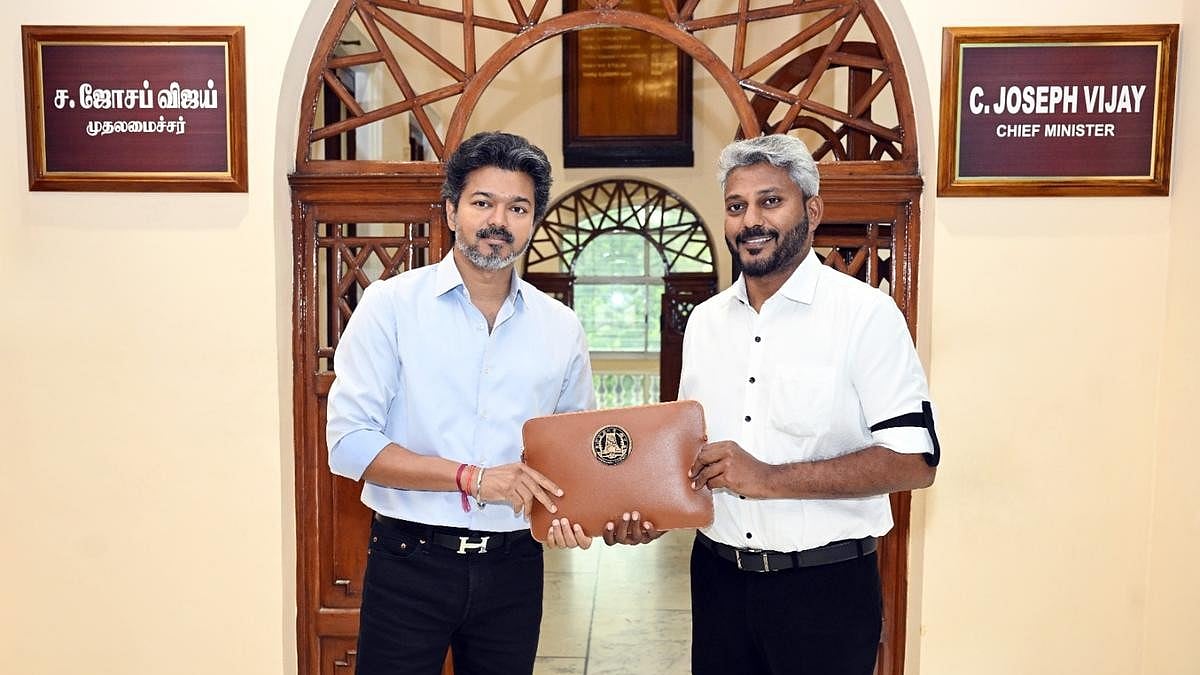
The Tamil Nadu government on Wednesday unveiled an expansive welfare- and growth-oriented Budget that combines flagship social schemes with ambitious investments in artificial intelligence, industrial infrastructure and employment generation, while projecting an image of fiscal stability despite the State's sizeable debt burden.
Presenting the Revised Budget Estimates for 2026-27 in the Legislative Assembly, Finance Minister N. Marie Wilson announced a series of welfare measures ranging from gold gifts for brides and newborns to enhanced healthcare, education and livelihood programmes, alongside major initiatives aimed at positioning Tamil Nadu as a hub for advanced manufacturing, logistics and artificial intelligence.
One of the headline announcements was the launch of the Annan Seer Thittam, under which eligible brides will receive an eight-gram gold coin and a silk saree on their wedding day. The scheme, which fulfilled a key Tamilaga Vettri Kazhagam (TVK) election promise, has been allocated Rs 812 crore in the revised estimates.
The government also announced the Thai Maaman Thanga Mothiram Thittam, under which every child born in a government hospital will receive a one-gram gold ring. The initiative, backed by an allocation of Rs 560 crore, is intended to encourage institutional deliveries while reducing out-of-pocket healthcare expenditure for families.
Seeking to establish Tamil Nadu as a leader in emerging technologies, Wilson announced that the State would undertake a feasibility study for Arivagam, billed as India's first dedicated AI and innovation city. The proposed ecosystem will include an AI university, semiconductor hardware testing facilities, innovation incubators, an international skill development centre and residential infrastructure.
Separately, the government also unveiled the TN AI Mission, under which artificial intelligence will be integrated into sectors such as healthcare, agriculture, education and citizen services.
Industrial expansion featured prominently in the Budget. The government said it would introduce a new Industrial Policy focused on innovation, technology-led growth and export promotion while pursuing additional Multi Modal Logistics Parks, dry ports, petrochemical hubs and new port infrastructure to attract large-scale investments and strengthen Tamil Nadu's manufacturing ecosystem.
The Budget also placed significant emphasis on education and skill development. The government allocated Rs 2,000 crore for the Vetri Laptop Scheme, expanded the TN Spark programme to another 2,600 government schools and announced plans to train one lakh job seekers under the Vetrithiran Training Scheme. Internship opportunities for 20,000 young people will be created in collaboration with government and private industry, while five lakh students and faculty members are expected to receive artificial intelligence training by 2031.
School education received an allocation of Rs 44,527 crore, with additional funding for modernising thousands of government schools, improving sanitation and security, introducing residential model schools and providing bicycles with helmets and water bottles to over five lakh Class XI students. Higher education was allocated Rs 8,393 crore, while a new government law college will be established in Madurai.
The healthcare sector also received a significant push. The government announced the establishment of Thai Care maternity support centres for expectant mothers, 1,000 mobile geriatric healthcare units for senior citizens and expanded services for persons with intellectual disabilities. Dedicated shelter homes and short-stay facilities for transgender persons were also announced as part of a broader social inclusion agenda.
The Budget enhanced welfare support for traditional fishermen by increasing lean-season assistance from Rs 6,000 to Rs 7,000 per family, benefiting around 1.93 lakh households. Agriculture and Farmers' Welfare received an allocation of Rs 14,984 crore ahead of the presentation of a separate Agriculture Budget.
Among the environmental initiatives, the government announced the creation of 2,500 hectares of new mangrove forests under the TN-SHORE programme and allocated funds to establish 20,000 public electric vehicle charging stations over the next five years. A new Tamil Nadu Palmyra Development Corporation and a Tiruppur Textiles Centre focused on sustainable clothing production were also unveiled.
The government further announced major allocations for social justice, tribal welfare, Adi Dravidar development, differently abled welfare and Olympic Centres of Excellence, while expanding overseas scholarship programmes and introducing land ownership support for Scheduled Caste and Scheduled Tribe agricultural labourers.
On the fiscal front, Wilson said Tamil Nadu's outstanding debt was estimated at Rs 10.99 lakh crore, while asserting that the new government had introduced greater transparency in public procurement and was working to strengthen both tax and non-tax revenues. He also claimed the administration had ended the practice of awarding public tenders to select individuals and politically connected entities.
The Budget, the first presented by the TVK-led government, reflects an attempt to balance expansive welfare commitments with long-term investments in technology, industrial development and human capital, signalling the administration's twin focus on social protection and economic transformation.
With agency inputs
Join our official telegram channel (@nationalherald) and stay updated with the latest headlines