Economy
Rupee decline deepens, approaches 94 against US dollar
Weak domestic equities and strong dollar add pressure as West Asia conflict drives currency slide
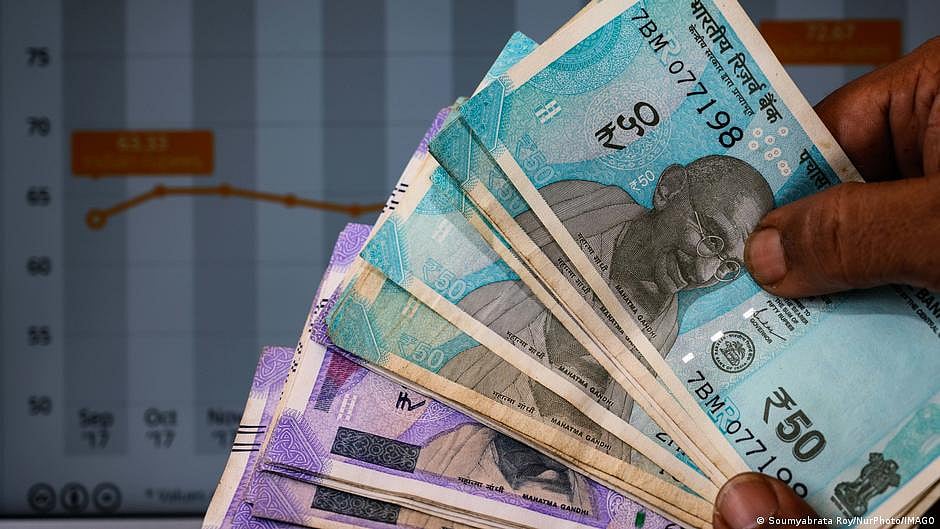
The Indian rupee weakened further in early trade on Monday, falling to a record low against the US dollar as elevated crude oil prices and continued foreign fund outflows weighed heavily on the currency.
At the interbank foreign exchange market, the rupee opened lower and slipped to 93.94 against the dollar, marking its weakest level on record. The decline follows a sharp fall in the previous session, when the currency breached the 93 mark for the first time before closing at an all-time low.
Currency traders attributed the weakness to a combination of global and domestic factors, with the ongoing conflict in West Asia keeping crude oil prices elevated and strengthening demand for the US dollar.
Higher oil prices have increased India’s import bill, placing additional strain on the rupee. Market participants noted that the country is now paying significantly more for crude imports, particularly from Gulf nations, which has intensified dollar demand.
The pressure has been compounded by persistent foreign institutional investor outflows. Overseas investors have continued to pull money out of Indian equities amid global uncertainty, further weakening the domestic currency.
The broader strength of the dollar has also contributed to the rupee’s decline. The dollar index, which measures the greenback against a basket of major currencies, remained firm in early trading.
On the domestic front, a sharp fall in equity markets added to the negative sentiment. Benchmark indices declined significantly in morning trade, reflecting investor concerns over global risks and rising volatility.
Market participants said the Reserve Bank of India had intervened intermittently to manage volatility, but allowed the rupee to adjust in line with market pressures. Expectations remain that the central bank may step in more actively if the depreciation accelerates further.
Meanwhile, India’s foreign exchange reserves have declined in recent weeks, adding another layer of concern for currency stability. The drop in reserves, coupled with sustained capital outflows and high import costs, has heightened pressure on the rupee.
Analysts expect the currency to remain volatile in the near term, with movements likely to be influenced by crude oil prices, global risk sentiment and the trajectory of capital flows.
With PTI inputs
Join our official telegram channel (@nationalherald) and stay updated with the latest headlines