World
California vote on 3 November to tax the super-rich sparks demands for a billionaire tax
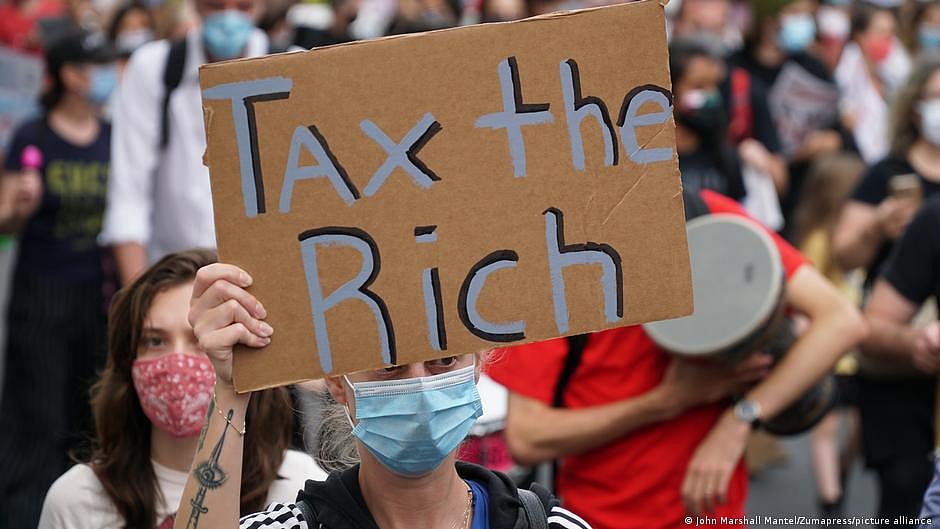
California voters will decide on a one-time 5 per cent tax on 200 billionaires in November, boosting calls for a nationwide billionaire wealth tax in the US.
The story is best recalled in the words of French economist Gabriel Zucman. On Friday, 26 June 2026 Zucman took to X to say, “I have some tremendous news to share: we've just won a decisive victory against Mark Zuckerberg and the Silicon Valley billionaires. Together with my colleague Emmanuel Saez, we’ve spent years working alongside California's civil society to make the 200 Silicon Valley billionaires—including Mark Zuckerberg and Peter Thiel—pay their fair share. Today, they have just lost a crucial battle.”
The deadline was 25 June to fulfil all mandatory requirements to put the proposal to vote in November, 2026. The first step was to mobilise 100,000 signatures by valid voters in California and thereafter to navigate through other objections and obstacles. The move was initiated after President Donald Trump in July, 2025 made sweeping budget cuts to slash public funding for health insurance programs for low-income Americans. The ballot initiative was spearheaded by the SEIU-UHW (Service Employees International Union-United Healthcare Workers West) union, a union of healthcare workers, patients and consumers in California.
The tax on extreme wealth could raise nearly $100 billion, recalled Zucman. A 5 per cent tax on just 200 individuals could raise $100 billion to fund education and healthcare for millions of Californians. The billionaires naturally did everything they could to stop it. They poured enormous sums of money into preventing the union from gathering enough signatures. ‘According to some reports, they even paid homeless people (!!) to sabotage the signature drive,” says Zucman. California Governor Gavin Newsom, he points out, worked behind the scenes to kill the initiative and shield the billionaires. They failed and it will now be the people in California who will decide in November.
The California Governor in fact opposed the proposal on Friday and argued that it would lead to flight of capital from California and hinder innovation. In a video statement he, however, advocated a ‘national billionaires tax’ and not a law confined to California, possibly realising that a federal tax would be far more difficult to push through. Newsom plans to contest for a Democratic Party nomination for the presidential election in 2028 and is keen not to lose the support of the billionaires.
Yet, Newsom was forced to acknowledge, “10 per cent of Americans own two-thirds of the wealth. Wages have stagnated. The cost of living has skyrocketed. The system is fundamentally broken. The federal tax code, a corporate code, and an inheritance code were written for a different set of Americans. It’s time for an economic reset.”
Zucman was not impressed. Noting that Newsom is continuing his crusade against the California billionaire tax, the economist accused the Governor of doing ‘Trump’s job’ in repeating arguments against taxing wealth, namely the threat of capital flight, harm to growth and innovation, etc. Zucman pointed out that billionaires cannot escape the tax even if they moved out of California or chose to live abroad. The risk, he said, is non-existent because the one-off tax would apply only to billionaires residing in California as of January 1st of 2026. The tax could easily be annual at the federal level, said Zucman, calling upon Newsom to support the federal wealth tax bill moved in the US Congress by Senators bernie Sanders and Ro Khanna.
In reply to the fear that innovation would stop in the Silicon Valley, Zucman exclaimed and said, “The claim is absurd. Since the ballot initiative was announced, according to Pitchbook data, venture capital funding going to California has exploded!”
Justifying the proposed tax on the billionaires, Zucman claimed, “California's billionaires pay only 0.07 per cent of their wealth each year in California income tax—representing barely 0.2 per cent of the state's total tax revenue. They contribute a negligible amount to the state that made them rich. It's as though they live in a parallel society.”
Sergey Brin and Larry Page, Google's founders, reported no taxable income in 2019, 2020, and 2023 and paid no California income tax on the wealth generated by Alphabet. Since 2019, their fortunes have increased by more than $400 billion. Sergey Brin is now spending tens of millions of dollars to defeat the billionaire tax initiative. “There is every reason to believe that the California ballot will be one of the defining political battles of the U.S. midterm elections. If the measure passes, California's billionaire tax could quickly inspire similar initiatives in states such as New York, Washington, and Massachusetts,” Zucman added.
Hoping that the California ballot could mark the beginning of a global movement to end the tax impunity of the ultra-rich, the economist who along with others has been at the forefront of a campaign against wealth and income inequality, reiterated, “extreme wealth always brings with it extreme power: the power to crush competition, manipulate public debate, shape public policy, and buy elections.”
Join our official telegram channel (@nationalherald) and stay updated with the latest headlines